Blog
Practical articles on mixing: what to listen for, where things go in the chain and how much to do, with the VEIRA plugin that does each job.
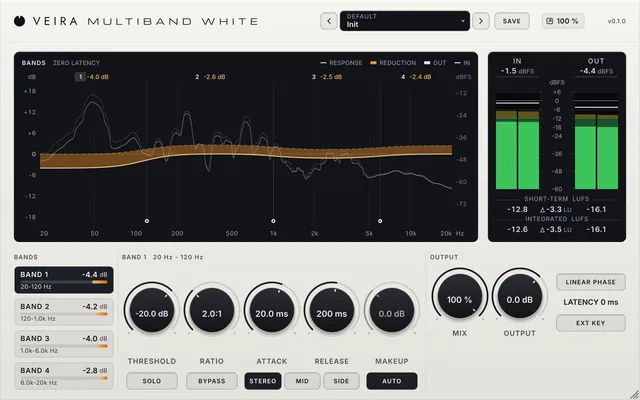 White: clean control of low end, bands and driveThree clean tools for the jobs that most often go wrong in a mix: a low end that jumps and vanishes on small speakers, a part that is right in one range and wrong in another, and saturation you can’t judge because it also gets louder.Read the article →
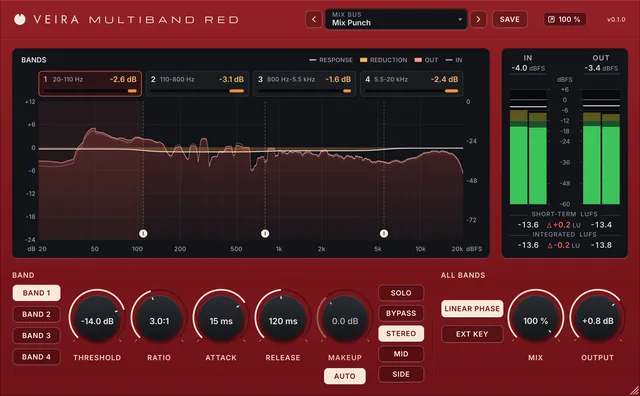 Red: punch, grit and low endThree jobs the Red family does for a mix: a low end that carries on small speakers, punch held band by band, and grit from four analog circuits, and how to use them together.Read the article →
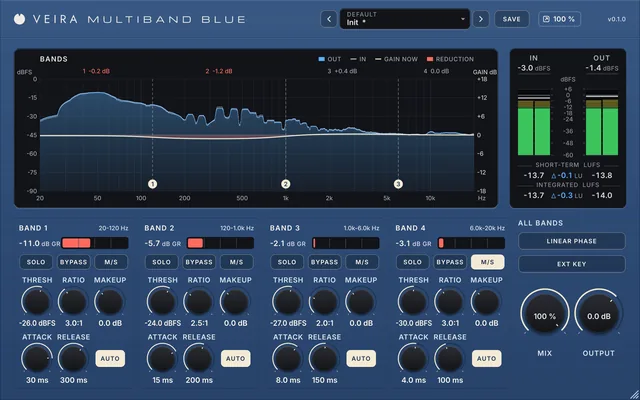 Blue: console glue, iron and rack gritThree things the classic British console and the early digital rack did to a mix, and how the Blue family does them: a low end that carries on small speakers, glue band by band, and drive from a channel, its iron and a converter.Read the article →
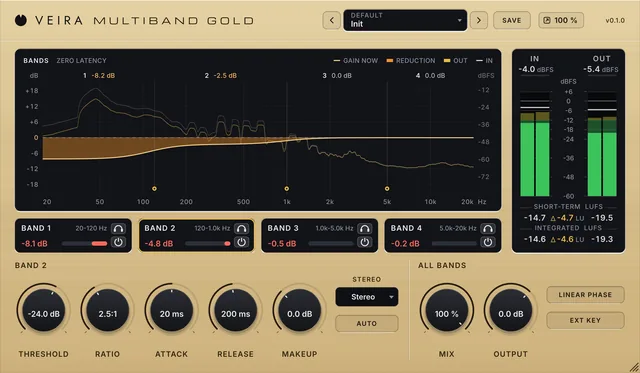 Gold: valve warmth for the low end, the bands and the driveThree things warm valve and tape gear did to a mix, and how the Gold family does them: a low end that carries on small speakers, compression that lets go smoothly band by band, and drive from a valve preamp, tape and a tube that glows.Read the article →
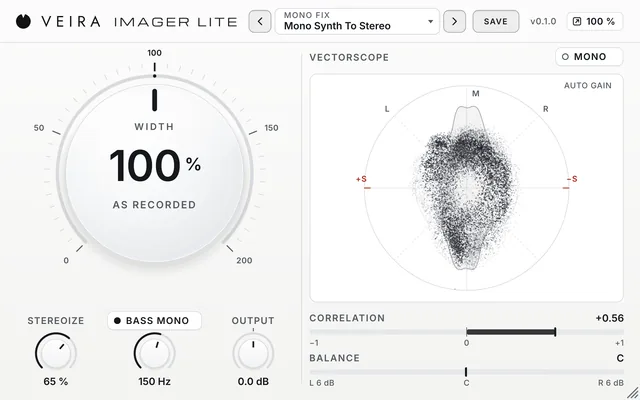 Stereo width with one knob: wider, not louderHow to set stereo width with VEIRA Imager Lite: widen at the same loudness, make a mono part stereo without changing it in mono, keep the low end in the centre, and check the result in mono.Read the article →
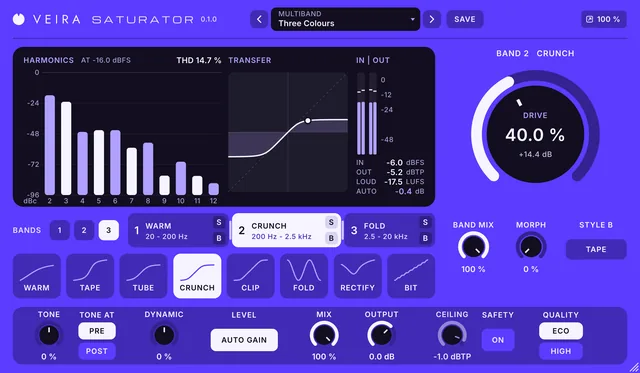 Eight ways to saturate: choose the style, split the bands, keep the levelHow to use saturation with VEIRA Saturator: what a curve adds, which of eight styles suits the job, how to judge it at the same level, when to split it into bands, and how to blend and move it with the music.Read the article →
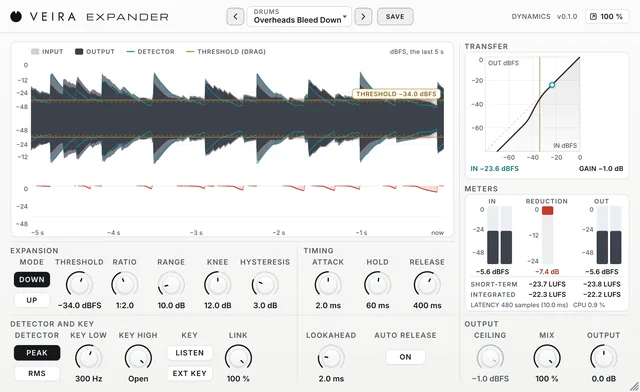 Quieter between the notes: how to use an expanderHow to use an expander with VEIRA Expander: what downward expansion does, how to set the threshold by eye, when to go gentle and when to gate, how to stop chatter, and upward expansion for punch.Read the article →
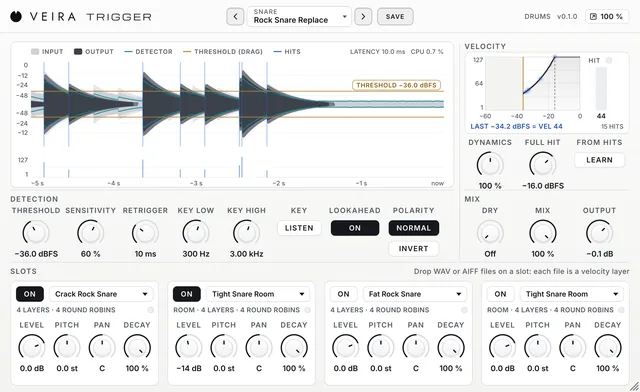 Triggering drums without losing the drummerHow to trigger recorded drums with VEIRA Trigger: finding the hits and not the bleed, keeping the sample in phase, following the drummer’s dynamics, blending or replacing, and what a trigger can’t do.Read the article →
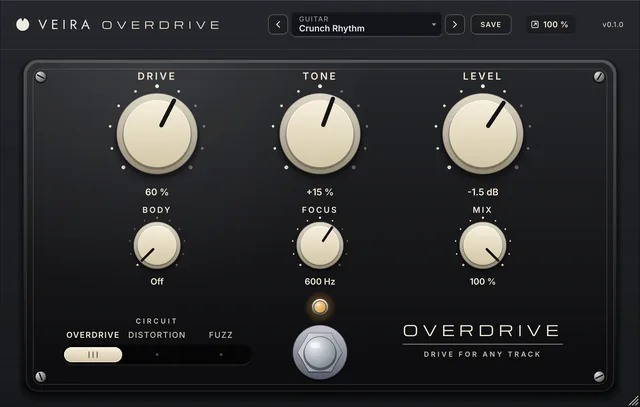 Drive on every track: drums, bass, vocals, keys and the mix busHow to use a drive pedal beyond the guitar with VEIRA Overdrive: which circuit to choose, how to keep the low end clean, where to start the drive, and settings for drums, bass, vocals, keys and the mix bus.Read the article →
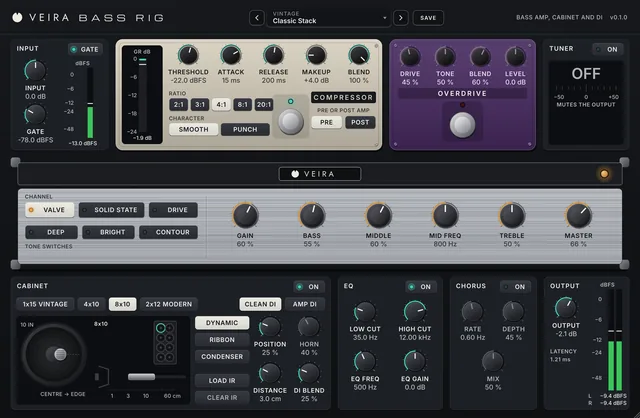 Recording bass: the DI, the amp and the compressorHow a recorded bass sound is built with VEIRA Bass Rig: compression that holds the low end without distorting it, an amp channel, a miked cabinet, and a DI blended in phase so the low end adds up.Read the article →
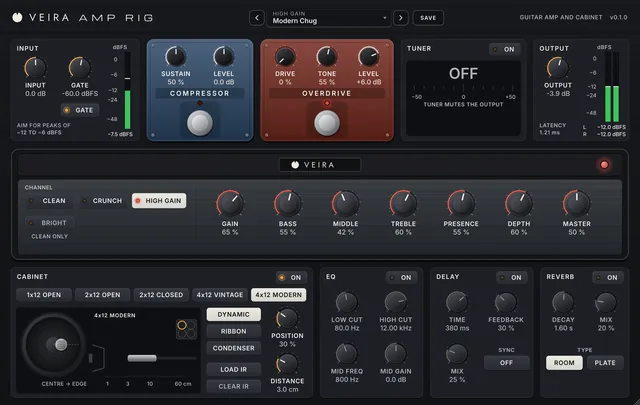 Building a guitar amp sound: pedals, channel, cabinet and microphoneHow a miked guitar amp sound is built, in signal order, with VEIRA Amp Rig: the input level, a pedal in front, the amp’s channel and tone stack, the cabinet and where the microphone goes, and the effects after it.Read the article →
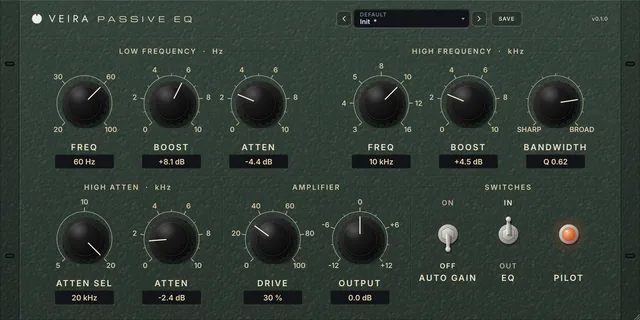 The low-end trick, done right: why BOOST sits above ATTENThe passive program EQs of the 1950s let you boost and cut the same low frequency at once. Here is why the two don’t cancel, why equal settings nearly do, and how to set the trick by ear.Read the article →
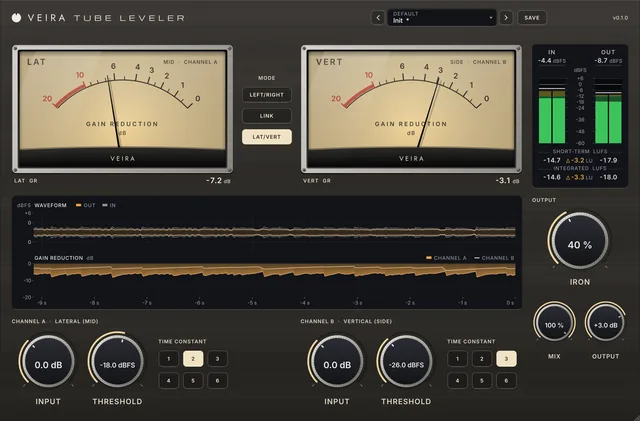 Twin-channel tube limiting: linked, split, or mid and sideHow a twin-channel vari-mu tube limiter holds a mix bus, a master or a pair of guitars: what the two channels are for, when to link them, when to split them, and why lateral and vertical is the secret of the classic units.Read the article →
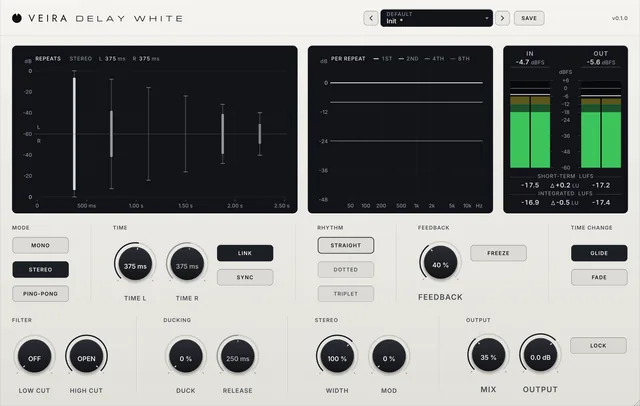 Four colours of delay: clean, analog, tape and vintage digitalWhy one delay isn’t enough: when to reach for a clean modern digital delay, an analog bucket brigade, a multi-head tape echo or an early-1980s rack digital delay, and what each does to the repeats that the others don’t.Read the article →
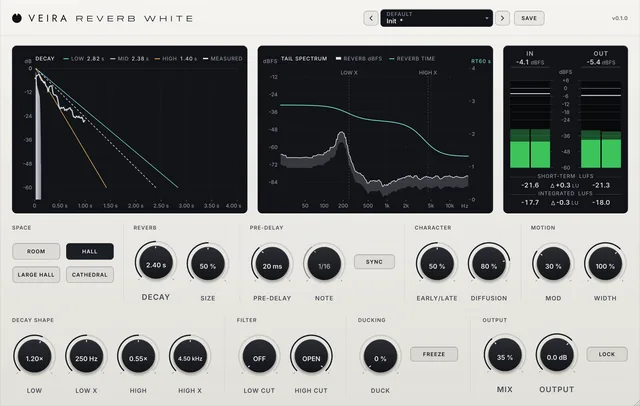 Four colours of reverb: pristine, plate, chamber and vintage digitalWhy one reverb isn’t enough: when to reach for a modern algorithmic hall, a studio steel plate, an echo chamber or an early-1980s digital rack reverb, and what each does to a sound that the others don’t.Read the article →
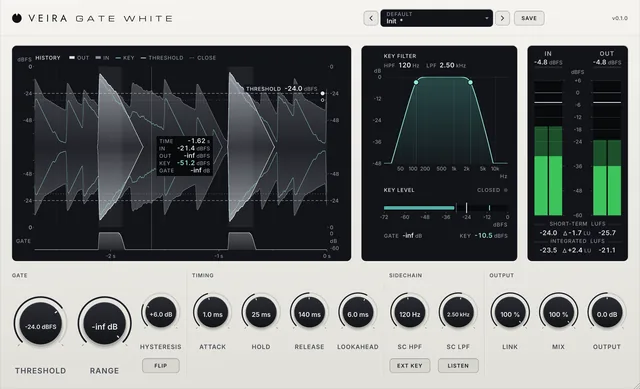 Four colours of gate: clean, punchy, smooth and vintageWhy one gate isn’t enough: when to reach for a precise modern gate, a drum gate with a band-pass key, a smooth downward expander or a vintage console channel gate, and what each does to the sound that the others don’t.Read the article →
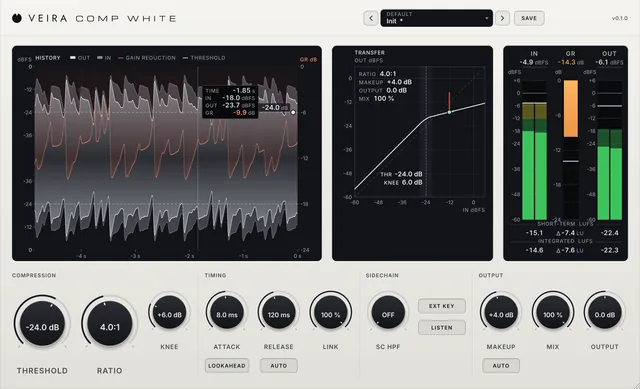 Four colours of compressor: clean, punchy, warm and vintageWhy studios keep more than one compressor: when to reach for a clean modern compressor, a fast FET, a tube optical leveller or a vari-mu, and what each does to the sound that the others don’t.Read the article →
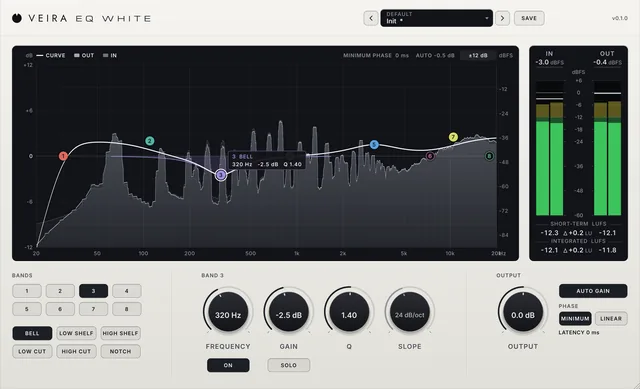 Four colours of EQ: clean, mid/side, warm and vintageWhy one equalizer is never enough: when to reach for a clean surgical EQ, a mid/side EQ, a warm passive tube program EQ or a vintage console EQ, and what each does that the others don’t.Read the article →
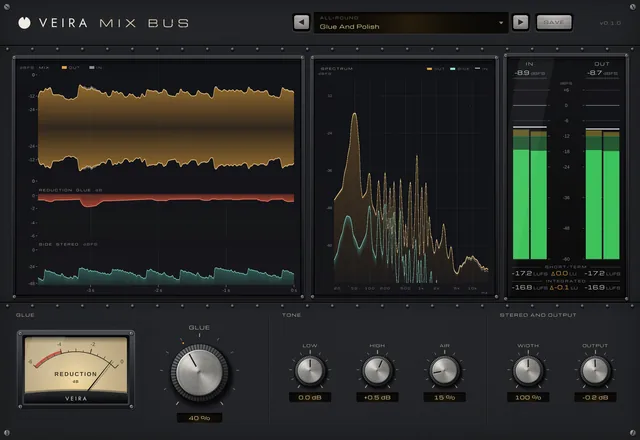 Mix bus compression: glue without squashing the mixWhat “glue” really is, gentle settings for the mix bus, when to put it on, how to compare it fairly, and why the loudness belongs to mastering.Read the article →
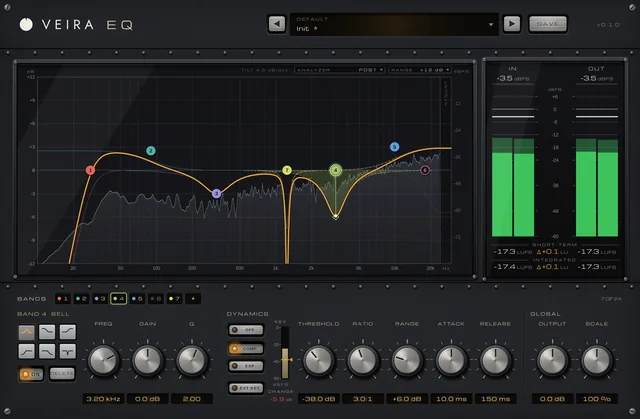 Dynamic EQ: taming a resonance that only shows up sometimesHow to find a resonance or harshness that comes and goes, why a static cut is the wrong fix, and how to set a dynamic EQ band’s threshold, range and timing.Read the article →
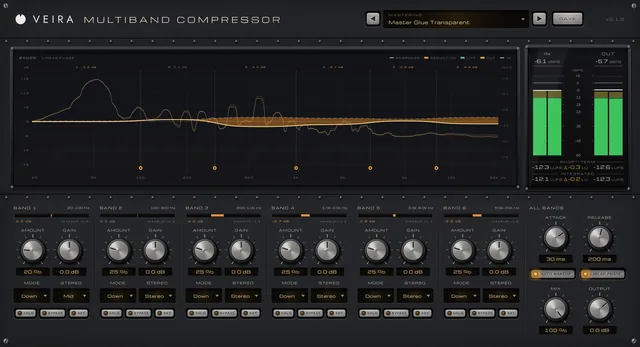 Multiband compression: controlling one part of the spectrum at a timeWhen a multiband compressor is the right tool, where to put the crossovers, how much to compress each band, and how to keep the result from sounding thin or uneven.Read the article →
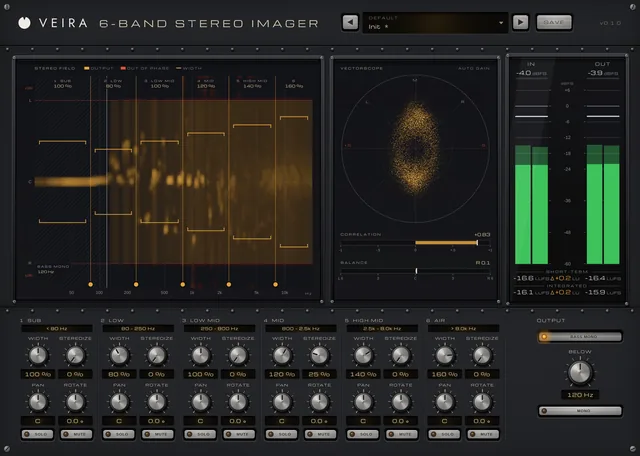 Making a mix wider that still holds up in monoHow stereo width works in mid and side terms, why the low end belongs in the center, how to widen band by band, and how to check every move in mono.Read the article →
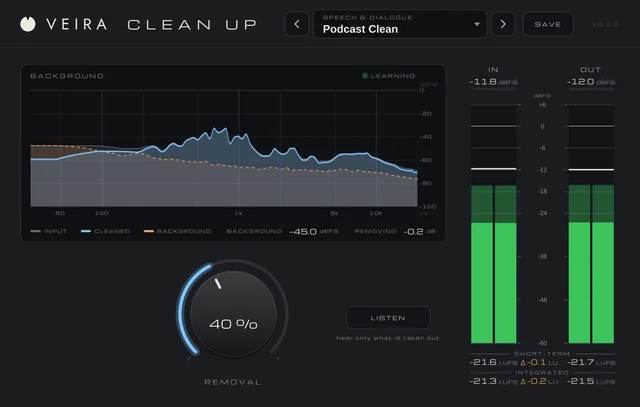 Cleaning up a noisy recording: hum, hiss, fans and room toneHow to tell the kinds of background noise apart, what gates and EQ can and can’t do about them, and how to remove noise without leaving artifacts or dulling the voice.Read the article →
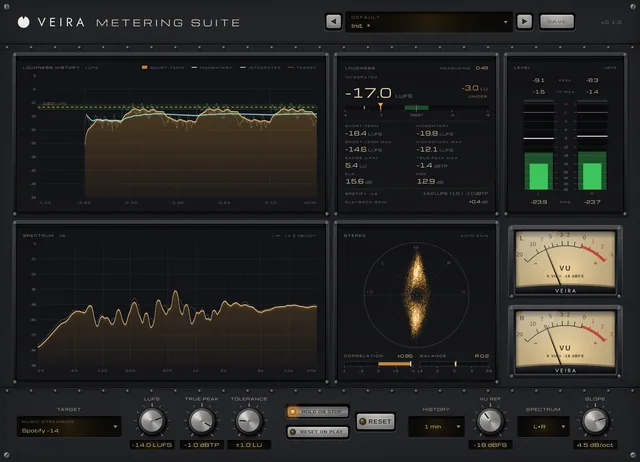 Is the mix ready? Loudness, true peak and phase for where it’s goingWhat integrated loudness, true peak, PLR and correlation tell you, the common references for streaming and broadcast, and how to read them before you deliver.Read the article →