Four colours of delay: clean, analog, tape and vintage digital
Why one delay isn’t enough: when to reach for a clean modern digital delay, an analog bucket brigade, a multi-head tape echo or an early-1980s rack digital delay, and what each does to the repeats that the others don’t.
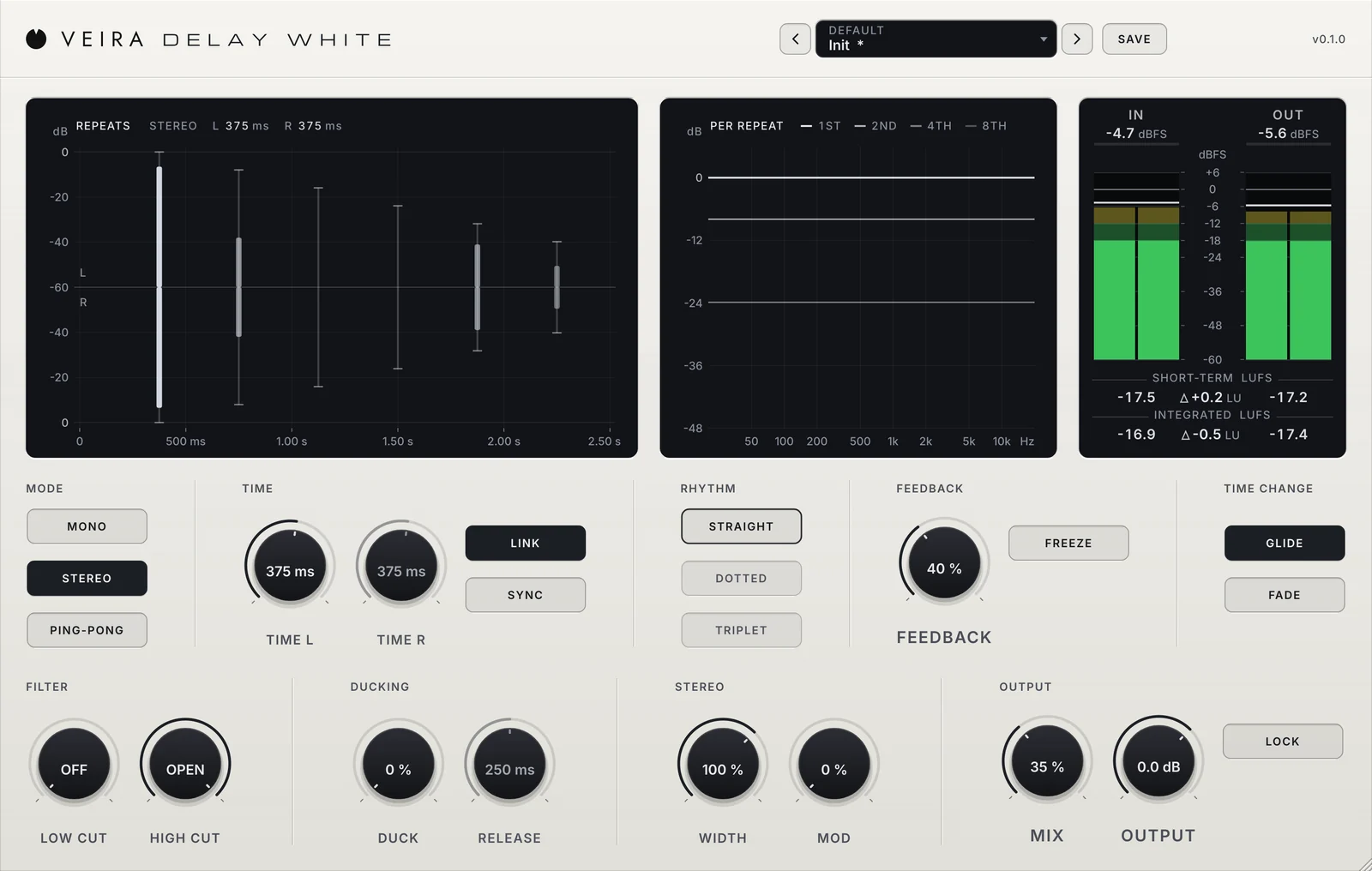
Every delay plays back what you played a moment later, so why would you want more than one? Because the repeats themselves are the sound. A modern digital delay gives back exactly what went in; an analog bucket brigade softens and darkens every echo and makes it waver; a tape echo records each repeat again, saturating it, bending it and playing it from several heads at once; and the digital racks of the early 1980s made bright but bounded, slightly grainy repeats, with the chorus and flanging of a whole decade. The kind of delay shapes the part as much as its time does.
Clean: the modern digital delay
A modern digital delay is a perfect memory: each repeat is the sound itself, on the exact sample, quieter by the feedback and nothing else. That precision is what you want when the echoes are part of the arrangement: a dotted eighth that fills in the sixteenths of a guitar part, a pop vocal’s quarter-note throw bouncing between the speakers, two slightly different times left and right that make a part wide. Filters in the loop let each repeat get a little thinner and darker, and ducking keeps the echoes out of the words, so even long trails stay clear.
Analog: the bucket brigade
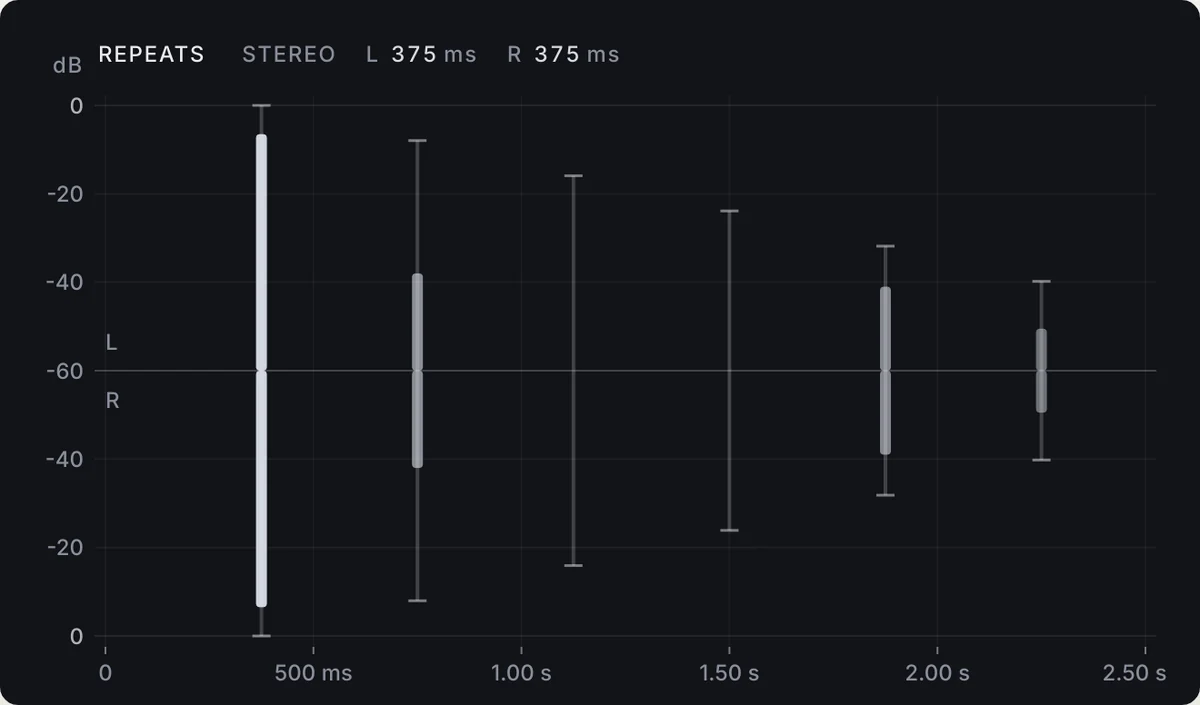
Before digital memory was cheap, an analog delay passed the sound down a chain of thousands of tiny capacitors at the tick of a clock. A longer delay needs a slower clock, and a slower clock carries less treble, so the long echoes of an analog delay are darker and grainier than the short ones; a compander around the chips makes them breathe, and a little wobble on the clock gives the classic chorused repeats. Turn the time and everything in the chips bends in pitch. The result melts behind a guitar solo or a vocal instead of standing next to it.
Tape: three heads and a spring
The tape echoes of the 1970s used a short loop of tape running past a record head and several playback heads. The distance from the record head is the echo time, so three heads give three echoes at once, at one, two and three times the first, and choosing which heads play chooses a rhythm. Every repeat is recorded onto the tape again, so it picks up a little more saturation and loses a little more top on each pass; the motor and the capstan make the pitch sway and shimmer; and pushed far enough the loop runs away into the tape and sings. Many of these machines had a spring reverb in the same box.

Vintage digital: the early-1980s rack
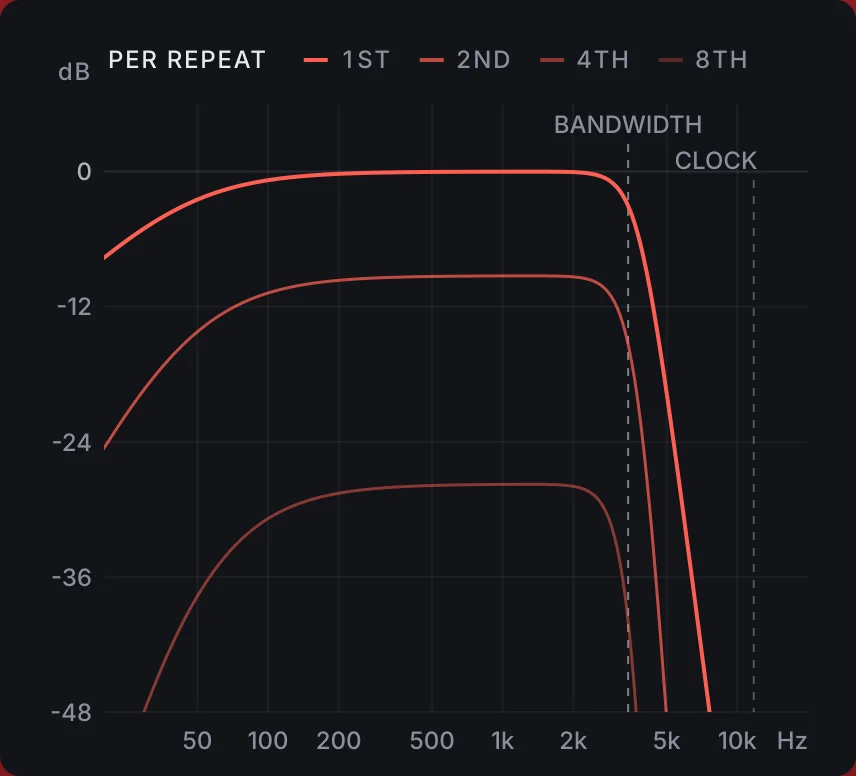
The first studio digital delays made long, clean echoes possible, but memory and converters were expensive: a narrow band behind steep filters and 10 to 16 bits that switched range with the signal. Their repeats are bright up to a sharp edge and have nothing above it, with a fine grain, and because their feedback ran through the converters again, each repeat is a little darker and coarser than the last. Sweeping the delay time turned the same box into the decade’s chorus and its jet-plane flanger, and a hold button looped the memory for ever.

Set the time to the song
Whatever the delay, a time set to the song’s tempo makes the echoes part of the groove instead of clutter. A dotted eighth fills in the sixteenths between straight eighths; a quarter or half note sits behind a part as a pulse; triplets against straight playing give a lilting three-against-two. Under about 30 ms you hear no echo at all, only a thicker or wider sound, and from 60 to 150 ms a slap.
Less low end, and a send
Two habits fix most delay problems. Take the lows out of the echoes, 150 to 300 Hz on vocals and guitars, so they add space without mud, and darken them a little so they sit behind the dry sound. And put the delay on an aux at 100 % wet: you can then throw single words or snare hits into it by automating only the send, and the echoes ring on naturally after the send closes.
Doing it with the VEIRA colour delays
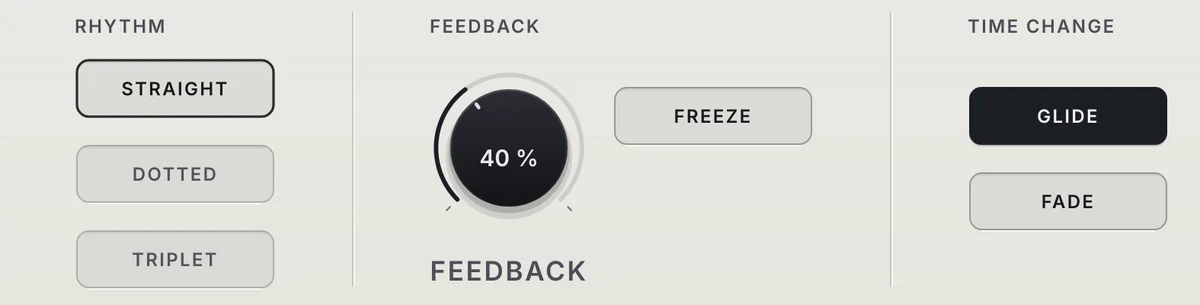
VEIRA Delay White is the clean one: exact repeats in mono, stereo or ping-pong, two times or synced notes, FEEDBACK to 110 %, filters in the loop, DUCK, FREEZE and GLIDE or FADE. VEIRA Delay Red is the analog bucket brigade, with TIME as the chips’ clock, chorused MOD with SPREAD, AGE, COMPANDER and NOISE. VEIRA Delay Gold is the multi-head tape echo, with 15 HEAD modes, REPEAT RATE as the tape’s speed, SATURATION, TAPE AGE, WOW, FLUTTER and a spring tank. VEIRA Delay Blue is the early-1980s rack digital delay, with ERA’s converters, GRIT, chorus and flanging, HOLD and the PITCH bend. All four sync to the tempo, have a MIX LOCK for aux returns and add no latency.