Blue: console glue, iron and rack grit
Three things the classic British console and the early digital rack did to a mix, and how the Blue family does them: a low end that carries on small speakers, glue band by band, and drive from a channel, its iron and a converter.
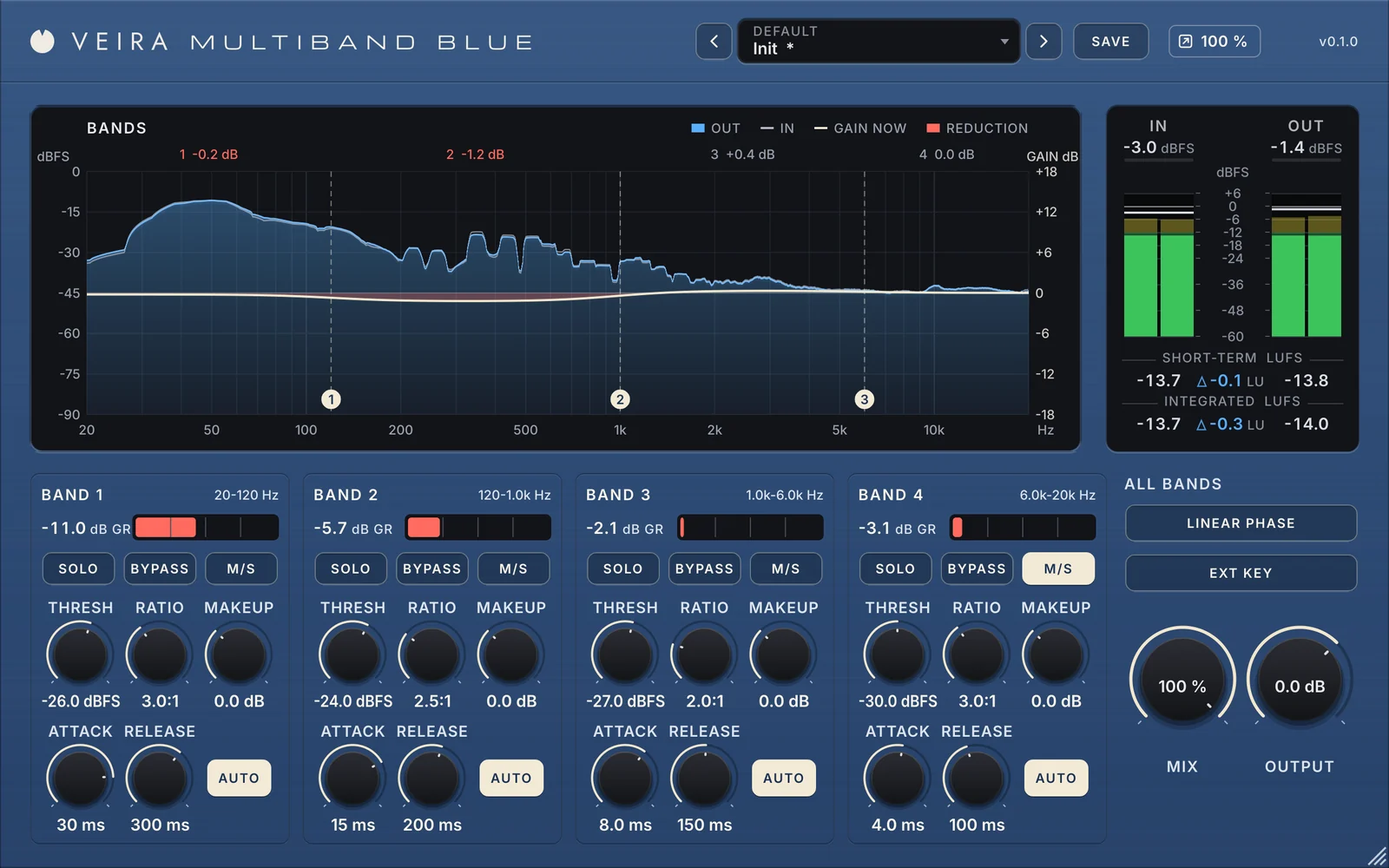
Many of the records we still reach for were mixed on a large British console of the 1970s and finished through the first digital rack units of the early 1980s. Some of their sound came from those machines themselves: a bus compressor that held the mix together, output transformers whose iron thickened the low end when it was pushed, and converters that clipped hard and left a fine grain when they ran out of bits. The Blue family brings three of those jobs into your session, each one measured and each one with its controls in plain view.
Iron that makes the bass carry
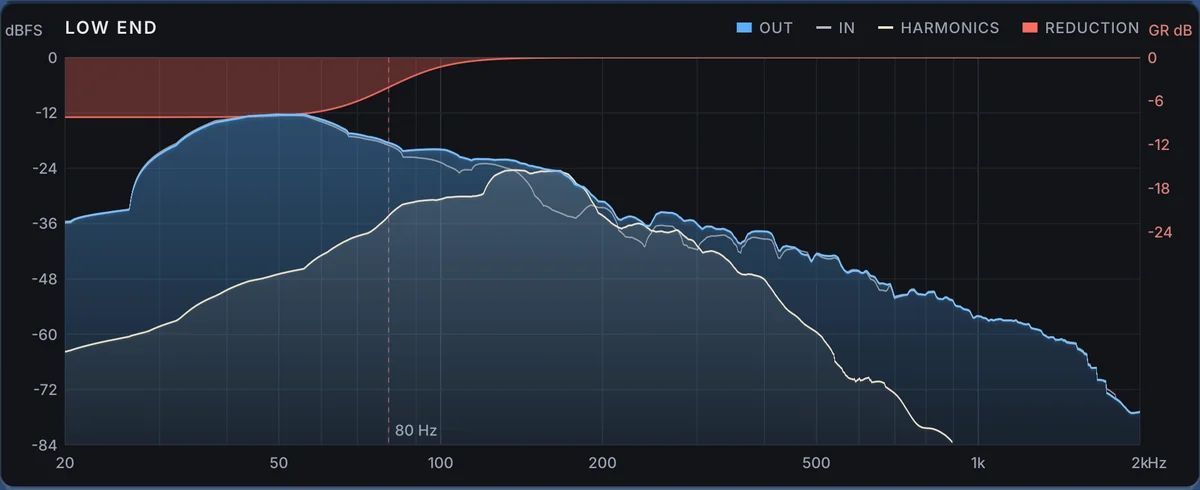
Phones, laptops and earbuds play little or nothing of a bass note’s fundamental, the 40 to 100 Hz you would name the note by, so on them a bass line can vanish. The ear has a useful habit, though: from a row of harmonics at two, three and four times the note, it hears the note’s pitch even when the note itself is missing. A transformer driven by a loud bass makes exactly those harmonics, more on low notes than on high ones, because its iron saturates as the frequency falls. A bass enhancer makes them on purpose. Two things keep it clean: add only the harmonics, never a shifted copy of the note, which would thin some notes and thicken others; and even out the lowest notes first, so the harmonics don’t bounce with an uneven low end.
Glue, band by band
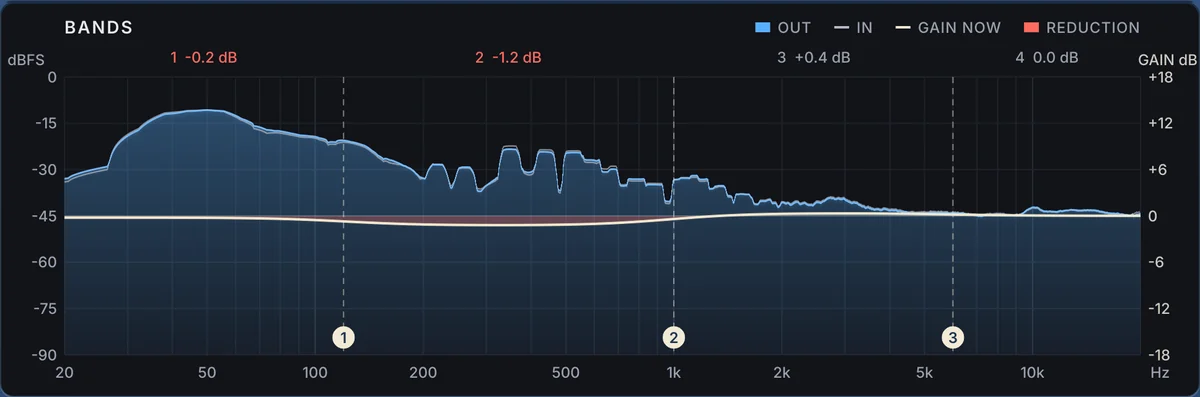
The bus compressor of those consoles was a feed-forward VCA: it measured the level, worked out a few dB of reduction and turned the whole mix down smoothly, so the parts moved together and sounded like one record. Its weakness is that one loud part moves everything: a big kick pulls the vocal and the cymbals down with it. A multiband compressor splits the sound into bands first and gives each its own compressor. With the same gentle settings in every band, a couple of dB at 2:1, it glues a mix without the low end pumping the top; with a firmer setting in one band it holds just the boom, just the harshness or just the esses. Makeup that gives back each band’s average reduction keeps the balance of the mix where you left it.
A channel, its iron and a converter
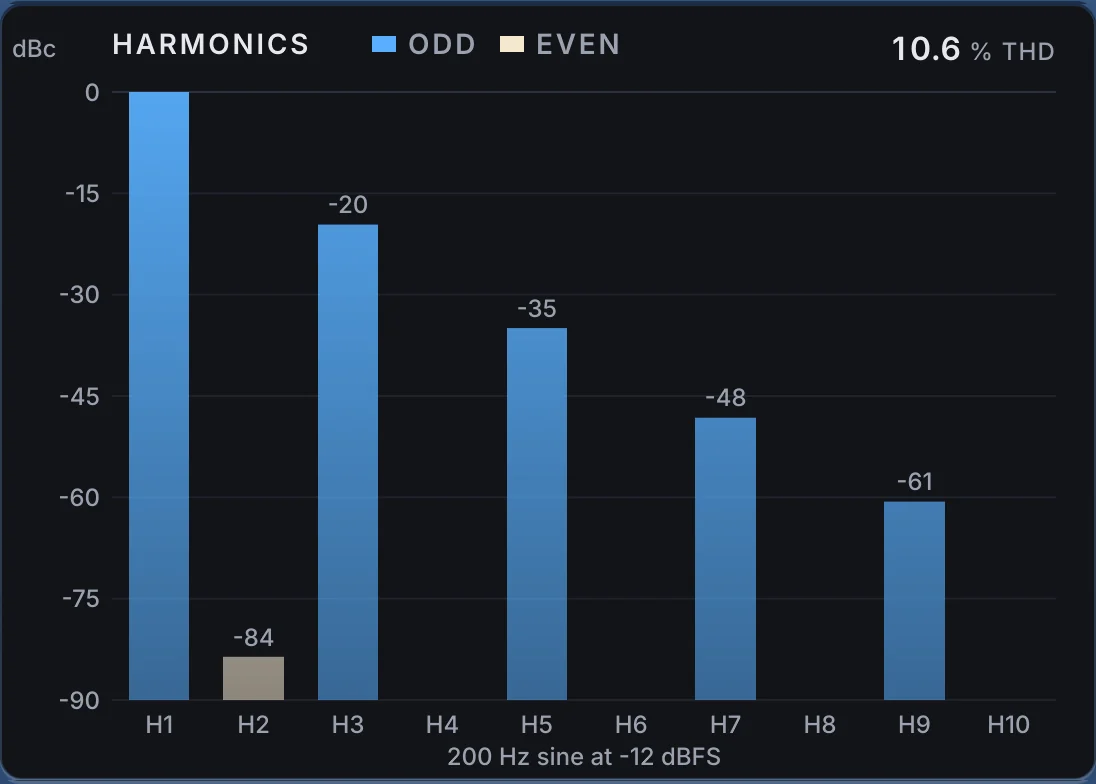
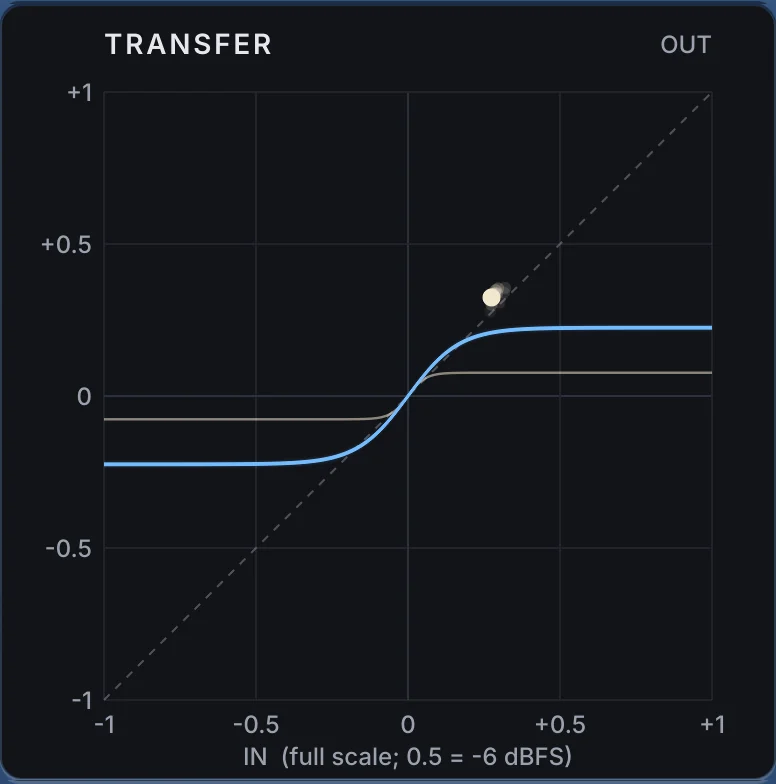
Pushing a console channel too hard was never a mistake to everyone. Its mic amp and line driver round the top of the wave softly at first and firmly when pushed, and a slightly lopsided operating point adds a 2nd harmonic, which reads as warmth. The transformer after it saturates differently: its core runs out of room on the low notes first, so the bass gets thick and dense while the mids barely change. And an early-1980s digital rack, driven past full scale, does something else again: a hard clip at the converter, and a grain of few bits that stays even on quiet passages, bright and gritty. Judge any of them at equal loudness, because louder always sounds better for a moment, and choose which band is driven: a bass driven only above its sub keeps its weight and gains a growl.
Using them together
On a bass, a natural order is colour first and low end after: a console channel for warmth or the iron for weight, then the bass enhancer to even out the lowest notes and add the harmonics that carry them, then the multiband if a range still jumps out. On a drum bus, the multiband glues the kit band by band and a saturator blended in parallel under it adds density. On a mix bus or a master, keep each one gentle: a couple of dB per band, a little console drive, and harmonics you can hear on earbuds but hardly on big speakers. Compare each step with bypass at the same loudness.
Doing it with the Blue family
VEIRA Bass Enhancer Blue is the console bass enhancer: a compressor that works on 80 Hz and below only, with the lows’ level in its THRESHOLD fader and a console VCA’s smooth timing, and one big ENHANCE knob that adds a transformer’s harmonics, each at its natural place against the note. VEIRA Multiband Blue is the console-bus multiband: a VCA in each of four bands with AUTO makeup, crossovers you drag, zero latency or LINEAR PHASE, M/S per band and an external key. VEIRA Saturator Blue is the console and rack saturator: CHANNEL, IRON and RACK, a TONE that moves the distortion, a driven band, AUTO GAIN for fair comparisons and a parallel MIX in time. All three are painted 1970s steel blue, like the rest of VEIRA’s Blue family.