Red: punch, grit and low end
Three jobs the Red family does for a mix: a low end that carries on small speakers, punch held band by band, and grit from four analog circuits, and how to use them together.
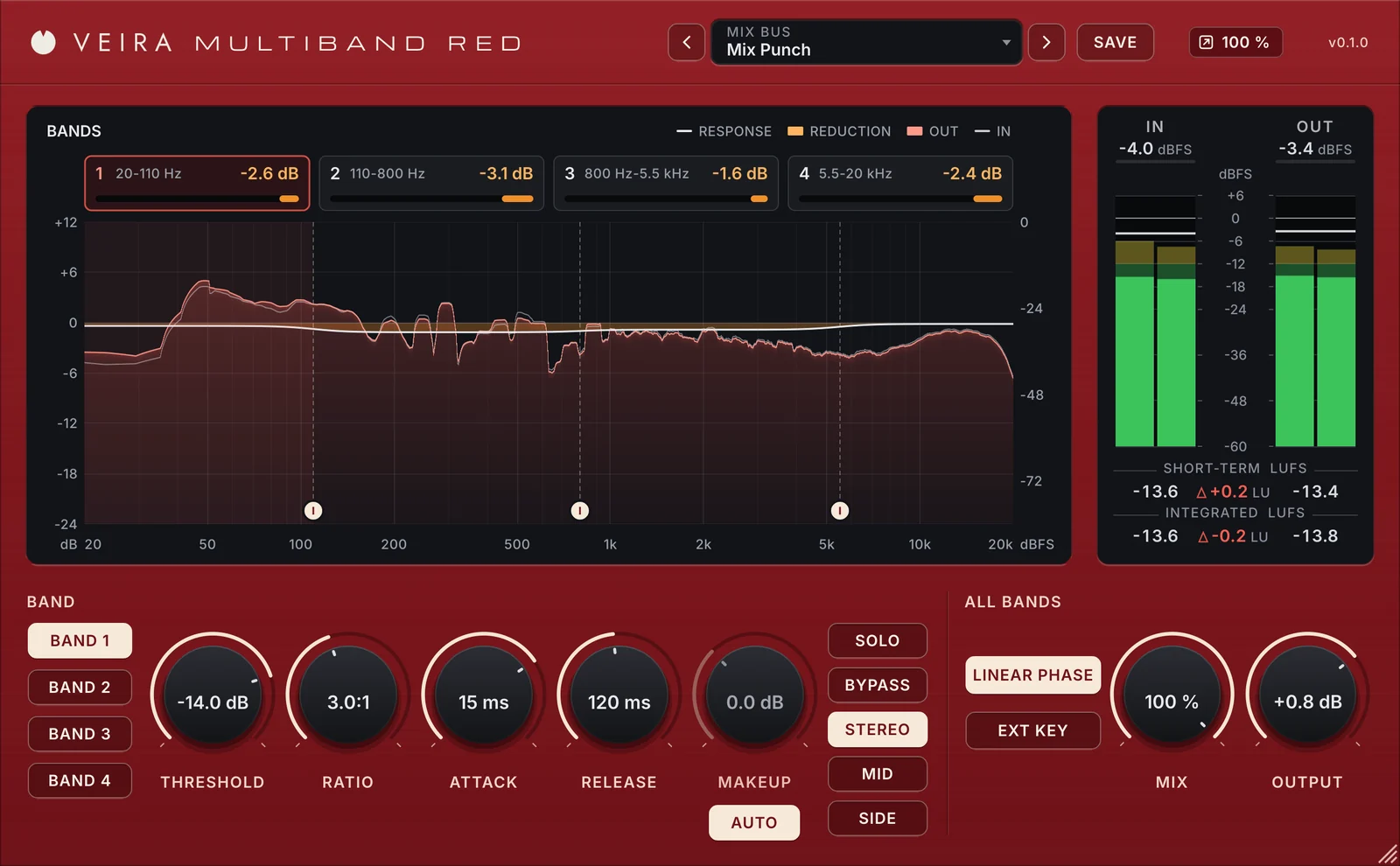
Some mixes need to be polite. Others need to hit: a bass line you feel on a phone, drums that jump out of the speakers, a guitar or a vocal with some dirt on it. That kind of mix asks for three jobs most of all. The low end has to carry on every system, the punch has to be controlled without being flattened, and some sounds need grit. The Red family is built for exactly those three, each one fast and a little bold.
A low end that carries
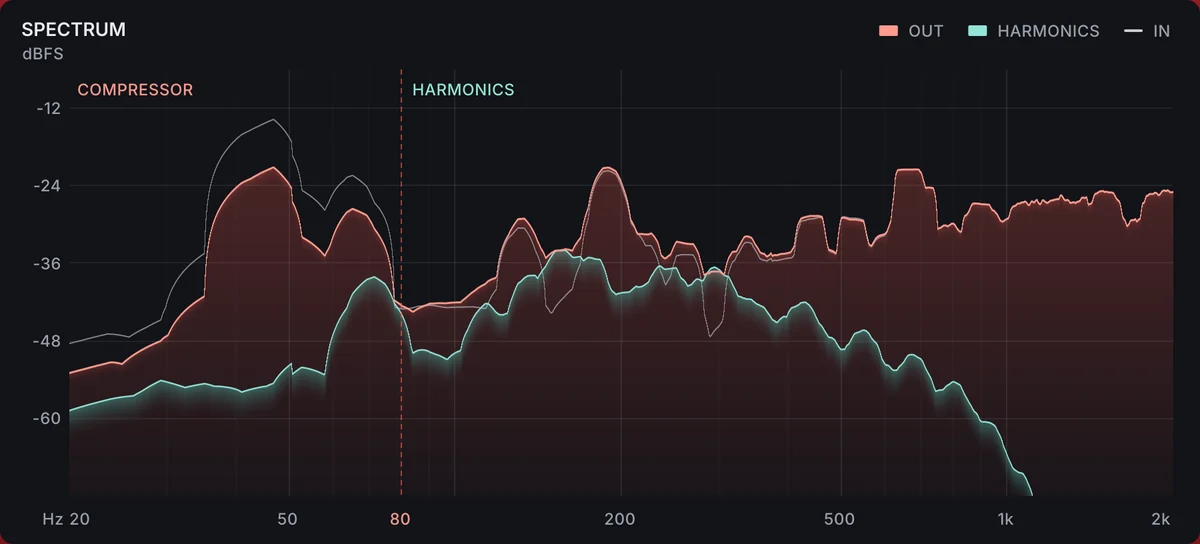
Phones, laptops and earbuds play little or nothing below about 150 Hz, yet a bass note’s fundamental sits at 40 to 100 Hz and an 808 lower still. On those speakers the bass line simply goes missing. The ear has a useful habit, though: from a row of harmonics at two, three and four times the note, it hears the note’s pitch even when the note itself isn’t there. A bass enhancer makes more of those harmonics. The trick is to add only harmonics: a plain distortion mixed in also adds a shifted copy of the note, which can thin the bass on one note and thicken it on the next. Holding the deepest notes at one level first helps too, so the harmonics don’t bounce with an uneven low end.
Punch, band by band
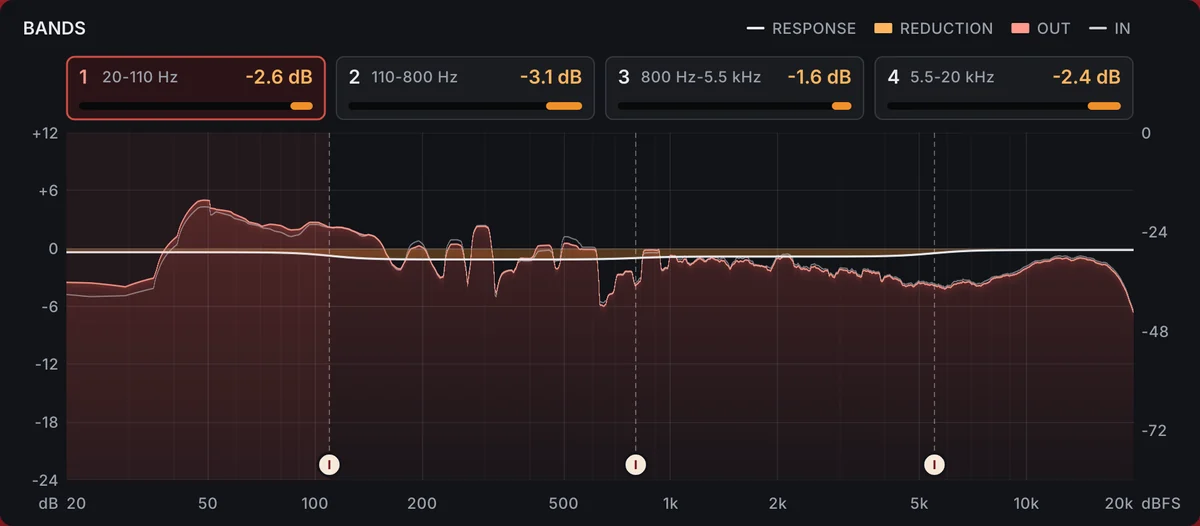
A single compressor on a drum bus or a mix pulls everything down when the kick hits: the vocal dips, the cymbals duck. A multiband compressor splits the sound into bands and compresses each on its own, so the kick can be held in the low band while the rest doesn’t move, and harsh upper mids can be tamed only when they flare up. Fast, FET-style bands bring the punch: a quick attack catches the hit, and a release that springs back after a hit but lets go gently after a long squash keeps heavy settings from pumping. On a loud mix bus, linear-phase crossovers keep the peaks where they were; on drums you play through, zero latency matters more.
Grit you can choose
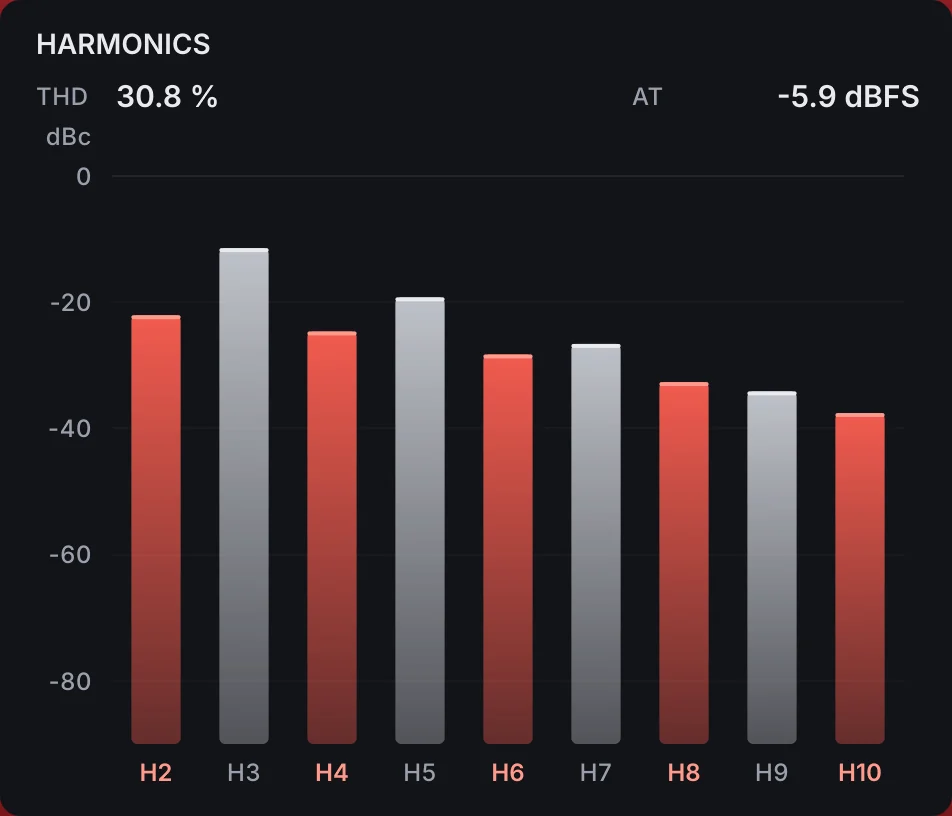
Saturation bends the signal through a curve that runs out of room near the top, and the flattened wave holds harmonics: that is the warmth, thickness or edge you hear. Different circuits flatten it differently. An overdrive pedal rounds it softly and drives the mids, leaving the lows tight. A single transistor stage is lopsided and leads with the second harmonic, warm and full. Diode clipping is hard and symmetric, odd harmonics only, edgy. A two-transistor fuzz squares the wave off and buzzes. Two habits keep saturation useful in a mix: judge it at equal loudness, because louder always sounds better for a moment, and blend it in parallel, so the grit sits under the clean sound instead of replacing it.
Using them together
On a bass, a natural order is grit first and low end after: a little transistor saturation for warmth or an overdrive for growl, then the bass enhancer to hold the lowest notes and add the harmonics that carry them, then the multiband if a range still jumps out. On a drum bus, the multiband holds the kick and the room, and a parallel saturator under it adds density. On a mix bus, keep each one gentle: a few dB per band, a touch of saturation at low drive, and a bass enhancer whose harmonics you can hear on earbuds but not on big speakers.
Doing it with the Red family
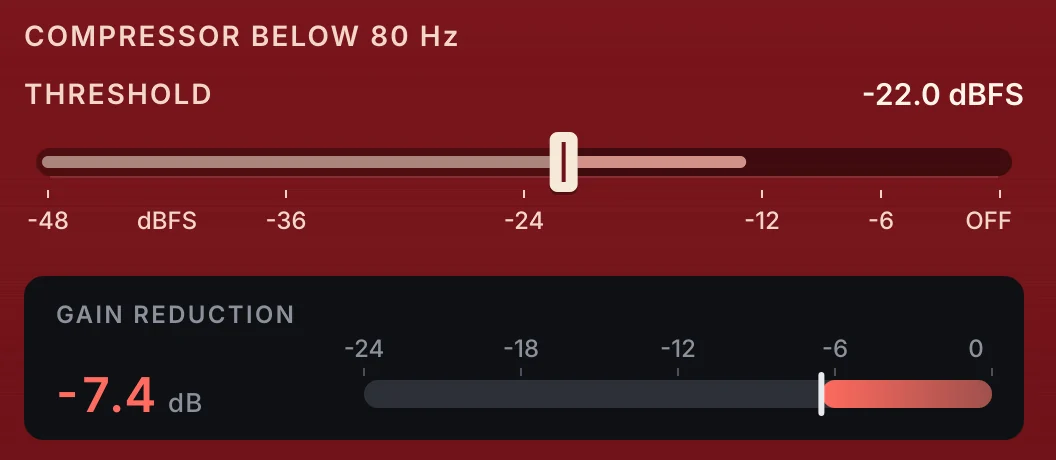
VEIRA Bass Enhancer Red is the gritty bass enhancer: a compressor that works on 80 Hz and below only, with the lows’ level in its THRESHOLD fader, and one big ENHANCE knob that adds a transistor stage’s harmonics, each in its place against the note. VEIRA Multiband Red is the punchy multiband: four fast FET-style bands, crossovers you drag, zero latency or LINEAR PHASE, mid/side per band and an external key. VEIRA Saturator Red is the bold saturator: OVERDRIVE, TRANSISTOR, DIODE and FUZZ, a TONE that tilts what goes into the drive, AUTO GAIN for fair comparisons and a parallel MIX in time. All three are painted deep lacquered red, like the rest of VEIRA’s Red family.