Gold: valve warmth for the low end, the bands and the drive
Three things warm valve and tape gear did to a mix, and how the Gold family does them: a low end that carries on small speakers, compression that lets go smoothly band by band, and drive from a valve preamp, tape and a tube that glows.
Some of the warmth we hear on older records came from the gear itself. Valve stages added harmonics, the even ones first, more on the loud attack of a note than on its tail. Optical compressors held a mix with a light and a cell that let go slowly after a long, loud passage, so nothing pumped. And tape rounded the peaks and softened the top as it was pushed. The Gold family brings three of those jobs into your session, each one measured and each one with its controls in plain view.
Valve harmonics that make the bass carry
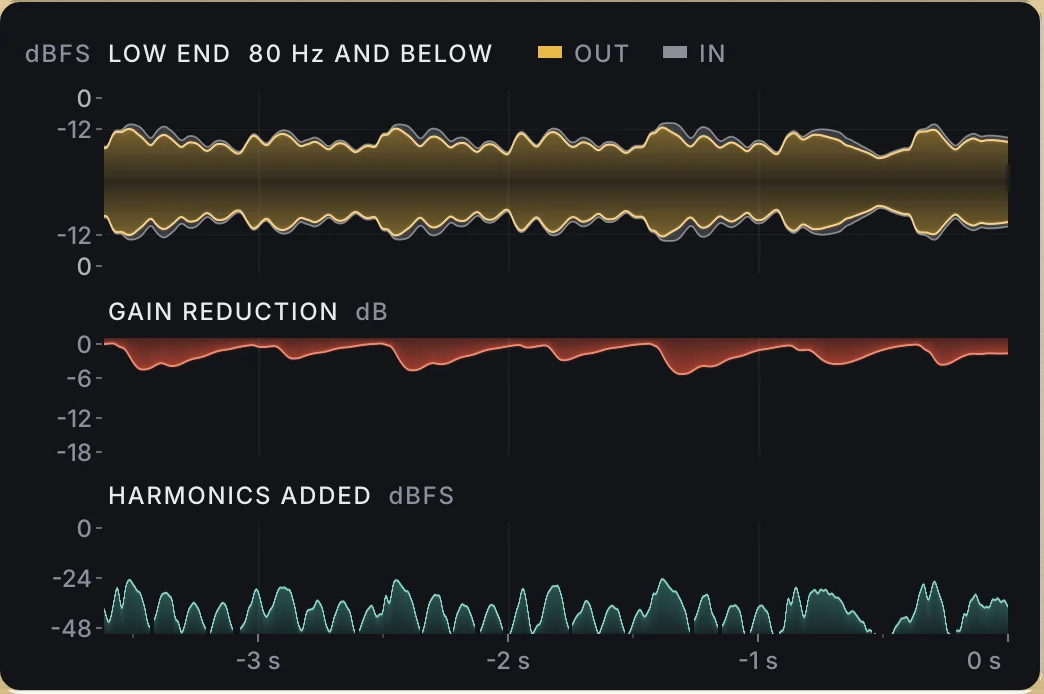
Phones, laptops and earbuds play little or nothing of a bass note’s fundamental, the 40 to 100 Hz you would name the note by, so on them a bass line can vanish. The ear has a useful habit, though: from a row of harmonics at two, three and four times the note, it hears the note’s pitch even when the note itself is missing. A valve stage driven by a bass makes those harmonics, the 2nd and 4th leading. A bass enhancer makes them on purpose, and two things keep it clean: add only the harmonics, never a shifted copy of the note, which would thin some notes and thicken others; and hold the lowest notes steady first, so the harmonics don’t jump from note to note. VEIRA Bass Enhancer Gold does both: a compressor on 80 Hz and below only, at 4:1 with a wide knee and an optical cell’s two-stage release, then the 2nd to 5th harmonics, locked in phase to each note and turned so the note’s peak rises as little as possible.
Compression that lets go smoothly, band by band
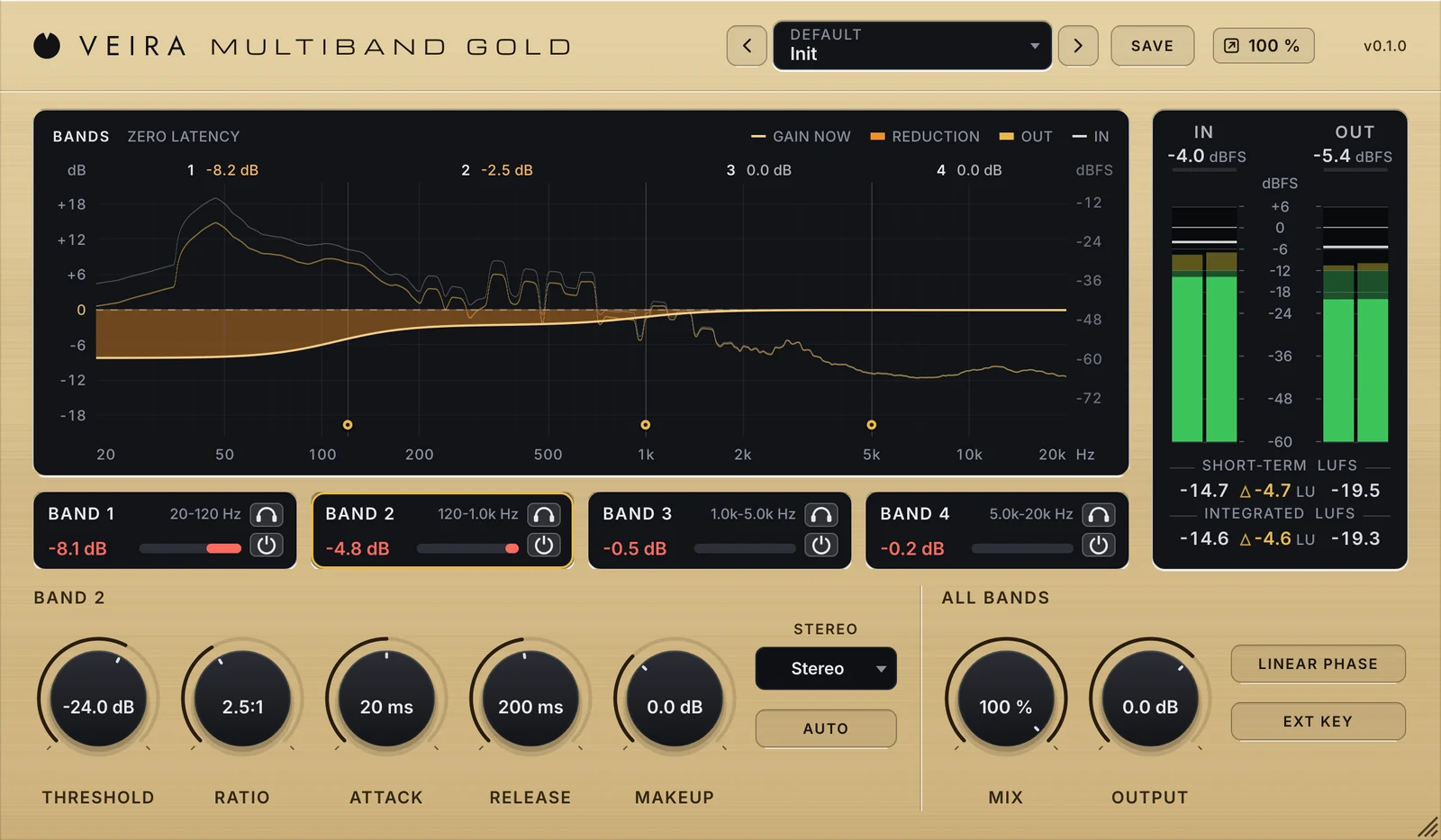
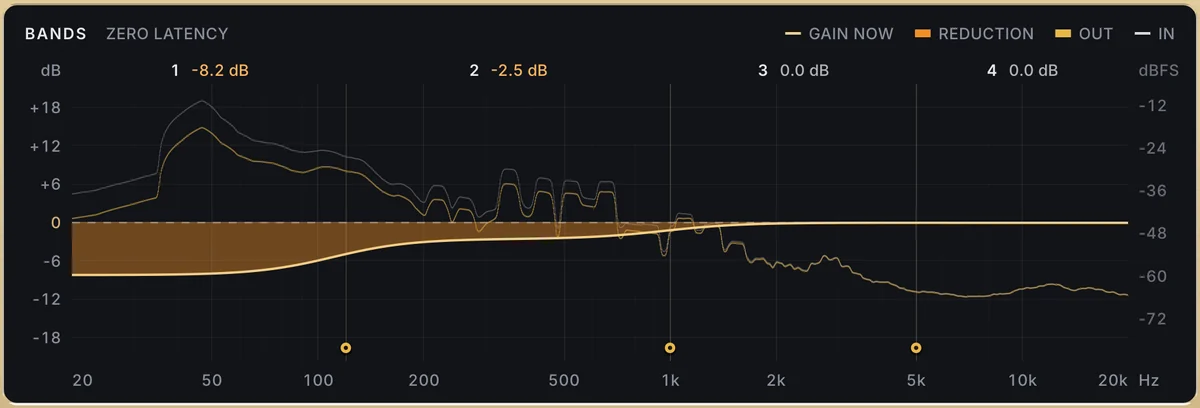
An optical compressor reacts to the music with a light and a cell, and the cell has a memory: after a short peak it lets go quickly, after a long, heavy passage it lets go slowly. That is why it can hold a lot without pumping. A multiband compressor splits the sound into bands first and gives each its own compressor, so a loud kick doesn’t pull the vocal and the cymbals down with it. Put the two together and each band is held firmly while it needs it and comes back with a soft tail when it doesn’t. VEIRA Multiband Gold does that in four bands with crossovers you drag on the display, a wide 10 dB knee, AUTO makeup from each band’s own curve, mid or side per band, and LINEAR PHASE for the mix bus and the master.
A valve preamp, tape and a tube that glows
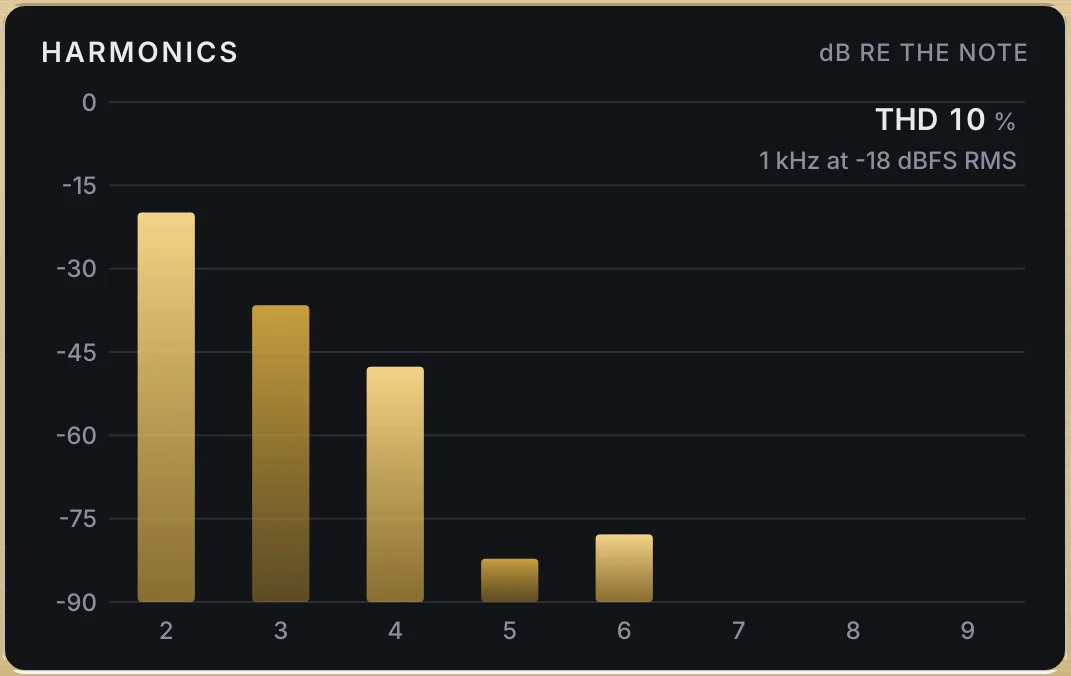
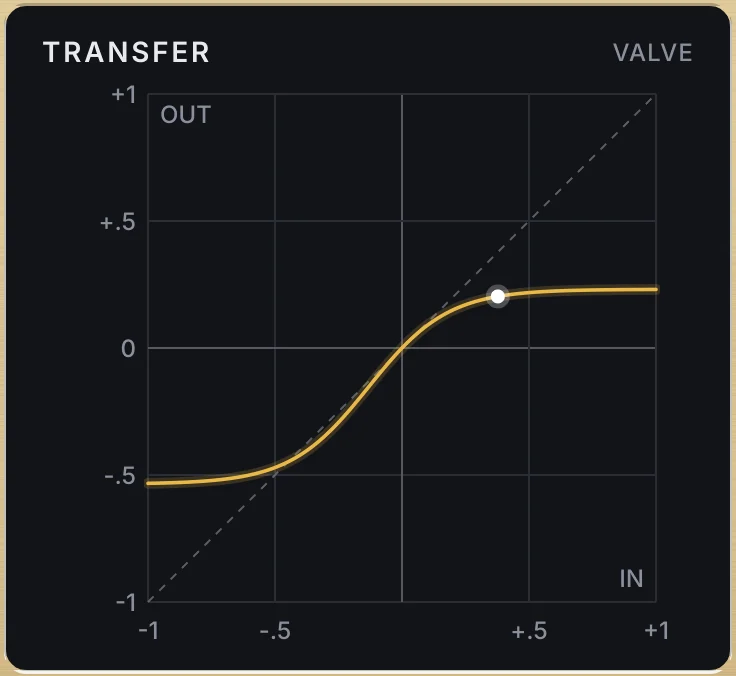
Saturation is a curve that runs out of room as the level rises, and its colour is the harmonics it makes. A triode preamp is lopsided, so it makes even harmonics first: warmth and fullness. Tape is symmetrical, so it makes odd ones, and it tucks the peaks in with a soft knee and softens the top: glue. And a triode whose bias follows the music stays nearly clean when you play softly and glows when you dig in. Two more things make saturation useful in a mix: keeping the level where it was, so you judge the colour rather than the loudness, and choosing which part of the sound is driven, so a bass can growl in its mids while its sub stays tight and clean. VEIRA Saturator Gold has all three characters, AUTO GAIN, a TONE that decides whether the highs or the lows are driven harder, and LOW CUT and HIGH CUT that let the rest pass clean around the drive.
Using them together
On a bass, a natural order is colour first and low end after: a little valve or tape for warmth, with LOW CUT keeping the sub clean, then the bass enhancer to hold the lowest notes and add the harmonics that carry them, then the multiband if a range still jumps out. On a drum bus, the multiband holds the kit band by band and a driven copy blended in parallel adds density. On a mix bus or a master, keep each one gentle: a dB or two per band in LINEAR PHASE, a touch of tape, and harmonics you can hear on earbuds but not notice on big speakers. Compare each one with bypass at equal loudness; every factory preset in the family is level-matched for exactly that.
Doing it with the Gold family
VEIRA Bass Enhancer Gold is the warm bass enhancer: a compressor on 80 Hz and below with an optical cell’s release, and one big ENHANCE knob that adds a valve’s even-led harmonics, locked in phase to each note. VEIRA Multiband Gold is the smooth multiband: an optical-style cell in each of four bands, crossovers you drag, mid or side per band, zero latency or LINEAR PHASE and an external key. VEIRA Saturator Gold is the warm saturator: VALVE PREAMP, TAPE and TUBE GLOW, a band you choose to drive while the rest passes clean, AUTO GAIN and a parallel MIX in time. All three are painted brushed champagne gold, like the rest of VEIRA’s Gold family.