Blog
Practical articles on mixing: what to listen for, where things go in the chain and how much to do, with the VEIRA plugin that does each job.
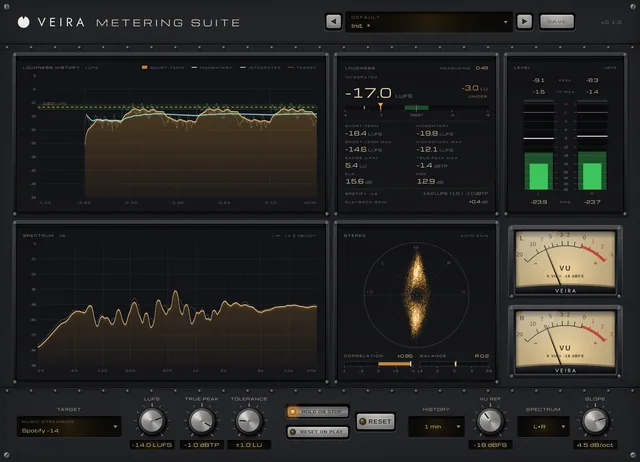 Preparing a mix session: organizing, gain staging and tuning checksHow to set up a session before you mix: organize and label the tracks, bring every track to a sensible level, choose and level-match references, pick a monitoring level, and check the instruments were in tune.Read the article →
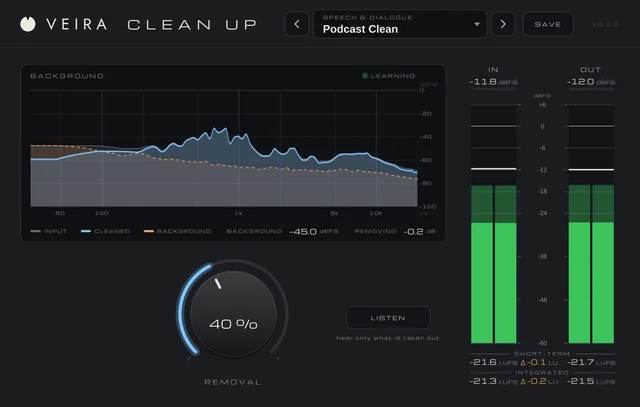 Cleaning up tracks before mixing: noise, hum, clicks and drum bleedHow to take hiss, hum and room tone out of your recordings, fix clicks with edits and fades, control the bleed between drum microphones, and when to edit silences instead of processing.Read the article →
- The static mix: building a balance with faders and panningHow to build a first balance with only faders and pan knobs: which element to start from, the order to bring the rest in, how much headroom to leave on the mix bus, where to pan, and how to check it all in mono.Read the article →
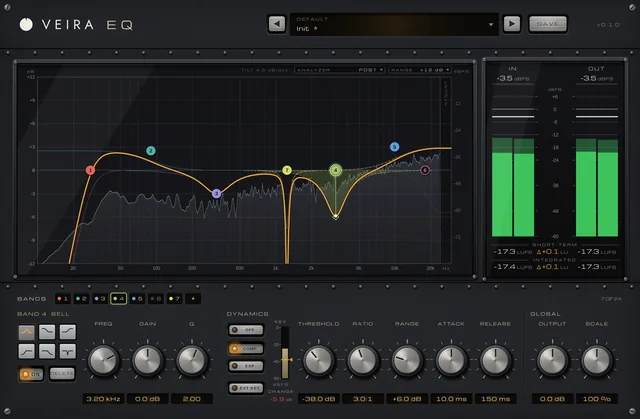 EQ to make room in a mix: high-pass filters, cuts and maskingHow to use EQ to make space for every instrument: where to set high-pass filters, why to cut before you boost, how to find and fix masking between parts, and when broad tonal moves work best.Read the article →
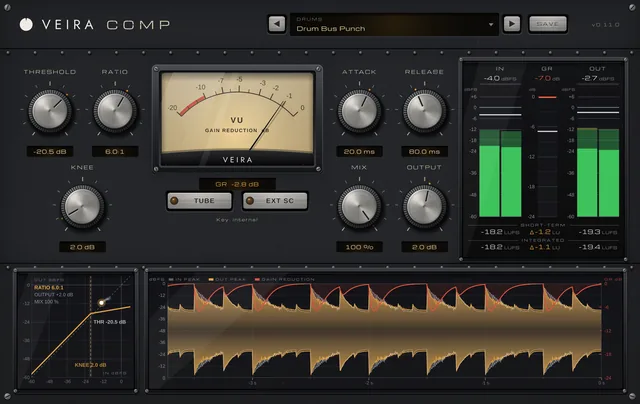 Compression basics for mixing: threshold, ratio, attack and releaseWhat each compressor control does, how much gain reduction a track needs, where to start attack and release, and why you should always judge compression at matched loudness.Read the article →
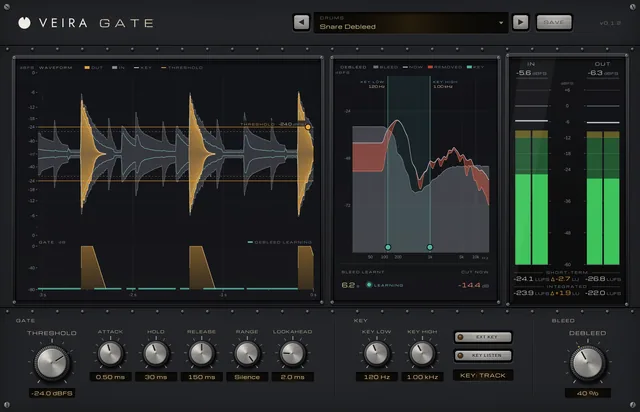 Mixing kick and snare: gating, punchy compression and EQHow to gate the bleed out of kick, snare and toms, compress them for punch, and EQ the kick’s weight and click and the snare’s body and crack, with starting settings for each.Read the article →
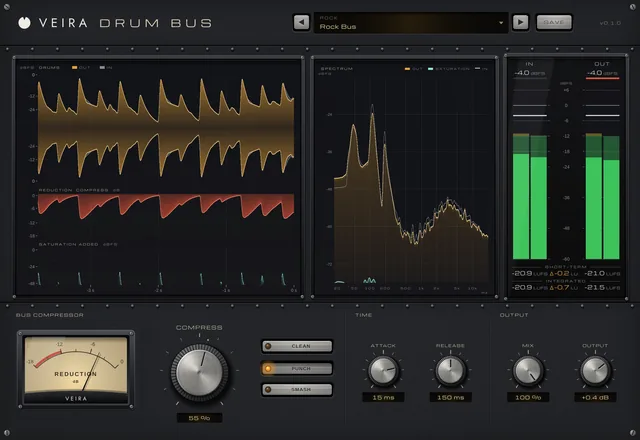 The drum bus and parallel compression: gluing the kit togetherHow to balance the close mics, overheads and room on a drum bus, glue the kit with bus compression, and add parallel compression for dense drums that still hit hard.Read the article →
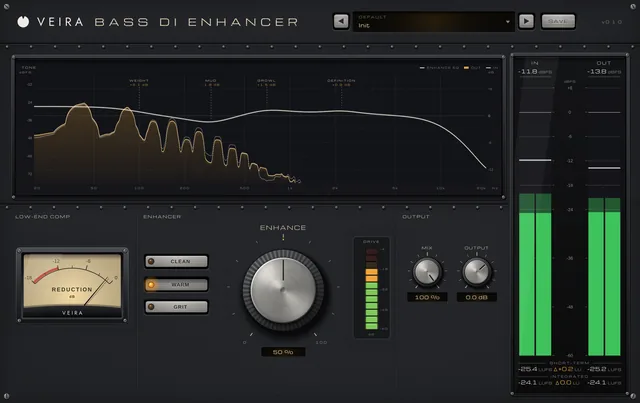 Mixing bass and kick together: an even, clear low endHow to decide whether the kick or the bass owns the lowest notes, turn a DI bass into a finished tone, even out the low end, make the bass carry on small speakers and ride its level through the song.Read the article →
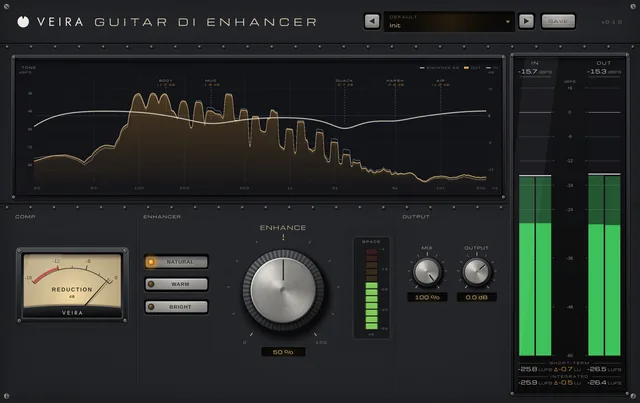 Mixing guitars and keys: tone, colour and width around the vocalHow to turn an acoustic DI into a finished guitar, EQ electric guitars and keys so they stop masking each other, and add drive and modulation for colour and width while leaving room for the vocal.Read the article →
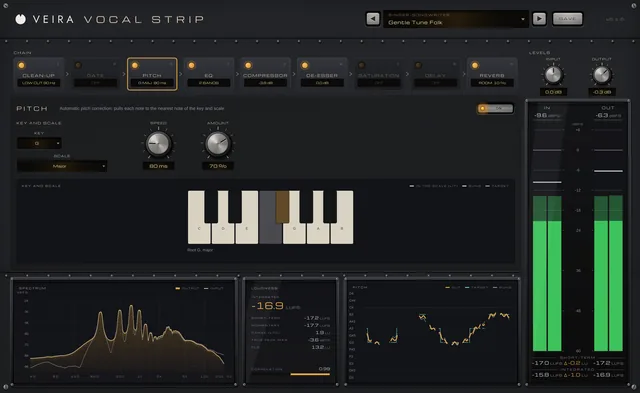 Building a lead vocal chain: order, clean-up, EQ, two-stage compression and colourThe order to process a lead vocal in, how to clean it up and EQ it, why two stages of compression sound more natural than one, and how to add colour and judge it all at matched loudness.Read the article →
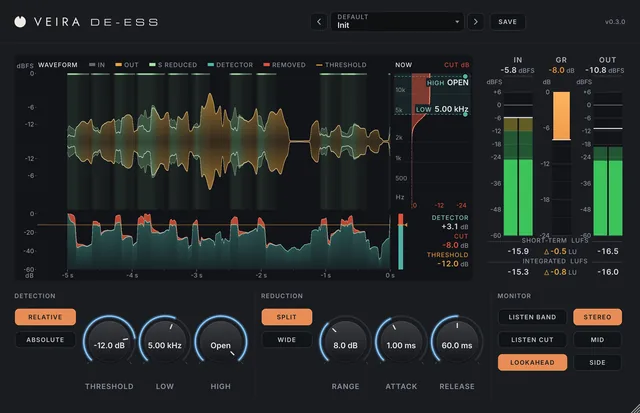 De-essing and riding a lead vocal: softer “s” sounds and every word heardWhere sibilance lives and where de-essing goes in the chain, how much to take off without a lisp, and how to level words and phrases with VEIRA Vocal Rider and fader automation so the vocal stays in front all song.Read the article →
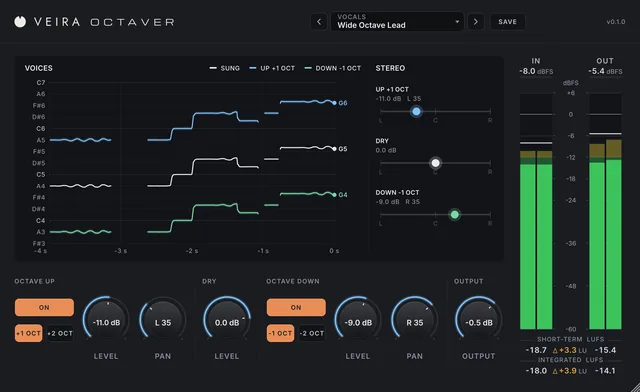 Mixing backing vocals and doubles: stacks, octaves and harmonies behind the leadHow to stack and pan doubles and harmonies, add octave voices that sound like real singers, make a double from a single take, and keep the backing vocals behind the lead instead of on top of it.Read the article →
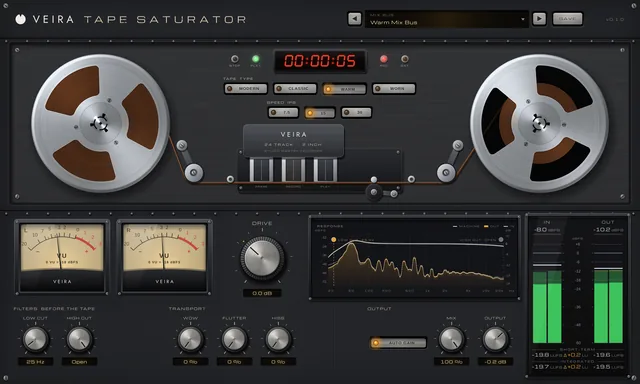 Saturation in a mix: adding harmonics and colour with tape and tubeWhat saturation really adds to a sound, how tape and tube colour differ, where it helps on bass, vocals, drums and buses, and how to judge how much at matched loudness.Read the article →
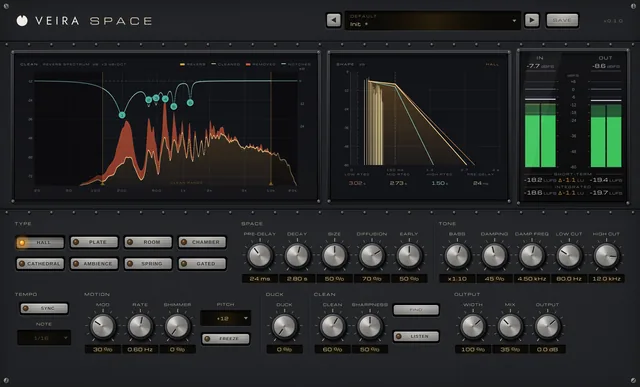 Reverb in a mix: building the space with sends, pre-delay and decayHow to build a mix’s space with reverb: sends versus inserts, starting points for pre-delay and decay, EQ on the returns, and which reverbs suit vocals, drums and instruments.Read the article →
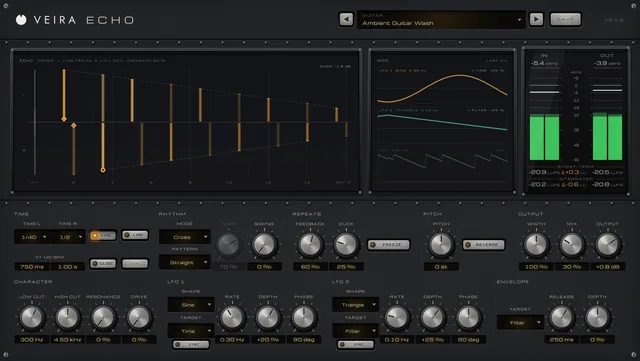 Delay in a mix: slapback, throws, ping-pong and tempo-synced echoesHow to use delay in a mix: setting times to the tempo or by ear, slapback, throws and ping-pong, filtering and saturating the repeats, and when a delay works better than reverb.Read the article →
- Dynamic EQ and multiband compression: fixing problems that come and goHow to tame resonances and harshness that only appear on some notes with dynamic EQ, how to use multiband compression on instruments and groups, and how to choose between them.Read the article →
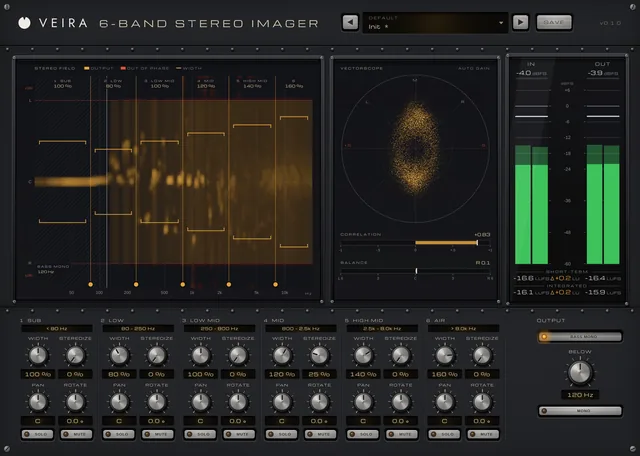 Stereo width in a mix: panning, widening and keeping it mono-safeWhen to pan and when to widen, how to keep the low end in the centre, how mid/side EQ shapes the centre and the sides separately, and how to check that the mix still works in mono.Read the article →
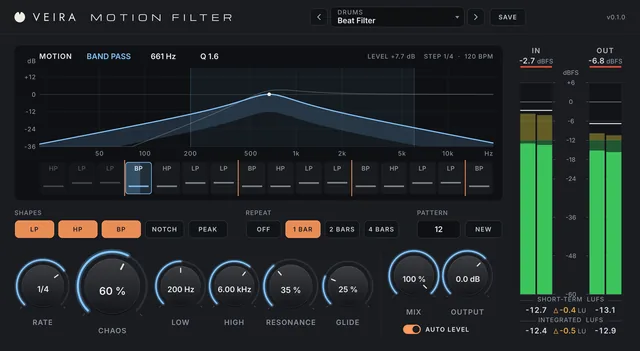 Movement and automation: keeping a mix alive from intro to outroHow to use fader and send automation section by section, add rhythmic filter movement that stays in time, give an intro or a breakdown its own texture, and keep the song moving without clutter.Read the article →
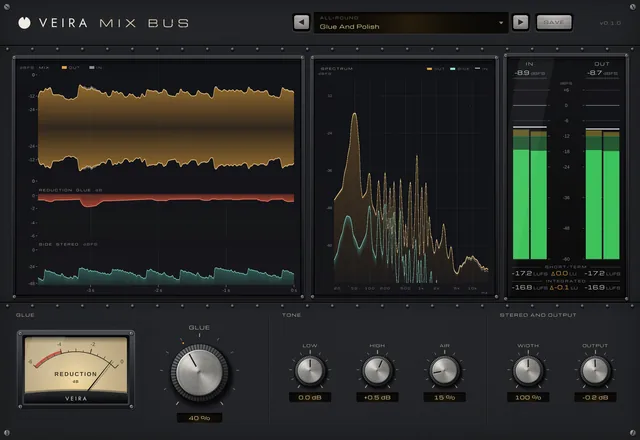 Processing the mix bus: gentle glue, broad tone and what to leave aloneWhat belongs on the mix bus and what doesn’t, when to put bus compression on, how much gain reduction a whole mix can take, how to make broad tone and width moves, and the mistakes that make a mix smaller.Read the article →
- Checking a mix and handing it off to masteringHow to measure loudness, true peak and headroom, check translation on different speakers, compare against references fairly, make a preview master, and print and send exactly what the mastering engineer needs.Read the article →