Blog · Mixing from start to finish · Part 15 of 20
Delay in a mix: slapback, throws, ping-pong and tempo-synced echoes
How to use delay in a mix: setting times to the tempo or by ear, slapback, throws and ping-pong, filtering and saturating the repeats, and when a delay works better than reverb.
In the last part we built the mix’s space with reverb. Delay is the other half of that space. Where reverb surrounds a sound, delay repeats it, and because a few clear echoes take up less room than a wash, a delay can add depth and size to a part while keeping it close and in front.
Time: in sync or by ear
Most mix delays are set to the song’s tempo, so the repeats fall on the grid and become part of the groove. The arithmetic is simple: 60,000 divided by the tempo gives a quarter note in milliseconds. At 120 BPM a quarter note is 500 ms, an eighth 250 ms and a dotted eighth 375 ms. Dotted eighths are a classic on guitars and vocals, because the repeats land between the beats and fill the gaps instead of doubling the rhythm.
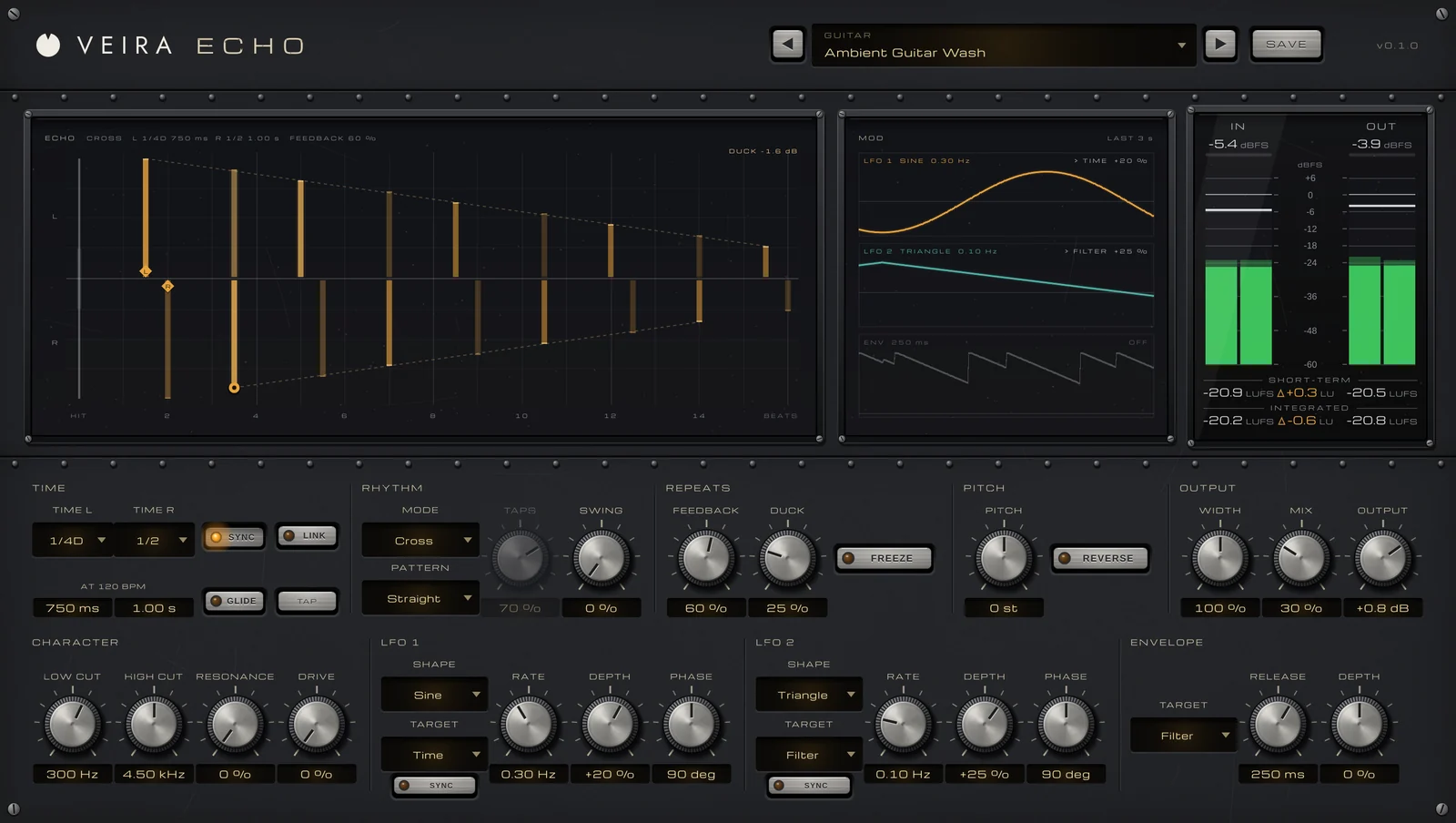
VEIRA Echo does the arithmetic for you. With SYNC on, TIME L and TIME R are note values at the song’s tempo, from 1/64 to 1/1 with triplets and dotted, and LINK gives the right side the left’s time. Without SYNC, the time runs from 1 ms to 4 s. Free times are worth trying too: a delay a few milliseconds off the grid sits behind the beat and feels looser, and very short times thicken a sound rather than echo it.
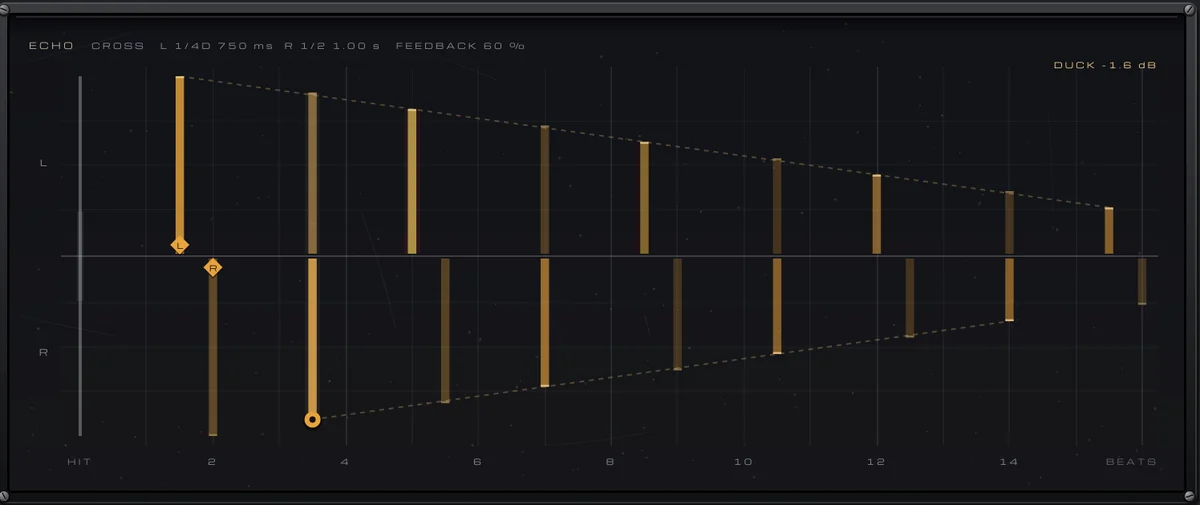
The ECHO display draws every repeat your settings make, the left side above the line and the right below, each bar as tall as its level. Drag the TIME and FEEDBACK handles right there, and you can see how many repeats you’ll hear before they fade.
Slapback
Slapback is a single, short repeat, usually somewhere around 80 to 140 ms, with little or no feedback. It’s the sound of early rock and roll vocals and guitars, and in a modern mix it makes a dry voice sound bigger without an obvious effect. Keep it lower than you think, often 10 to 15 dB under the dry sound, and a little darker.
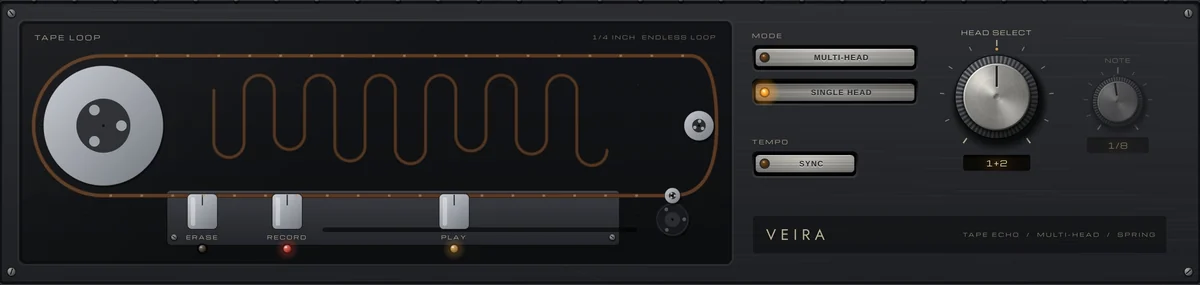
VEIRA Tape Delay has a mode made for this. SINGLE HEAD is one sliding playback head on a faster, brighter tape, for slapback and short echoes, and the Rockabilly Slapback preset is a ready starting point. Set TIME by ear and keep INTENSITY low: at 50 % each repeat is already about 6 dB quieter than the last.
Throws and ping-pong
A throw is a delay you only hear at chosen moments: the last word of a line, a snare hit before the chorus, the final note of a guitar phrase. Put VEIRA Echo on an aux return at MIX 100 % (its Sends folder has nine presets set that way), then automate the send up for that word and back down straight after. Throws can take more feedback than an always-on delay, because the echoes have a gap to trail off into.
Ping-pong bounces the repeats from left to right, which spreads a mono part across the stereo field and leaves the centre free for the vocal. VEIRA Echo’s PING-PONG mode does exactly this; STEREO keeps each side’s repeats on its own side, and CROSS bounces them while a stereo source keeps its image. Check in mono that the effect still works when the sides fold together.
Make the repeats sit behind
Repeats as bright and full as the dry sound compete with it. The fix is to make each repeat a little darker, thinner and softer than its source, so the ear hears it as distance.
- Filter the repeats: a low cut around 200 to 400 Hz keeps the delay out of the low end, and a high cut around 3 to 6 kHz pushes it back. On VEIRA Echo, LOW CUT, HIGH CUT and DRIVE sit inside the loop, so every repeat goes through them again and grows darker as it fades.
- Saturate them: VEIRA Tape Delay records every repeat onto the tape again through BASS, TREBLE and its tape model, so each comes back a little rounder and darker; push INPUT and the repeats saturate.
- Duck them: VEIRA Echo’s DUCK dips the repeats by up to 30 dB while you play and lets them bloom in the gaps, which keeps a vocal delay out of the words.
- Keep feedback modest: two or three audible repeats are usually plenty inside a full mix.
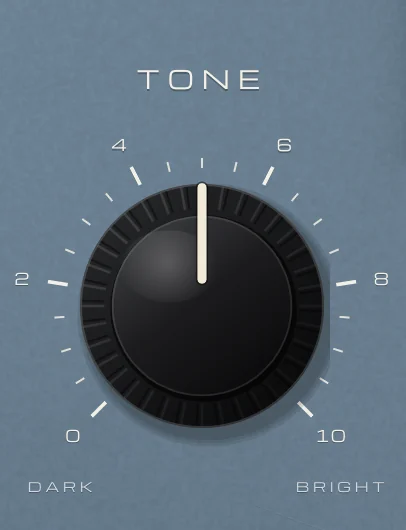
VEIRA Analog Delay builds this behaviour into its time setting. It’s a bucket-brigade delay, so a longer delay is a darker, grainier one: the chips’ filters sit at about 8 kHz up to 170 ms and close to 1.35 kHz at 1 s. TONE, from 600 Hz up to fully open, filters every repeat again, so the echoes melt away pass by pass, and MOD RATE and MOD DEPTH wobble the clock for a chorus on short delays and a warble on long ones. The delay itself is mono and the dry signal keeps its stereo, which suits a vocal or a lead line in the centre.
Delay instead of reverb
When a mix gets crowded, reverb is often the first thing that clouds it. Try replacing a vocal’s reverb with VEIRA Echo on a quarter or an eighth note, filtered with LOW CUT and HIGH CUT and ducked with DUCK, at a low level: the voice keeps a sense of space but stays dry, close and easy to understand. Many modern vocals use both, a short delay for size and a little reverb behind it, each lower than either would be alone.
One thing to know about the tape and analog designs: turning DELAY on VEIRA Analog Delay, or TIME on VEIRA Tape Delay in MULTI-HEAD, bends the pitch of the echoes already playing. It’s a lovely effect for a dub throw, but keep it for moments you choose, and change the time between phrases when you don’t want the bend. In the next part we deal with problems that come and go, using dynamic EQ and multiband compression.