- Type
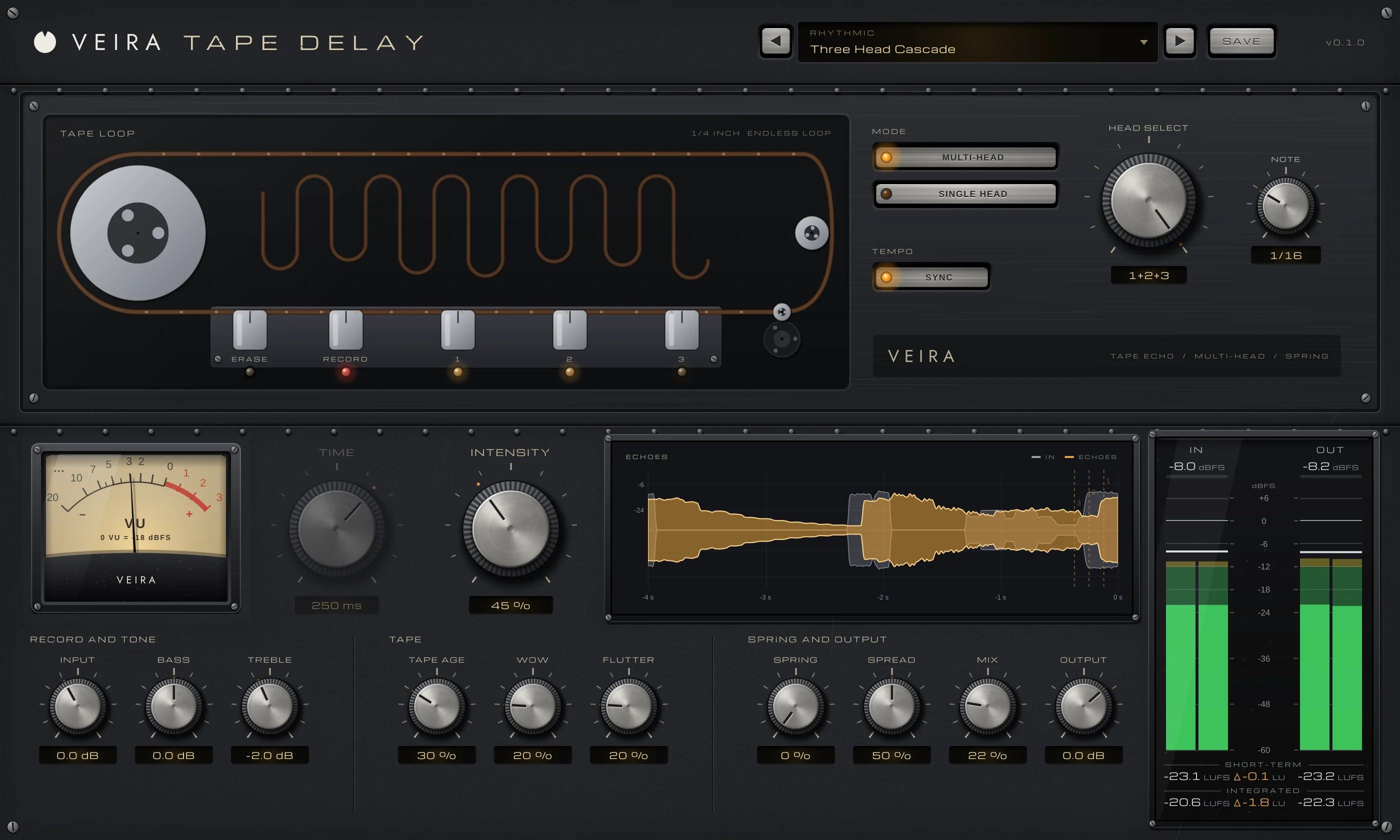
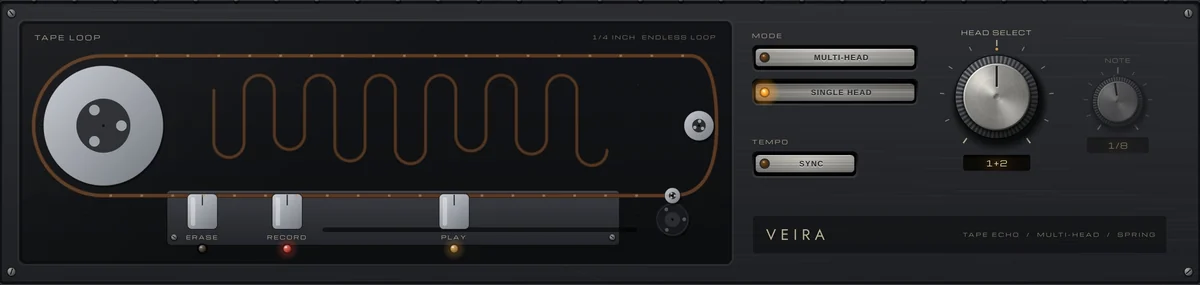
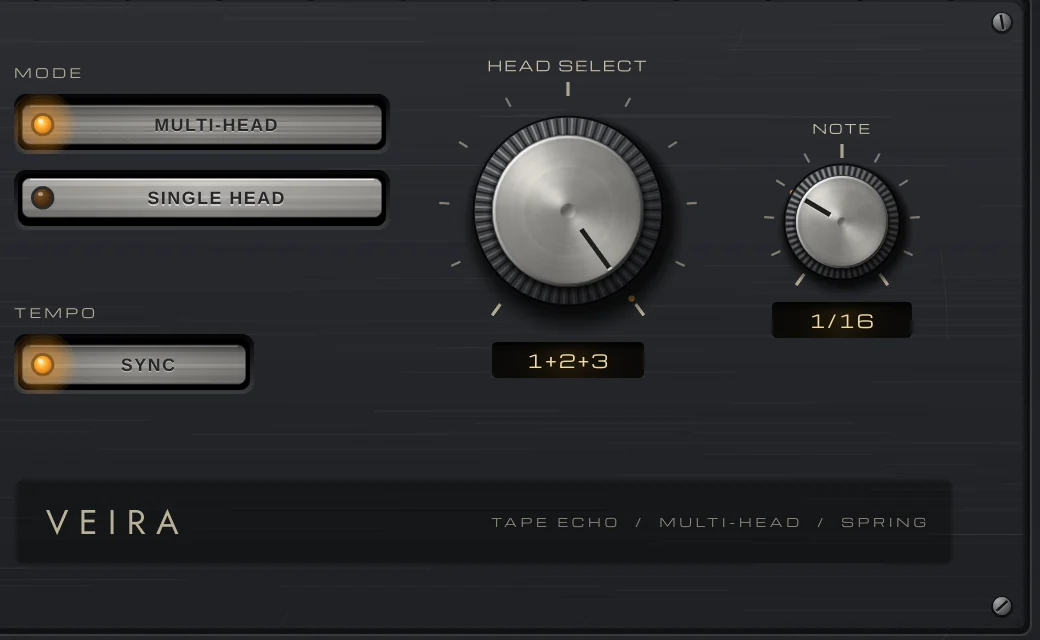
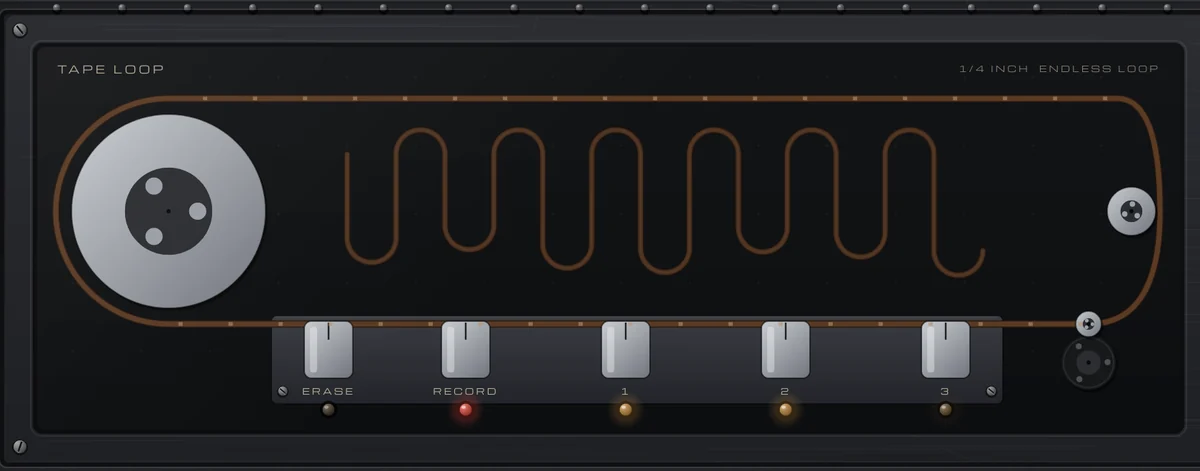
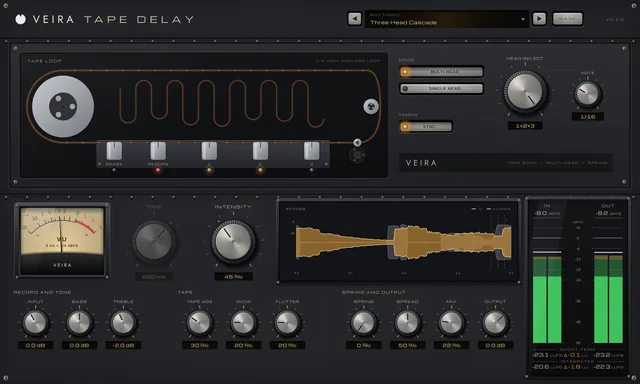
- Tape echo: an endless tape loop with a record head and three playback heads (MULTI-HEAD) or one sliding head (SINGLE HEAD); every repeat recorded again through VEIRA Tape Saturator’s Jiles-Atherton tape model
- Time
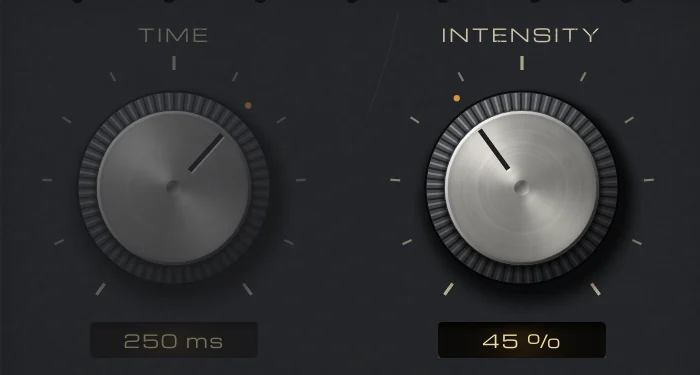
- TIME 20 ms to 1 s (the first head; heads 2 and 3 at 2× and 3×), or SYNC with NOTE 1/64 to 1/1, dotted and triplet. MULTI-HEAD: TIME is the motor’s speed and bends the echoes’ pitch; SINGLE HEAD: the head slides
- Heads
- HEAD SELECT: 1, 2, 3, 1+2, 2+3, 1+3 or 1+2+3; the feedback shared between the heads that play
- Repeats
- INTENSITY 0 to 120 % (50 % ≈ −6 dB per repeat; self-oscillation from about 102 %, held by the tape); the echoes never pass −1 dBFS
- Record and tone
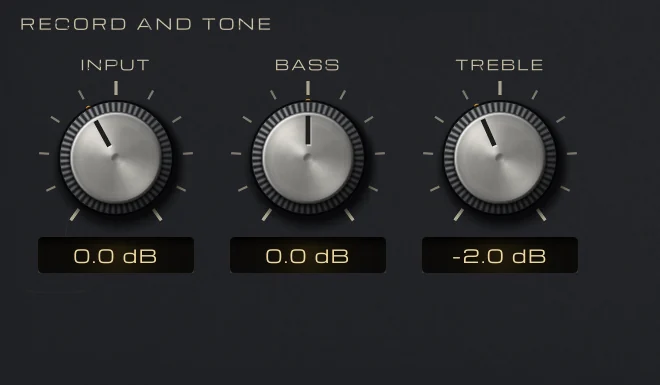
- INPUT −12 to +18 dB (0 VU = −18 dBFS RMS); BASS (150 Hz) and TREBLE (3 kHz) ±12 dB, in the loop
- Tape
- TAPE AGE 0 to 100 % (distortion, hiss, less top, wow, dropouts that come round with the loop); WOW and FLUTTER 0 to 100 %
- Output
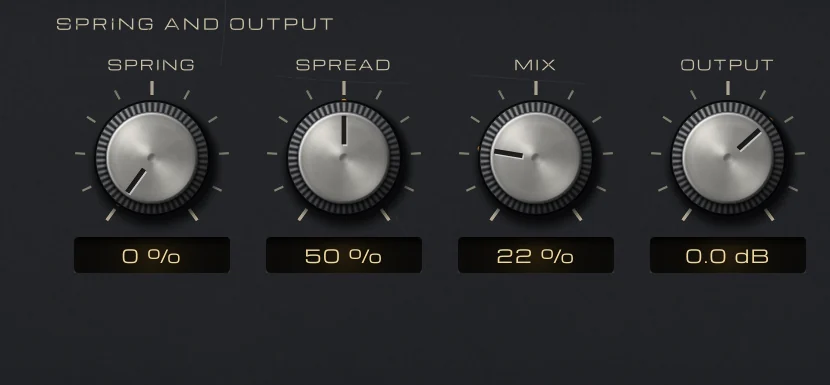
- SPRING 0 to 100 % (VEIRA Space’s spring tank); SPREAD 0 to 100 % (1.5 dB down in mono at 100 %); MIX 0 to 100 % (equal power); OUTPUT −24 to +12 dB
- Oversampling
- The tape: 2x at 44.1 and 48 kHz, none above
- Latency
- None; at MIX 0 % and bypassed, the output is the input, bit for bit; a 12 s tail
- Metering
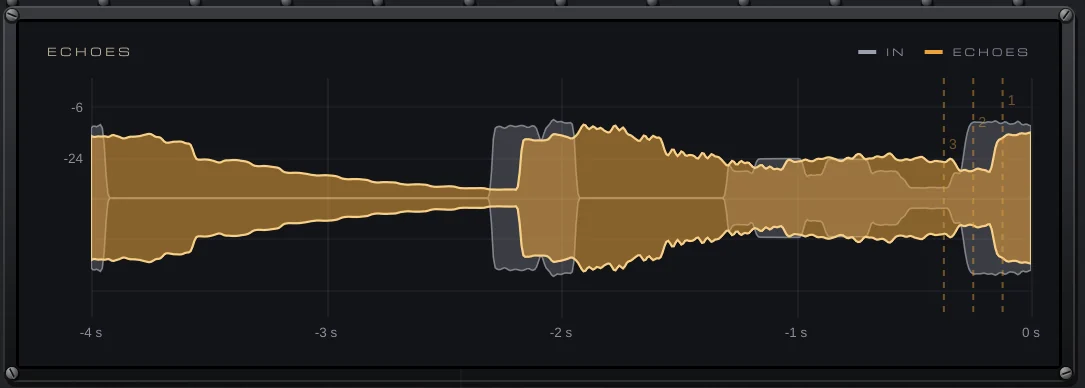
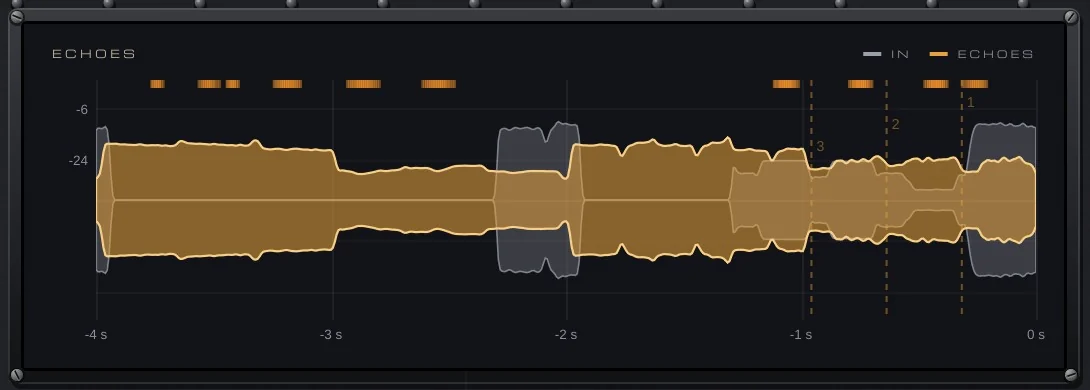
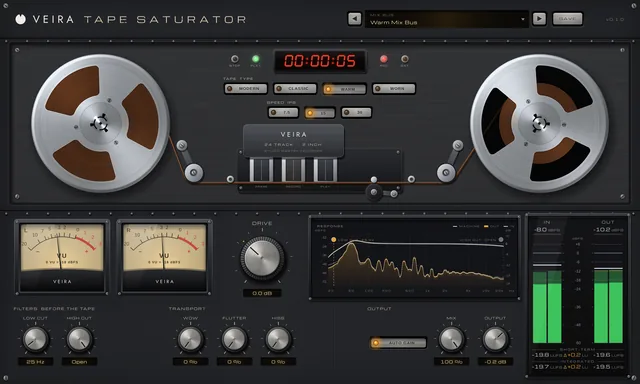
- The machine (moving tape, a lamp per head); RECORD LEVEL VU meter (−20 to +3 VU, IEC 60268-17); ECHOES (the last 4 s, each head’s time, dropouts); IN and OUT peak and RMS; short-term and integrated LUFS
- Presets
- 74 factory presets in 14 folders (including Sends, Rhythmic, Dub and Creative FX), plus your own
- Channels
- Mono, stereo, or mono in and stereo out
- CPU (measured)
- About 6 to 7 % of one core of a 2-core cloud machine (stereo, 48 kHz)
- Formats
- VST3, AU, Standalone
- macOS
- macOS 11 or later, Apple silicon or Intel (universal). VST3, AU and Standalone.
- Windows
- Windows 10 or later, 64-bit. VST3 and Standalone.
- Pro Tools
- Pro Tools (AAX) versions are built and tested, and arrive once they’re signed for Pro Tools.
- Latest version
- 0.2.0, released October 31, 2026 · What’s new