Tape echo: repeats that get darker, and dub-style feedback
How a tape echo works, why its repeats darken and wobble as they fade, how to set it for slapback and rhythmic echoes, and how to ride the feedback for dub throws.
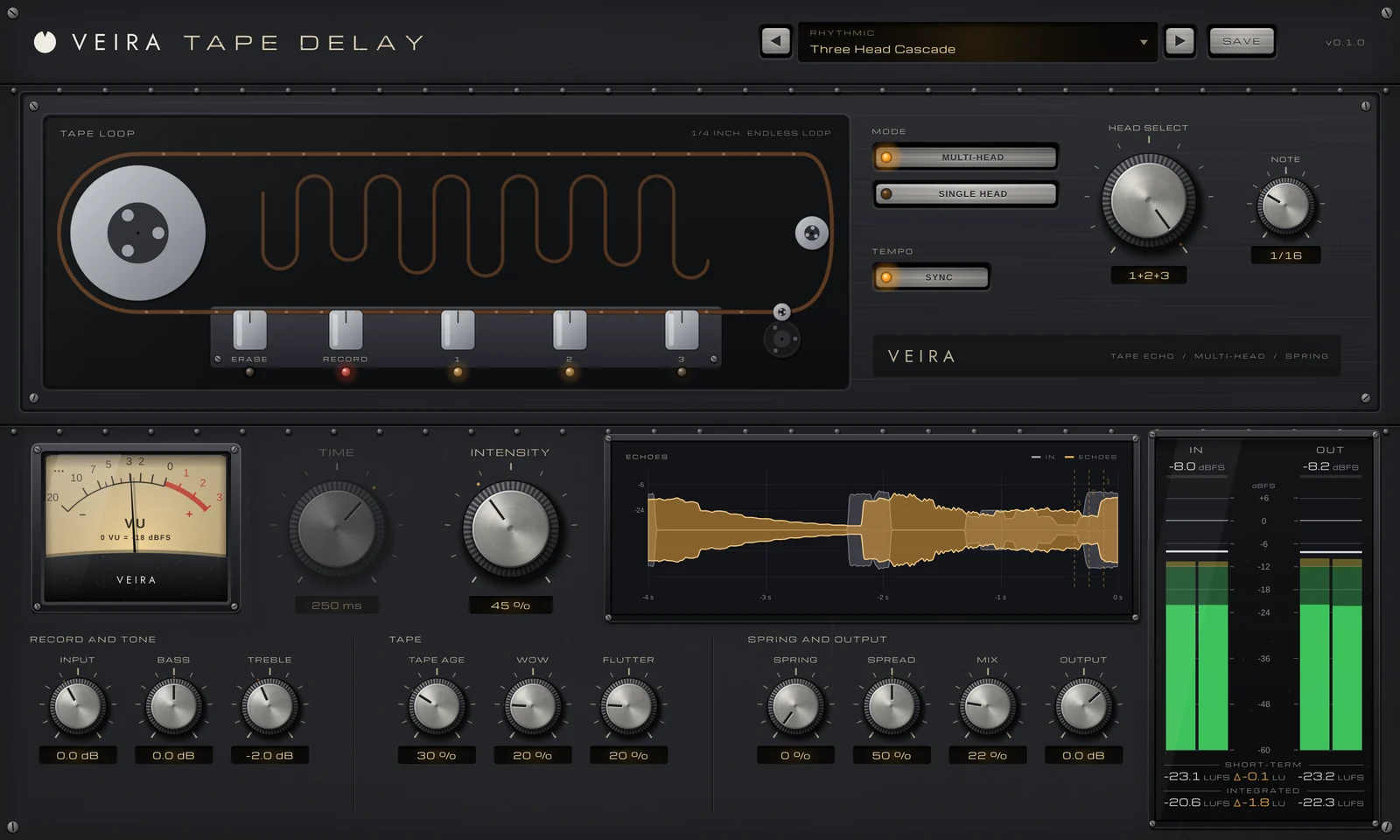
A digital delay can repeat a sound perfectly, again and again. A tape echo can’t, and that’s why people love it. Every repeat is recorded onto tape and played back, so it comes back a little darker, a little rounder and a little less steady than the one before. The echoes step back behind the dry sound instead of crowding it, and when you push the feedback they turn into the swirling, rising tails of dub.
How a tape echo works
A loop of tape runs past a record head and one or more playback heads. The distance between the heads and the speed of the tape set the delay time, and the feedback control sends the playback back to the record head, so each repeat is recorded again. Tape loses some top end and saturates a little on every pass, which is why the later repeats get softer and darker. Speed matters too: change the tape speed while echoes are on the tape and their pitch bends.
Slapback and rhythmic echoes
Slapback is a single, quick repeat, usually somewhere around 80 to 150 ms with little or no feedback. It thickens a vocal or a guitar and gives it a sense of a room without a reverb tail. For longer echoes, sync the time to the song’s tempo: an eighth or a dotted eighth tends to fall between the notes, while a quarter note leaves more space. Machines with several playback heads add extra patterns, because each head plays its own repeat and they interleave into gallops and cascades.
Shaping the repeats
The repeats shouldn’t compete with the part that made them. Most of the shaping happens inside the feedback loop, so every pass is changed again:
- Roll off some top on the repeats, so each one gets darker as it fades and stays out of the way of the vocal.
- Cut some low end too, so the echoes don’t muddy the bass and kick.
- Push the record level for more saturation and a thicker, rounder repeat.
- Add a little wow and flutter for movement, but keep it subtle on anything that has to stay in tune.
- On an insert, keep the mix low, often 15 to 30 %; on a send, set it fully wet and control it with the send level.
Dub feedback and throws
In dub, the delay is an instrument. Instead of leaving it on, you throw single words or snare hits into it by turning the send up for a moment, then let the repeats ring out. Raise the feedback toward and past 100 % and the loop builds on itself into self-oscillation; change the time while it rings and the whole tail bends in pitch. Ride it rather than leave it: bring the feedback back below 100 % before it gets out of hand, and keep an eye on the level, because a runaway loop can climb fast.
Doing it with VEIRA Tape Delay
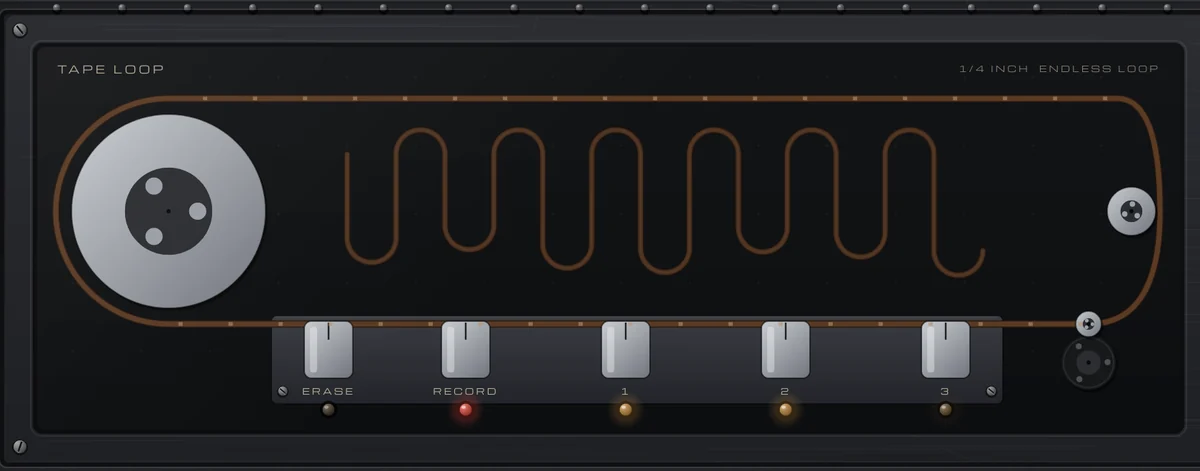
VEIRA Tape Delay is a tape echo machine: a loop of tape runs past an erase head, a record head and the playback heads, and every repeat is recorded onto the tape again. MULTI-HEAD has three playback heads at one, two and three times TIME, and HEAD SELECT plays them in seven combinations. SINGLE HEAD is one sliding head on a faster, brighter tape, for slapback and short echoes. With SYNC, NOTE sets the first head as a note value of your song’s tempo.
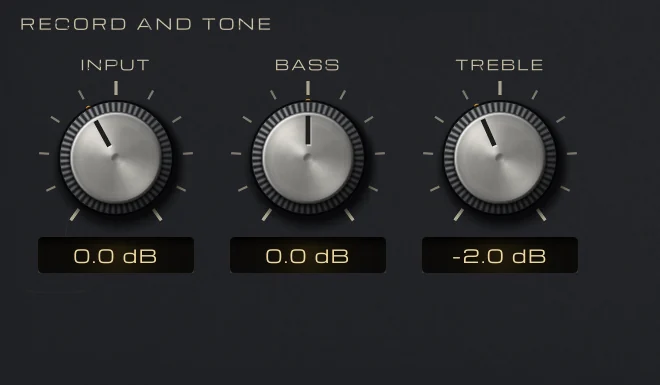
Each repeat goes back through BASS and TREBLE and a model of magnetic tape, so it comes back a little rounder and darker every pass. INPUT is the record level, read on a VU meter: push it and the repeats saturate. TAPE AGE, WOW and FLUTTER wear the tape and the transport, and since every repeat is recorded again, the wobble builds up in the later repeats, while the dry signal is never touched.
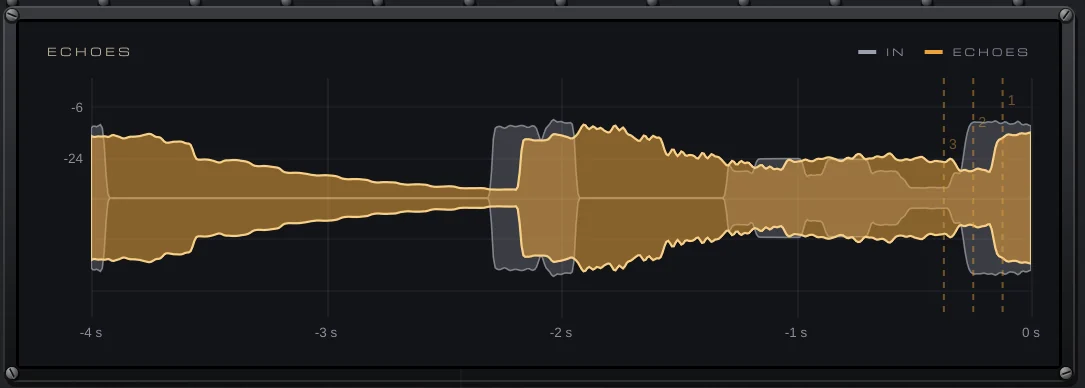
INTENSITY is the feedback, from 0 to 120 %. Past about 102 % the loop runs away, but into the tape’s saturation, and the echoes never pass −1 dBFS. In MULTI-HEAD, TIME is the motor’s speed, so sweeping it bends the echoes in pitch without stalling or clicking. Ride INTENSITY up for a dub siren, sweep TIME to bend it, and bring it back under 100 % to let it fade. The Dub folder of its presets starts you off with throws, spring and self-oscillation.