The echo chamber sound: a classic reverb for vocals and snare
What an echo chamber is, why it suits vocals and snare, and how to set pre-delay, send filtering and decay so the reverb supports the part instead of washing over it.
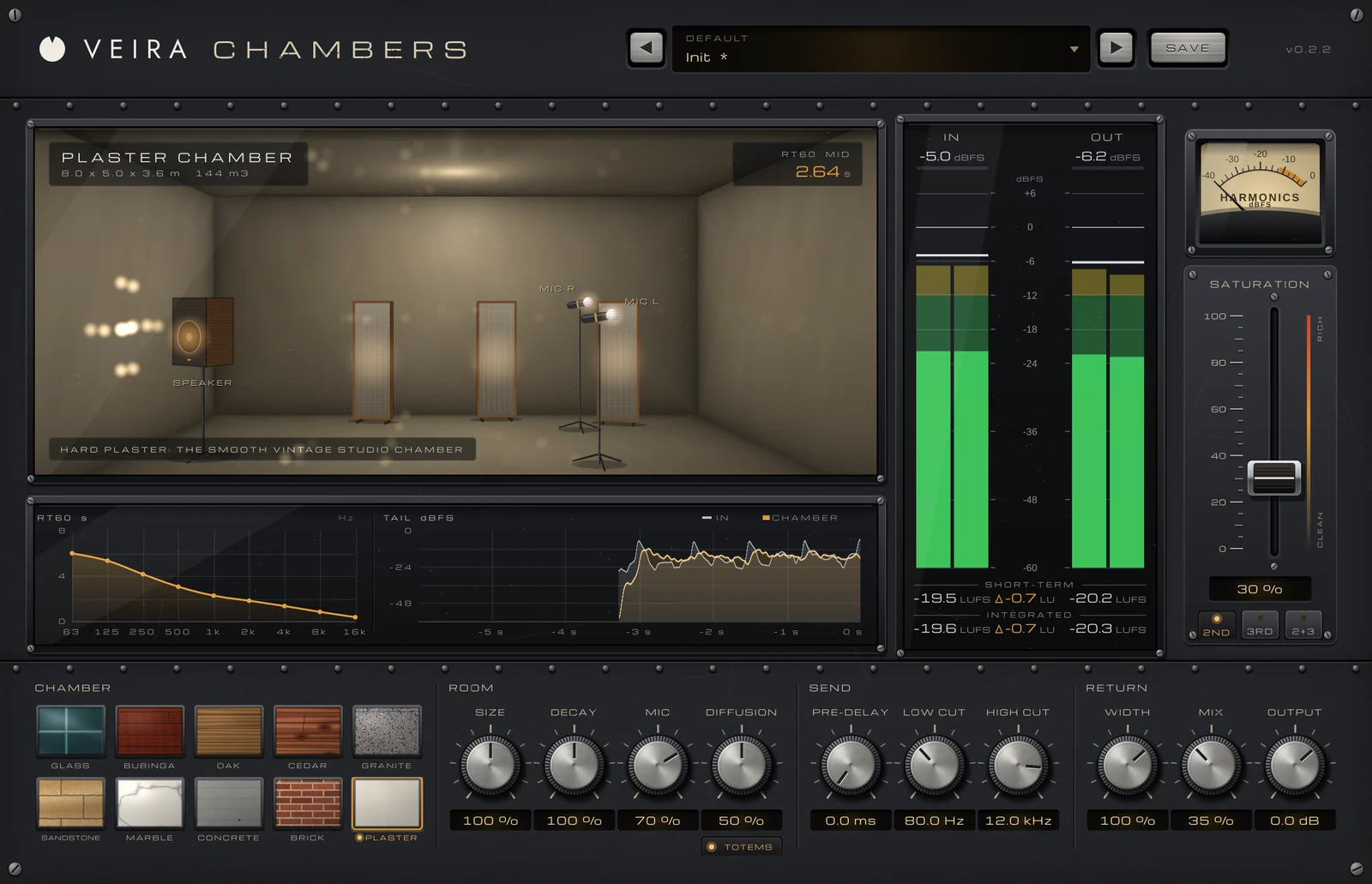
Long before plates and digital reverbs, many studios made their reverb in a real room: a hard-walled space with a speaker at one end and a microphone or two at the other. The send from the console played into the room, and the microphones brought back what the walls returned. That echo chamber sound is dense, natural and a little bright, and it’s still one of the most flattering reverbs you can put on a vocal or a snare.
What makes a chamber sound like a chamber
A chamber is a real room, so its early reflections come from real walls at real distances, and its tail builds up quickly into a smooth, even wash. The walls shape the color: hard surfaces such as tile, stone or plaster keep the highs alive and ring longer, while softer materials absorb more and sound warmer and shorter. Where the microphones stand matters too. Close to the speaker, you hear a clearer, earlier reverb; at the far end, more of the room and a more diffuse sound.
Run it as a send, and filter what goes in
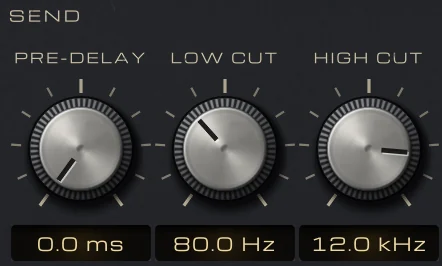
Put the chamber on an aux return at 100 % wet and send the vocal or snare to it, so you can set the amount by ear with the send level. Studios usually filtered the signal on its way into the chamber, and it’s still good practice:
- Cut the lows going in, often somewhere around 150 to 300 Hz, so the reverb doesn’t make the mix boomy.
- Roll off some highs going in, often around 6 to 10 kHz, to keep sibilance and cymbal hiss from splashing into the room.
- Add pre-delay, commonly somewhere between 20 and 80 ms, so the start of each word or hit is heard dry before the reverb arrives.
- Keep the return in stereo, but check it in mono so it still holds together on a single speaker.
Set the decay to the tempo and the part
On a vocal, a decay of around 1.5 to 2.5 seconds is a common place to start for a slow song, and shorter for faster ones, so the tail dies away before the next line piles on top. On a snare, a short, bright chamber adds size without washing over the hi-hat. A good test is to listen for the reverb in the gaps: if it fills every space between phrases, shorten the decay or lower the send. Then mute the return for a moment. If the part suddenly sounds small and dry, the reverb is doing its job; if you barely notice, it may be too subtle to matter.
Doing it with VEIRA Chambers
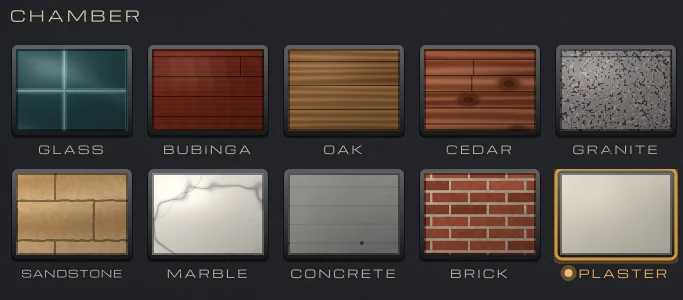
VEIRA Chambers is an echo-chamber reverb: a speaker plays your send into a modeled room and two microphones pick up what the walls give back. There are ten chambers, each built from one material’s measured absorption: glass, bubinga, oak, cedar, granite, sandstone, marble, concrete, brick and plaster. Glass rings bright with thin lows, wood is warm and short, and marble goes on and on, with mid reverb times from 0.85 s in cedar to 6.4 s in marble.
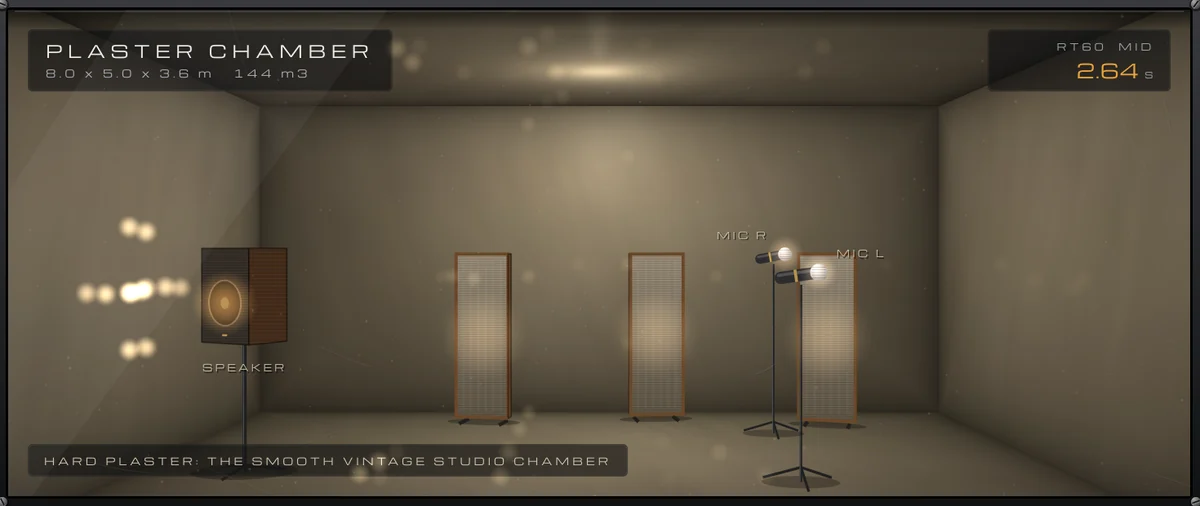
SIZE scales the room, DECAY sets the reverb time against what the room does by itself, and MIC moves the microphones from near the speaker (early and clear) to the far end (later and more diffuse). DIFFUSION stands up to six fabric totems that smooth the early echoes into a denser wash. On the way in, PRE-DELAY holds the sound back before it reaches the speaker, and LOW CUT and HIGH CUT filter the send the way studios did.
On an aux return, set MIX to 100 %; WIDTH goes from mono to wider than the two microphones. The decay display shows the reverb time per octave in seconds, so you can see whether the lows ring on longer than you want. The vertical SATURATION fader adds 2nd, 3rd or both harmonics to the reverb only, never to your dry signal, and the Classic Chambers presets give you one send preset per room to start from.