Reverb without mud: how to give a mix space and keep it clear
Sends instead of inserts, filtering the return, pre-delay and decay timed to the song, ducking, and taking the ringing out of a reverb so the space stays and the mud goes.
Reverb is what makes a mix sound like it happens somewhere. It’s also the quickest way to make one sound washed out: tails piling up under the vocal, low end blurring, the words losing their edges. The fixes are mostly about where the reverb goes and what you let into it.
Use sends, and fewer reverbs
Put the reverb on an aux return at 100 % wet and send to it, instead of inserting a separate reverb on every track. Sharing one or two spaces, for example a short room for drums and a longer plate or hall for vocals and leads, makes the whole mix sound like it was played in one place, and it gives you one fader per space to control the depth of the mix.
Filter the return
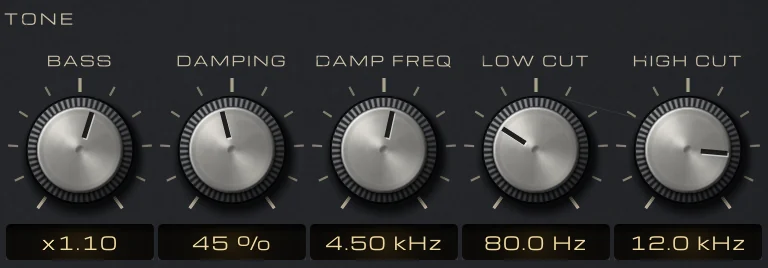
Most of the mud a reverb adds is low end. Reverberant lows build up, last longer than the notes that caused them, and sit right where the bass and kick need room. A high-pass on the return, often somewhere between 150 and 300 Hz, cleans that up; you rarely miss it in the mix. A low-pass softens the top and keeps the tail behind the dry sound instead of next to it.
Time it to the song
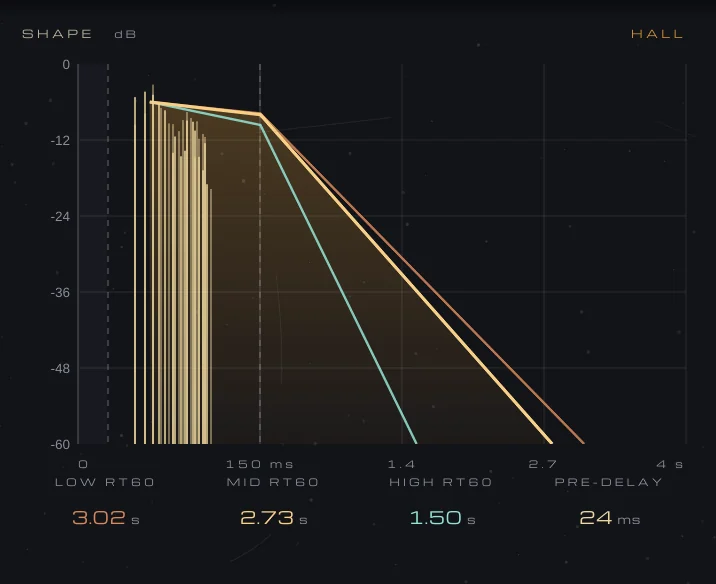
- Pre-delay holds the reverb back for a moment after the dry sound, so the start of each word stays clear before the space arrives. Somewhere around 20 to 80 ms is common on vocals; locking it to a note value of the tempo makes it feel part of the groove.
- Decay should fit the gaps. A tail that dies away just before the next phrase sounds big; one that runs on through it is just noise under the words.
- Duck the reverb under the source. A compressor on the return keyed from the vocal turns the tail down while the singer sings and lets it bloom in the pauses.
Take the ringing out
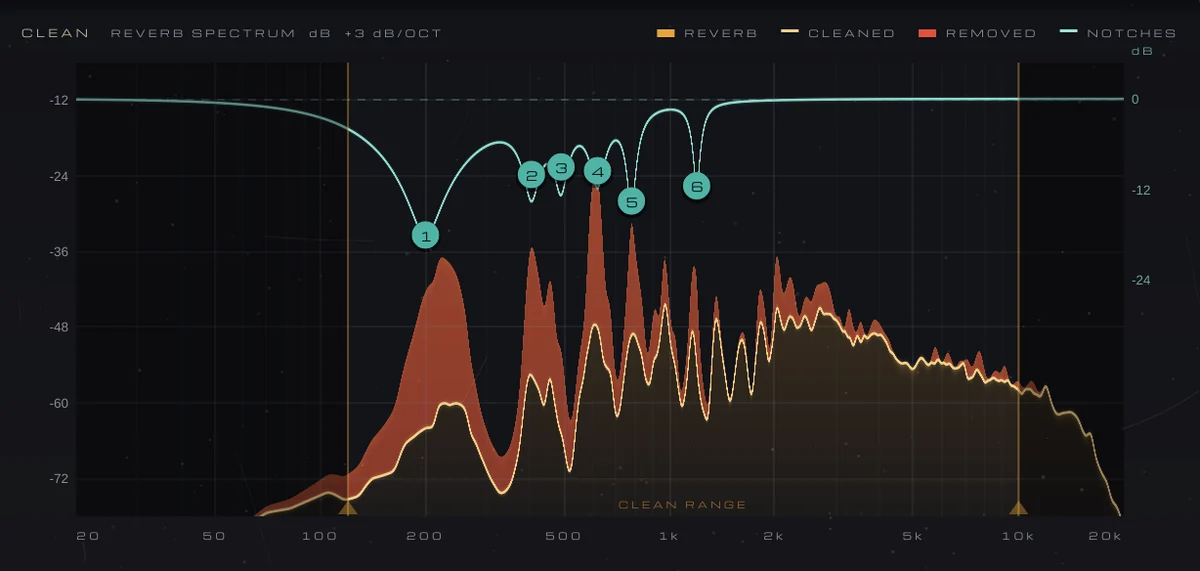
Every reverb rings at some frequencies more than others, and the notes you play make it worse: a sung A leaves an A hanging in the hall. Those resonances are often what makes a reverb sound harsh or boomy, even when its overall tone seems right. Engineers traditionally find them by sweeping a narrow EQ boost through the return and notching out the ones that ring.
Doing it with VEIRA Space
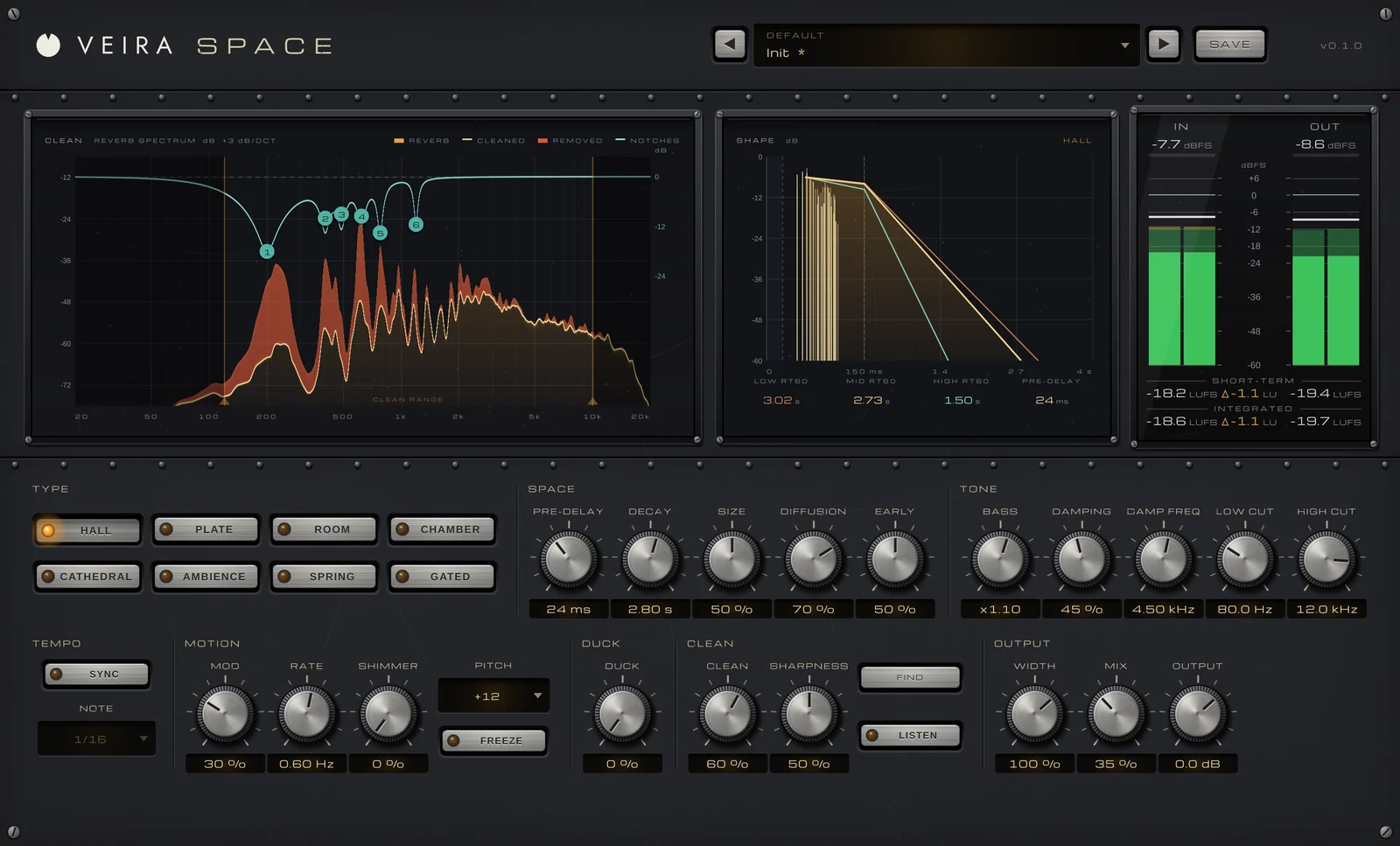
VEIRA Space is an algorithmic reverb with eight classic types, from Hall and Plate to Spring and Gated, and a cleanup made for the reverb’s output. CLEAN listens to the reverb and turns frequencies down only while they stick out above their surroundings: a tone ringing in the Hall comes down by 14.7 dB, while the reverb around it moves by less than 0.5 dB. For ringing you want gone all the time, FIND listens to the last 3 seconds of reverb and places six notches on its strongest resonances.
Everything else in this article is on the same panel: LOW CUT and HIGH CUT filter only the reverb, PRE-DELAY goes up to 500 ms or follows the tempo as a note value, DUCK turns the reverb down by up to 30 dB while you play and lets it bloom back in the gaps, and MIX at 100 % makes it ready for an aux return.