VEIRA Analog Delay

A bucket-brigade analog delay behind a vintage blue-grey panel: the longer the delay, the darker and grainier the repeats, each one a little darker than the last, and the pitch bends as you turn DELAY.

$149.99, a one-time purchase with free updates

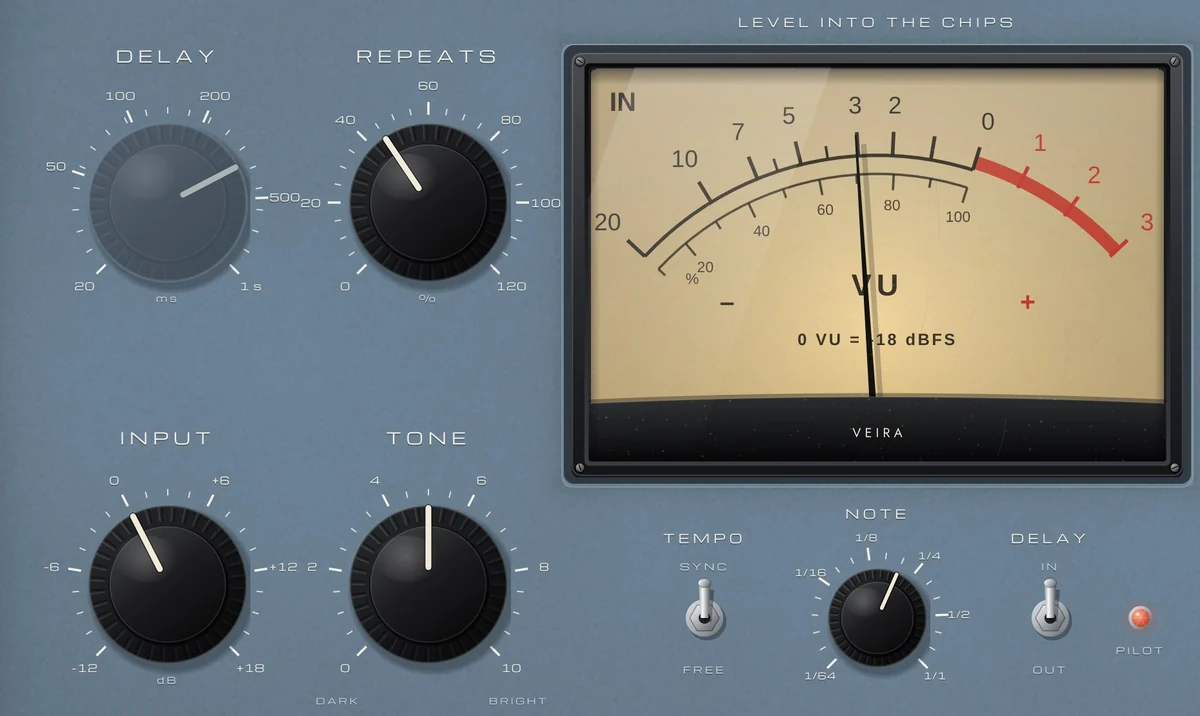
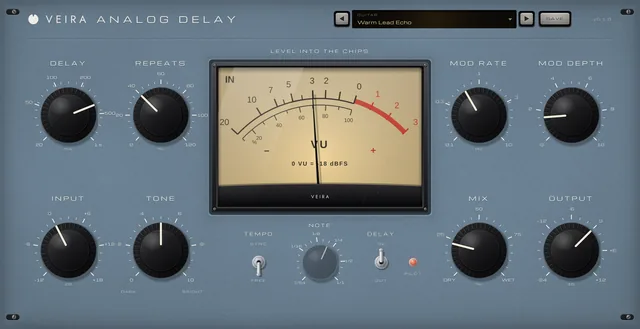
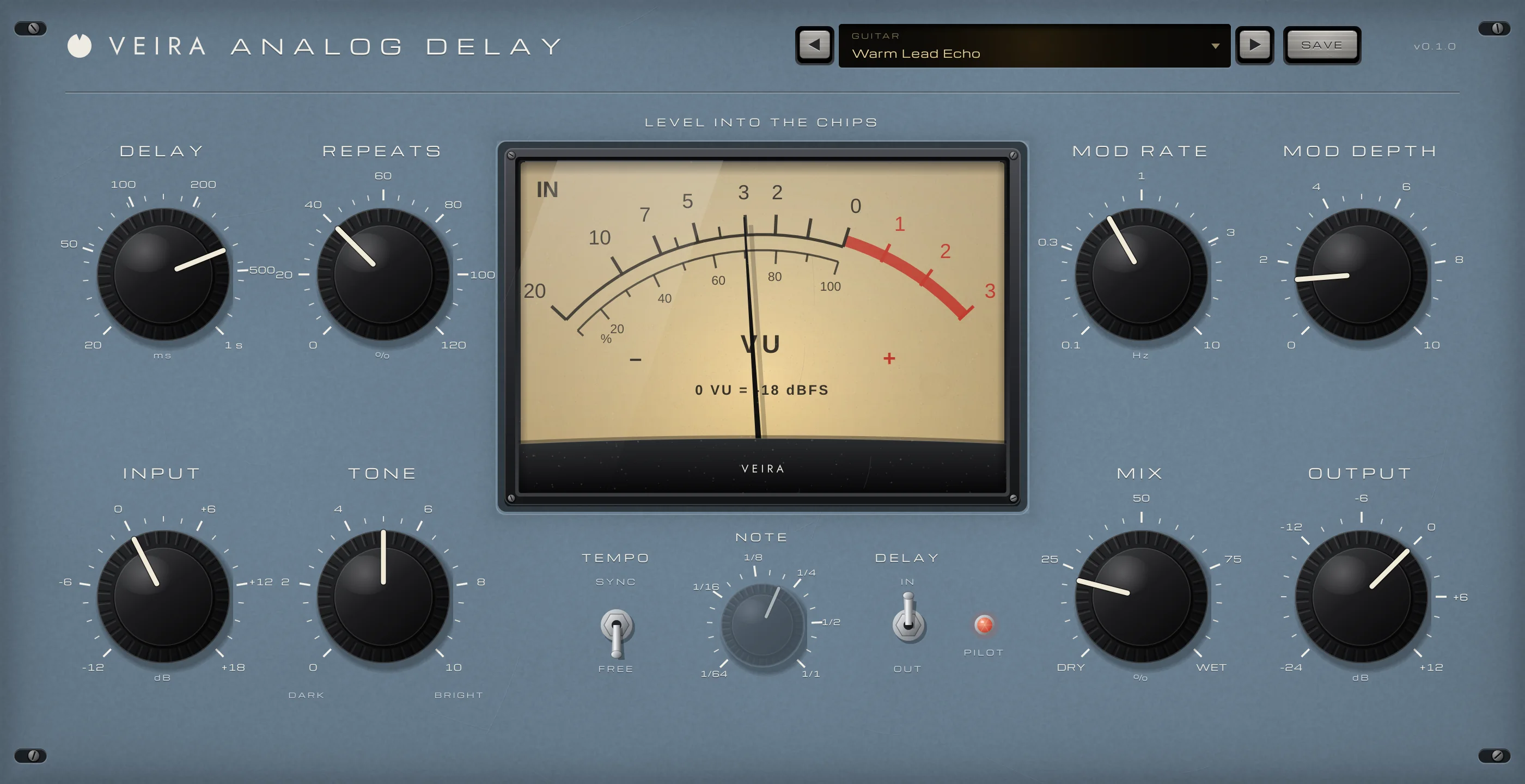
VEIRA Analog Delay with the Warm Lead Echo preset while a guitar phrase plays: a blue-grey front panel with white engraving and big black knobs, DELAY at 380 ms and REPEATS at 40 % top left, INPUT at 0 dB and TONE at 5 below them, one huge VU meter labelled LEVEL INTO THE CHIPS in the middle, the TEMPO switch at FREE, NOTE dimmed and the DELAY switch at IN with its red pilot lamp lit under it, and MOD RATE, MOD DEPTH, MIX and OUTPUT on the right.

VEIRA Analog Delay is a bucket-brigade delay, modelled on the classic analog units. A clock passes the sound along a chain of 4096 buckets, and DELAY sets the clock: a long delay is a slow clock, so the chips’ filters close down with it, from about 8 kHz up to 170 ms to 1.35 kHz at a full second. The repeats go round through the chips and TONE again, so each one is a little darker than the last, and a compander keeps the chips’ noise down, breathing with the music as the real one does.

The front panel is styled after the classic program equalizers: blue-grey enamel, white engraving, big black knobs with printed scales, chrome toggles for TEMPO and DELAY IN/OUT with a red pilot lamp, and one huge VU meter showing the level into the chips. There are no other graphics. Turn DELAY while the repeats ring and they bend in pitch; push REPEATS past about 106 % and the loop runs away into self-oscillation, held under −1 dBFS. INPUT drives the op-amp and the chips without changing the echoes’ level, and there’s no latency.

A tour of VEIRA Analog Delay

VEIRA Analog Delay with the Warm Lead Echo preset while a guitar phrase plays: a blue-grey front panel with white engraving and big black knobs, DELAY at 380 ms and REPEATS at 40 % top left, INPUT at 0 dB and TONE at 5 below them, one huge VU meter labelled LEVEL INTO THE CHIPS in the middle, the TEMPO switch at FREE, NOTE dimmed and the DELAY switch at IN with its red pilot lamp lit under it, and MOD RATE, MOD DEPTH, MIX and OUTPUT on the right.
  1. The whole of VEIRA Analog Delay

    VEIRA Analog Delay is a bucket-brigade delay, modelled on the classic analog units. DELAY is the speed of the chips’ clock, so a longer delay is a darker, grainier one, and every repeat goes through the chips and TONE again. Turning DELAY bends the pitch of everything in the chips, MOD wobbles the clock for a chorus on short delays and a warble on long ones, and REPEATS goes to 120 %, into self-oscillation held by the chips. Big black knobs and one huge VU meter, no screens, and no latency.

  2. Delay and repeats

    DELAY sets the chips’ clock, from 20 ms to 1 s; REPEATS sends the echoes round again, up to 120 %.

  3. Drive and tone

    INPUT drives the op-amp and the chips; TONE darkens every repeat, from 600 Hz to open.

  4. The level into the chips

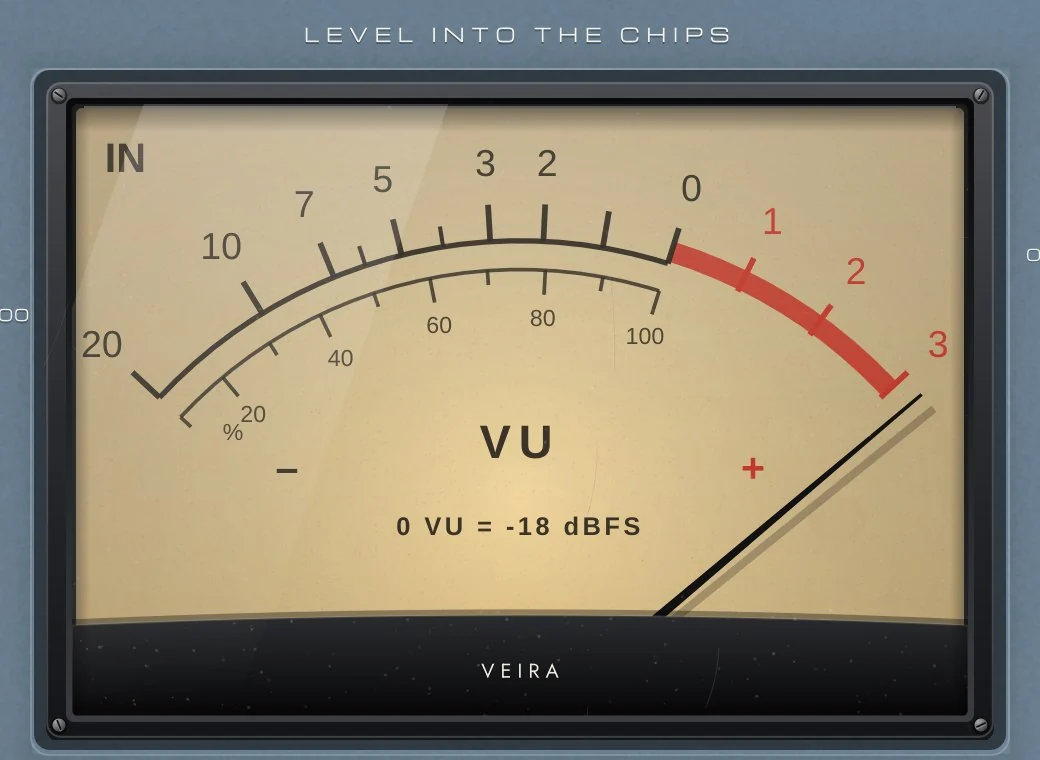
    One huge VU meter: the input at the INPUT level, with 0 VU at −18 dBFS.

  5. Tempo and the switches

    TEMPO at SYNC or FREE, NOTE for the note value, and the DELAY switch IN or OUT with its pilot lamp.

  6. Modulation and output

    MOD RATE and MOD DEPTH wobble the clock; MIX blends the echoes with the dry sound and OUTPUT sets the level.

What VEIRA Analog Delay does for you

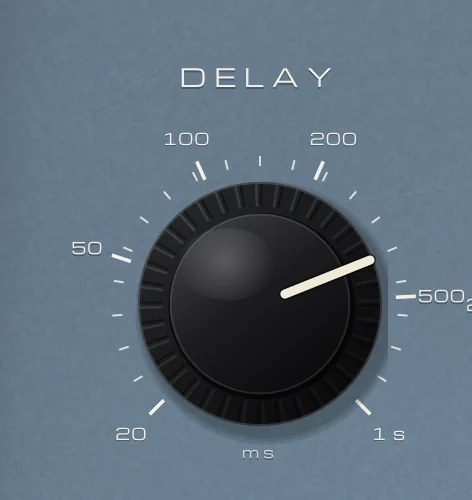
The DELAY knob at 380 ms, its scale printed around it from 20 ms to 1 s.

The delay is the clock

DELAY, from 20 ms to 1 s, sets the speed of the bucket brigade’s clock: 4096 buckets, clocked from 205 kHz at 20 ms down to 4.1 kHz at 1 s. A long delay is a slow clock, so the chips’ filters close down with it: about 8 kHz up to 170 ms, 3.9 kHz at 350 ms, 2.3 kHz at 600 ms and 1.35 kHz at 1 s. Short echoes stay bright; long ones turn dark and grainy, as on the analog units.

  • 20 ms to 1 s
  • Darker as it gets longer
  • No latency
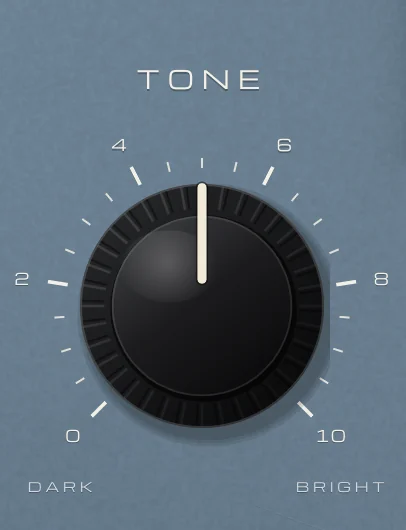
The TONE knob at 5, between DARK and BRIGHT, its scale printed from 0 to 10.

Every repeat a little darker

TONE is a gentle filter on every repeat, from 600 Hz up to fully open, and every repeat goes through it and the chips’ filters again. So the repeats darken as they fade into the distance instead of competing with the dry sound: keep it open for clear rhythmic echoes, or turn it down for dub tails that melt away pass by pass.

  • 600 Hz to open
  • In the loop
  • Repeats fade into the distance
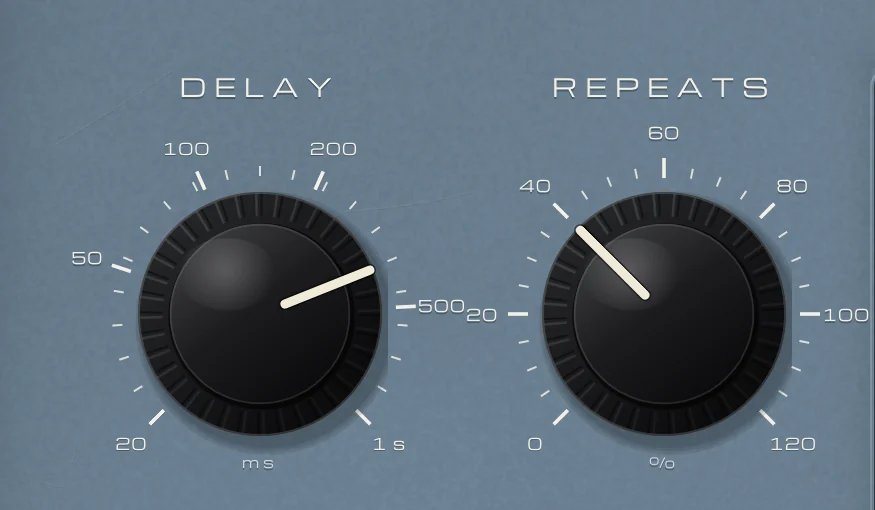
DELAY at 380 ms and REPEATS at 40 %, side by side.

Turn DELAY, bend the pitch

Changing the clock changes the speed of everything already in the chips, so turning DELAY while the repeats ring bends their pitch: down as the delay gets longer, up as it gets shorter. The clock glides over about a second and never plays backwards, so you can sweep it for dives, rises and sirens, or change it between phrases when you don’t want the bend.

  • Glides over about a second
  • Never backwards
  • No stalls or clicks
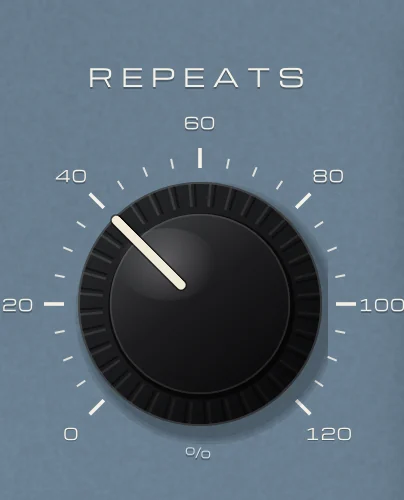
The REPEATS knob at 40 %, its scale printed from 0 to 120 %.

Self-oscillation, held by the chips

REPEATS is the feedback, from 0 to 120 %: at 50 % each repeat is about 6 dB quieter than the last, and 100 % is a long sustain. Past about 106 % the loop runs away into self-oscillation, as the analog units do, but it’s held by the chips’ saturation and never passes −1 dBFS. Ride it up for a dub siren or a drone, sweep DELAY to bend it, and bring it back under 100 % to let it fade.

  • REPEATS to 120 %
  • Runaway from about 106 %
  • Echoes under −1 dBFS
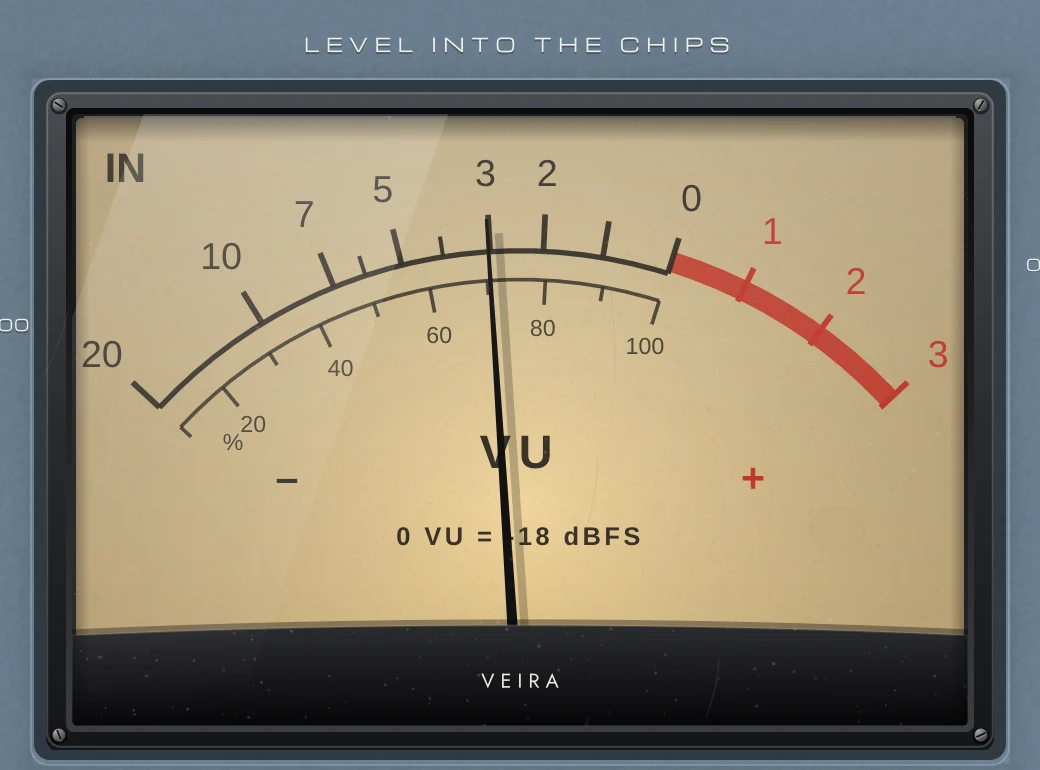
The VU meter with the Overdriven Echoes preset (INPUT +14 dB): the needle pinned past +3 VU in the red.

Drive without the level jump

INPUT, from −12 to +18 dB, sets how hard the op-amp and the chips are driven, read on the VU meter. Its gain is taken back off after the chips, and what the op-amp’s clipping takes off is given back, so the echoes keep their level, within about 2 dB fully driven, and the drive is in their sound: nearly clean at 0 dB, thick and gritty in the red, more so with every pass.

  • −12 to +18 dB
  • Level held within 2 dB
  • Drive in the sound
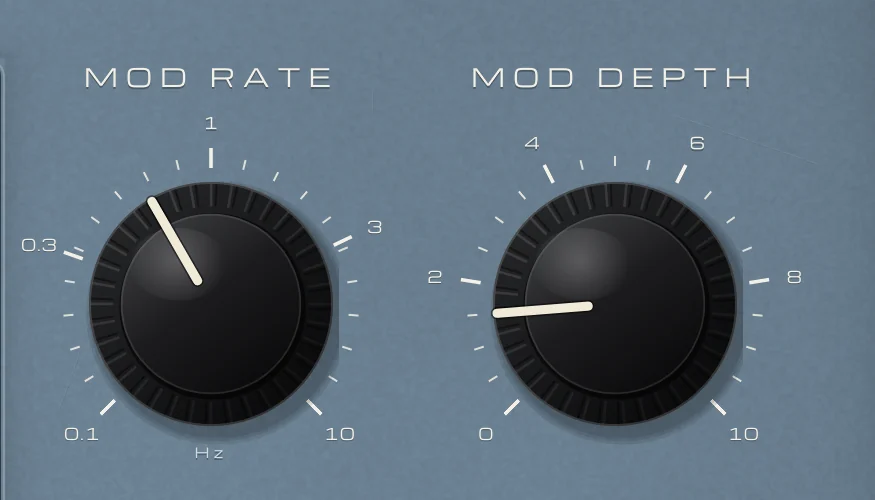
MOD RATE at 0.6 Hz and MOD DEPTH at 1.5.

Chorus, vibrato and warble

MOD RATE (0.1 to 10 Hz) and MOD DEPTH put a sine on the chips’ clock. DEPTH sets the echoes’ pitch swing, about ±50 cents at 100 % and the same at any DELAY: a chorus or vibrato on short delays, a warble on long ones. Where RATE × DELAY is a whole number, such as 1 Hz at 1 s, the swing cancels, as it does on the real units.

  • 0.1 to 10 Hz
  • About ±50 cents
  • The same swing at any DELAY
The Dotted Eighth Sync preset: DELAY dimmed, the TEMPO switch up at SYNC and NOTE lit at 1/8D, beside the VU meter, INPUT and TONE.

Echoes in time with the song

Flip TEMPO up to SYNC and NOTE sets the delay as a note value of your DAW’s tempo, from 1/64 to a whole note with dotted and triplet values, never longer than the chips’ 1 s; the knob you’re not using is dimmed. Flip the DELAY switch down to OUT and the input passes bit for bit, with the red pilot lamp dark.

  • 18 note values
  • TEMPO SYNC or FREE
  • Bit-exact at OUT
The huge VU meter, labelled LEVEL INTO THE CHIPS: a VU scale from −20 to +3 VU with a red zone above 0, a percentage scale under it, IN on the face and 0 VU = −18 dBFS.

One huge meter, no screens

The front panel is styled after the classic program equalizers: blue-grey enamel, white engraving, big black knobs with their scales printed around them, chrome toggle switches and one huge VU meter in the middle. The meter shows the level into the chips, after INPUT, with IEC 60268-17 ballistics, 0 VU at −18 dBFS RMS and the studio meter’s second scale, 0 to 100 %. Hover over a knob for its exact value.

  • IEC 60268-17 VU
  • 0 VU = −18 dBFS
  • Hover for the value
The preset browser showing Guitar: Warm Lead Echo, with previous, next and SAVE.

75 presets, each one measured

Fourteen folders, from Drums, Guitar and Vocals to Mix Bus, plus Sends (MIX 100 % for an aux), Rhythmic (SYNC eighths, dotted, triplets, sixteenths and halves), Dub (throws, an endless tail and two runaways) and Creative FX (warble, lo-fi grain, a metallic 20 ms loop, vibrato, overdrive and pitch dives). Each was measured on the real plugin on matching material: the insert presets come out within half a dB of bypass, peaks stay between −11.3 and −4.0 dBFS, and each note says what to set first.

  • 14 folders
  • Within half a dB of bypass
  • Save your own

Get VEIRA Analog Delay

Pay once and it’s yours, with every future update included.

VEIRA Analog Delay

A bucket-brigade analog delay behind a vintage blue-grey panel: the longer the delay, the darker and grainier the repeats, each one a little darker than the last, and the pitch bends as you turn DELAY.

  • Yours to keep: pay once, no subscription
  • Every future update, free for life
  • VST3, AU, Standalone on up to 3 computers
  • Changed your mind? Cancel within 14 days (refunds)
USD

One-time payment, in your cart.

Welcome offer

Get 10% off your first order

Leave your email and we’ll send you a code for 10% off your first order, on any plugins. One code per person.

Specifications

Type
Bucket-brigade (BBD) analog delay: 4096 buckets on a clock set by DELAY, between a 4th-order anti-alias filter and a 2nd-order reconstruction filter that follow the clock; an op-amp, a 2:1 compressor and a 1:2 expander
Time
DELAY 20 ms to 1 s (the chips’ filters about 8 kHz up to 170 ms, 3.9 kHz at 350 ms, 2.3 kHz at 600 ms, 1.35 kHz at 1 s), or TEMPO SYNC with NOTE 1/64 to 1/1, dotted and triplet, never over 1 s. Turning it bends the pitch, gliding over about a second
Repeats
REPEATS 0 to 120 % (50 % ≈ −6 dB per repeat; 100 % a long sustain; self-oscillation past about 106 %, held by the chips); the echoes never pass −1 dBFS
Drive and tone
INPUT −12 to +18 dB (the echoes keep their level within about 2 dB); TONE 0 to 10, a gentle filter on every repeat from 600 Hz to open
Modulation
MOD RATE 0.1 to 10 Hz; MOD DEPTH 0 to 10, the echoes’ pitch swing, about ±50 cents at 10 at any DELAY
Output
MIX dry to wet (equal power); OUTPUT −24 to +12 dB; the DELAY switch IN or OUT, with a pilot lamp
Latency
None; at MIX 0 %, at OUT and bypassed, the output is the input, bit for bit; a 12 s tail
Noise
The chips’ noise about −92 dBFS at MIX 100 %, rising and falling with the signal through the compander; no clock whine
Metering
One VU meter on the level into the chips (IEC 60268-17; 0 VU = −18 dBFS RMS; a second scale, 0 to 100 %)
Presets
75 factory presets in 14 folders (including Sends, Rhythmic, Dub and Creative FX), plus your own
Channels
Mono, stereo, or mono in and stereo out; the delay itself is mono and the dry signal keeps its stereo
CPU (measured)
About 1.3 % of one core at the fastest clock (stereo, 48 kHz)
Formats
VST3, AU, Standalone
macOS
macOS 11 or later, Apple silicon or Intel (universal). VST3, AU and Standalone.
Windows
Windows 10 or later, 64-bit. VST3 and Standalone.
Pro Tools
Pro Tools (AAX) versions are built and tested, and arrive once they’re signed for Pro Tools.
Latest version
0.3.0, released November 17, 2026 · What’s new
Read more on the blog: Analog delay on guitars and synths: repeats that sit behind the part · Delay in a mix: slapback, throws, ping-pong and tempo-synced echoes

Questions? 7 answers about VEIRA Analog Delay

Works well with

VEIRA Tape Delay

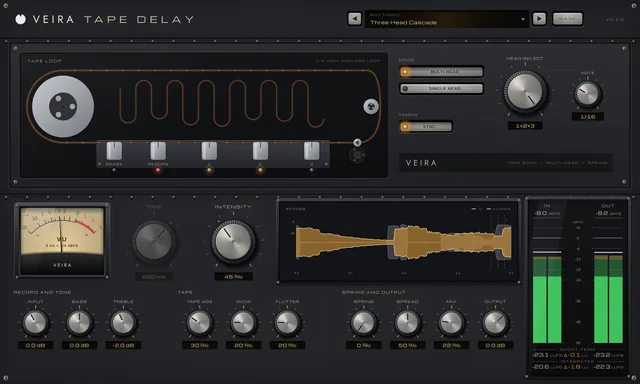
A tape echo machine: a loop of tape past three playback heads, every repeat recorded onto the tape again, so the echoes saturate, darken and bend in pitch as on the classic studio echoes.

$149.99

VEIRA Echo

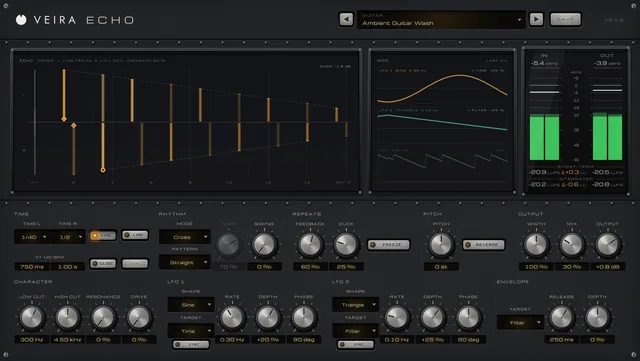
A modern stereo delay that shows every repeat, with rhythm, pitch and movement built in.

$69.99

VEIRA Space

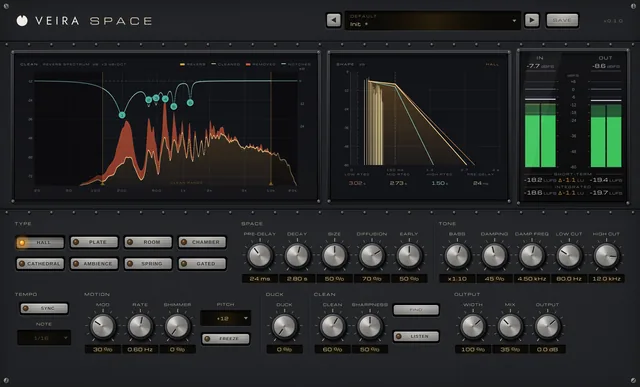
An algorithmic reverb that takes the ringing out and leaves the space.

$149.99