Analog delay on guitars and synths: repeats that sit behind the part
Why analog-style repeats sit behind a guitar or synth instead of fighting it, how to choose the time, feedback and tone, and how to use modulation and drive with taste.
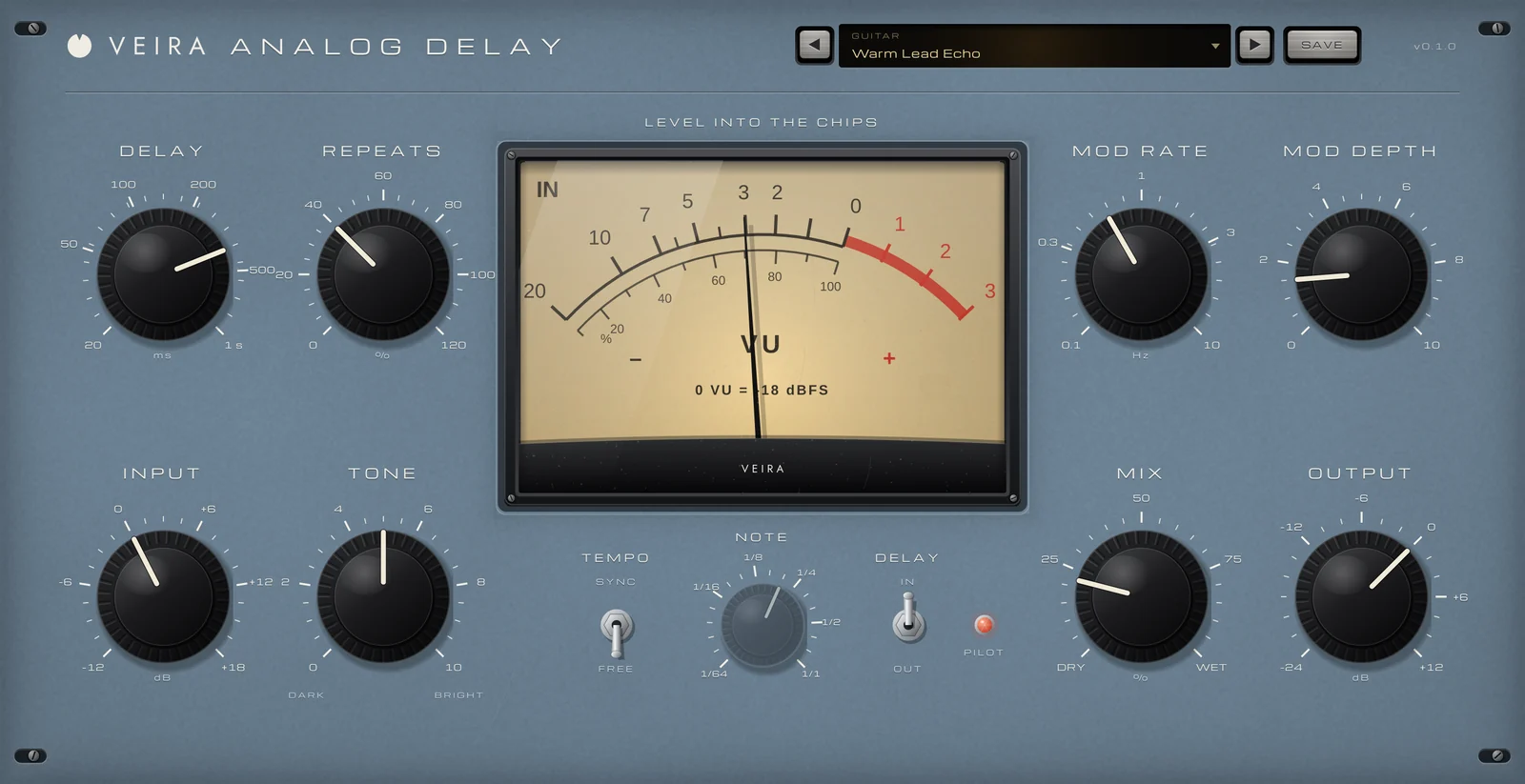
Put a clean, bright delay on a guitar solo or a synth lead and the repeats can be as loud and sharp as the part itself, smearing every note into the next. An analog delay does something more musical: each repeat comes back a little darker and softer than the last, so the echoes trail behind the part and fill the space around it instead of competing with it. Here’s how to set one up so it supports the line rather than burying it.
Why analog repeats sit back
The classic analog delays use bucket-brigade chips, which pass the sound along a chain of tiny capacitors at the speed of a clock. A longer delay means a slower clock, and a slower clock needs stronger filtering, so long delays are darker and grainier than short ones. Every repeat goes through the chips and the filters again, so the echoes lose top end as they fade. That gentle loss is exactly what keeps them out of the way of the dry sound.
Choose a time that fits the part
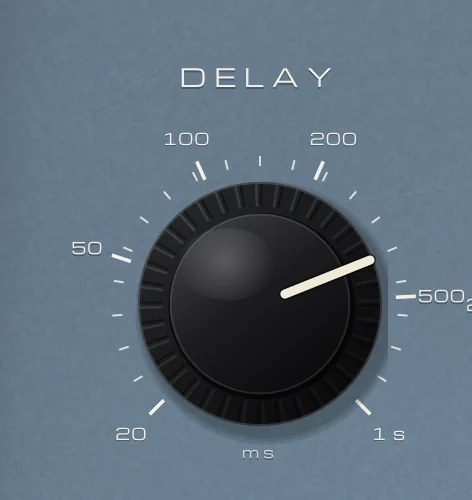
Start from the song’s tempo. A dotted eighth is a favorite on clean guitars and arpeggiated synths, because the repeats fall between the notes and create a rolling rhythm. A quarter note is calmer and leaves more room around a busy part. Very short times, around 20 to 50 ms, double or thicken a sound, and a slapback around 80 to 150 ms adds energy to rhythm guitars. On slow pads and long notes, a longer time adds space without cluttering the attack.
Set the feedback, tone and mix
Once the time is right, decide how long the echoes should last and how loud they are:
- Feedback: one or two repeats for a busy part, a longer tail for sparse lines and solos.
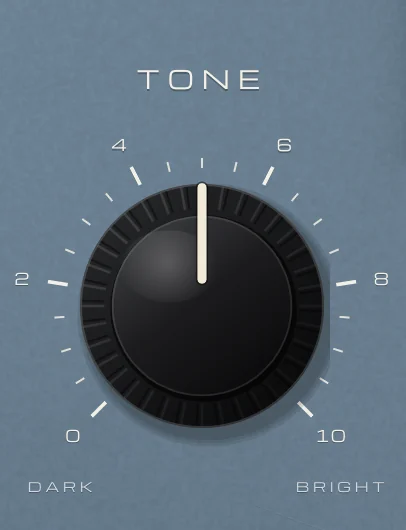
- Tone: darker repeats sit further back; brighter ones keep the rhythm clear in a sparse arrangement.
- Mix: on an insert, around 15 to 30 % is often enough; on a send, set the delay fully wet and use the send level.
- Low end: clean up the bottom of the repeats, so they don’t thicken the bass and kick.
- Bypass: switch the delay off now and then; if you miss it, it’s working, and if you don’t notice, it may be too low or too dull.
Modulation and drive, with taste
A slow, shallow modulation on a short delay turns into a chorus; on a long delay it becomes a gentle warble that makes the repeats feel less static. Keep the depth low on parts that need to stay in tune with the rest of the band. Driving the input adds grit and thickness to the echoes, which can make a synth line feel warmer, but too much quickly turns them into fuzz.
Doing it with VEIRA Analog Delay
VEIRA Analog Delay is a bucket-brigade delay, modeled on the classic analog units. DELAY, from 20 ms to 1 s, is the speed of the chips’ clock, so short echoes stay bright and long ones turn dark and grainy. TONE is a gentle filter on every repeat, from 600 Hz up to fully open, and since every repeat goes through it and the chips again, the echoes darken as they fade into the distance. Flip TEMPO up to SYNC and NOTE sets the delay as a note value of your DAW’s tempo, with dotted and triplet values.
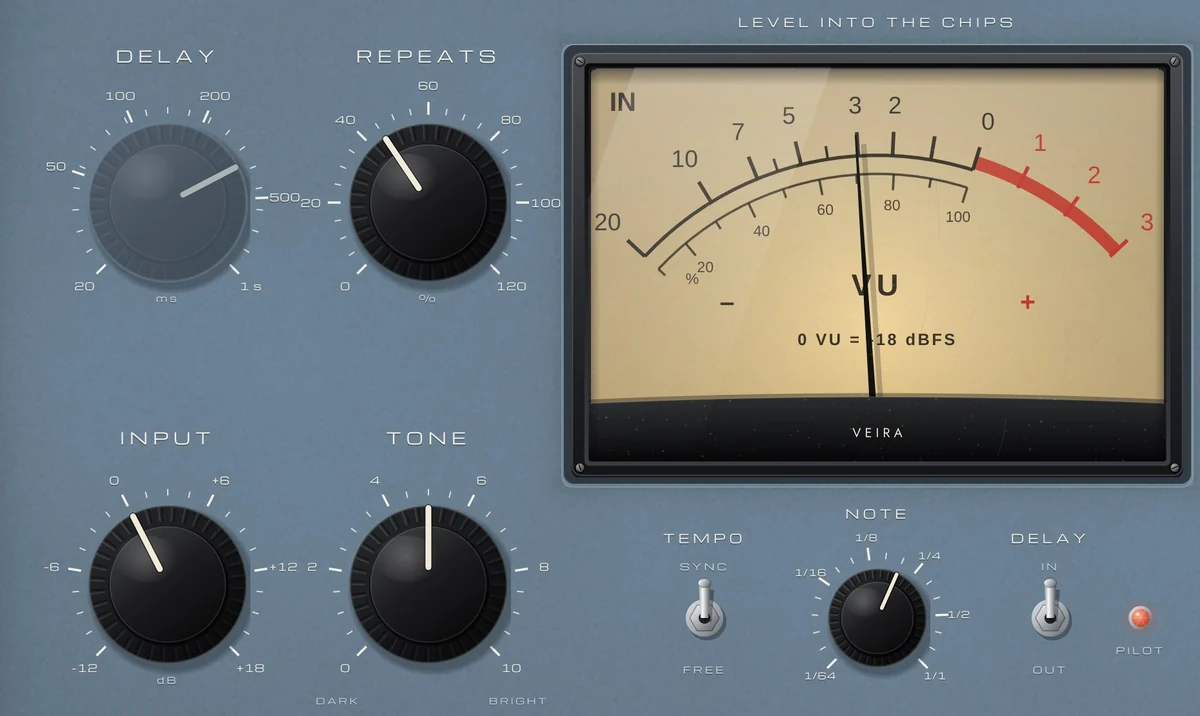
REPEATS is the feedback, from 0 to 120 %: at 50 % each repeat is about 6 dB quieter than the last. MOD RATE and MOD DEPTH put a sine on the chips’ clock, a chorus or vibrato on short delays and a warble on long ones. INPUT, from −12 to +18 dB, sets how hard the chips are driven, read on the big VU meter, and the echoes keep their level, within about 2 dB fully driven, so the drive is in their sound rather than their volume.
MIX blends the echoes with the dry sound, and there’s no latency. The Guitar folder of its presets is a good place to start, and each preset’s note says what to set first.