Four colours of gate: clean, punchy, smooth and vintage
Why one gate isn’t enough: when to reach for a precise modern gate, a drum gate with a band-pass key, a smooth downward expander or a vintage console channel gate, and what each does to the sound that the others don’t.
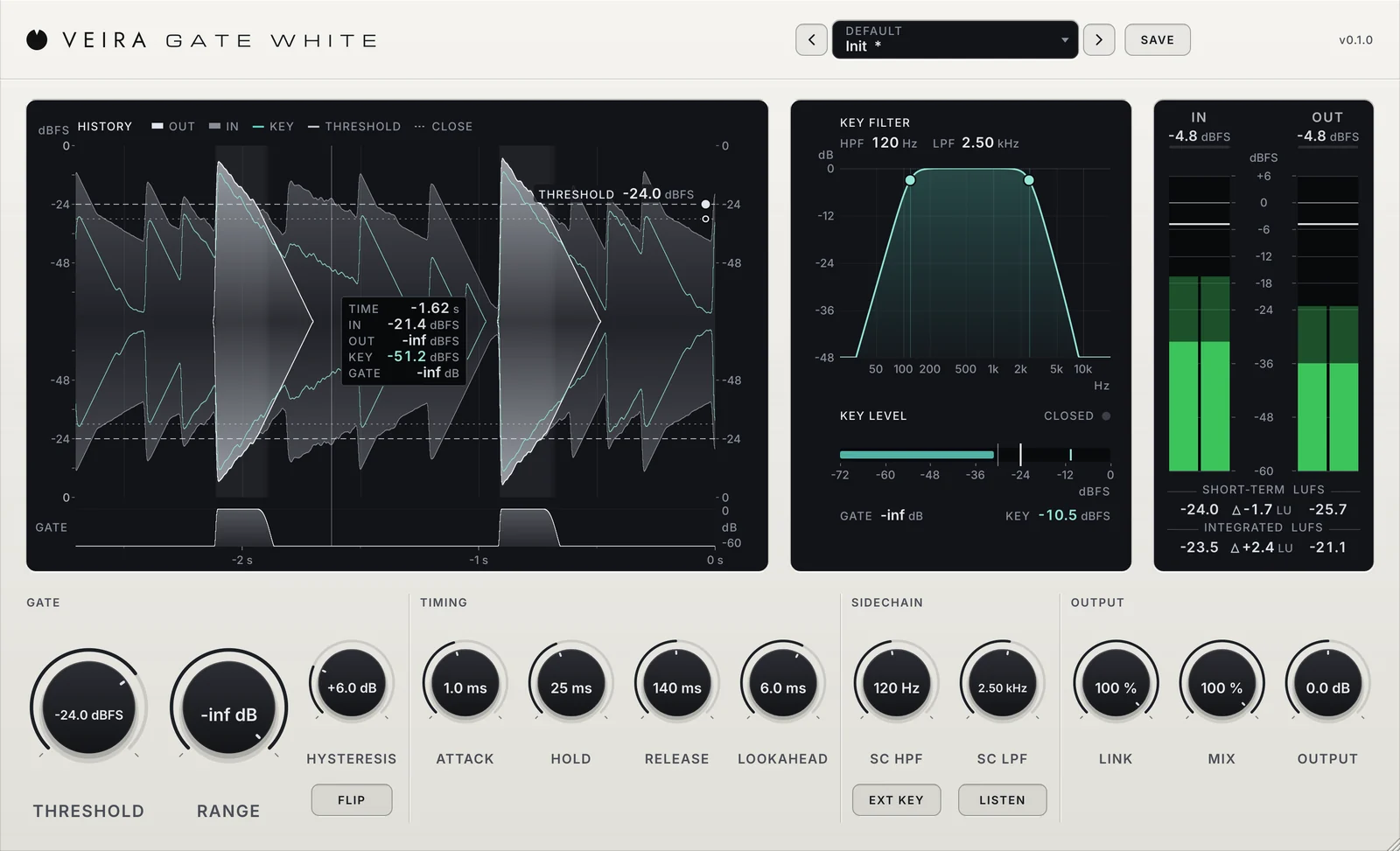
Every gate turns down what lies between the notes, so why would you want more than one? Because gates differ in what they listen to, in how they move, and in whether they switch or lean. One opens on the exact sample a hit arrives and closes without a click; another listens only to the body of a snare and adds crack as it opens; another never switches at all and only leans the room down between phrases; another snaps open the way a console channel did. The kind of gate shapes the result as much as the threshold does.
Clean: exactly when you ask
A clean, modern gate does what its controls say and nothing else. It opens on the first sample that reaches the threshold, closes along a curve with no corners, so it never clicks, and keeps a separate close point under the threshold (hysteresis) so a note dying away over noise can’t flutter it open and shut. A lookahead lets it hear the hit a few milliseconds early, so it is already open when the transient arrives. Filters on the key decide what it listens to without touching what you hear, and an external key lets another track open it, or, flipped, duck it.
Punchy: the drum gate
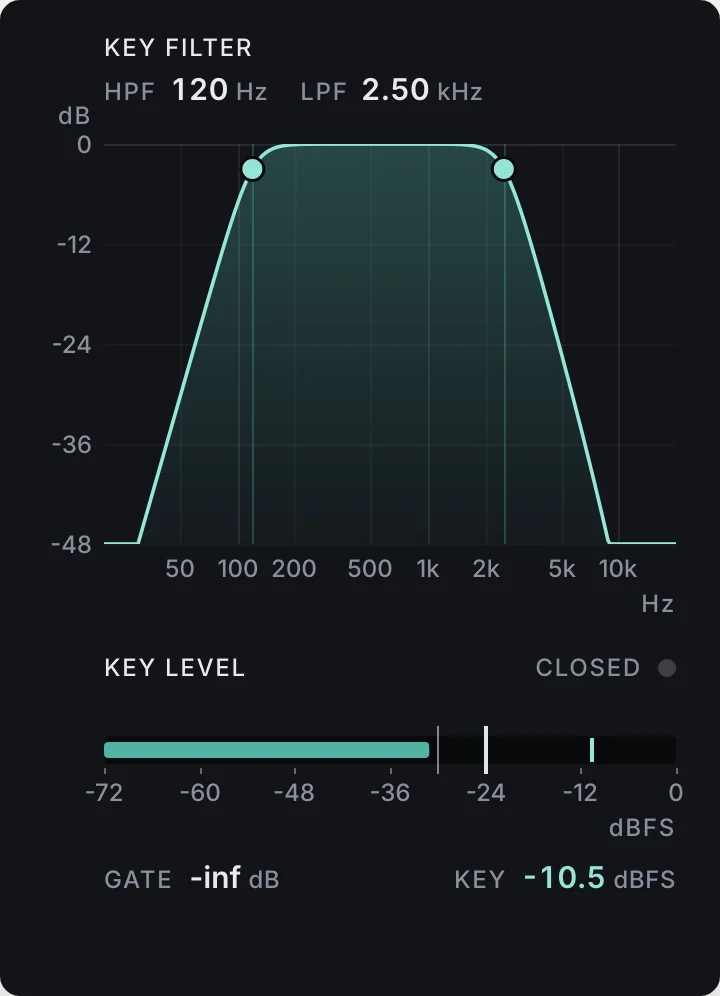
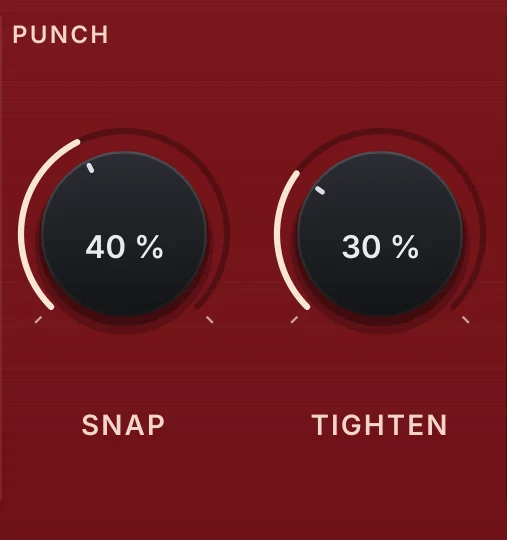
On a drum kit every microphone hears every drum, and the bleed between snare hits can be louder than the softest backbeat. No threshold separates them; a key that hears only the drum’s own body can. A band-pass on the key, placed on the snare’s body or the kick’s low end, leaves the cymbals and the other drums far under the threshold. A drum gate can also shape the hit as it opens: a short boost on the attack for more crack, and a pull-down after it for a shorter ring. Because a band-passed key arrives a few milliseconds late, lookahead matters even more here.
Smooth: the downward expander
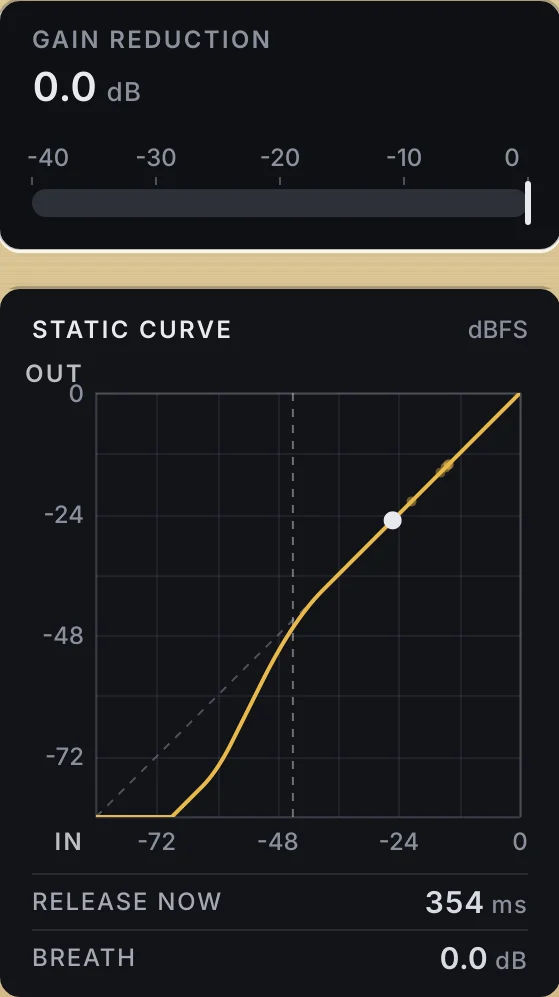
On a voice a gate can sound like a switch: the room cuts in and out with every word. A downward expander does the same job gently. Under the threshold it leans the level down by a ratio, so the noise between phrases goes a long way down while the soft end of a word just under the threshold only comes down a little, and a range sets the most it ever takes off, so the room gets quieter but never dead. A lookahead lets it open before the first consonant, and a release that follows the programme cuts short noises quickly and lets long phrases fade naturally. Breaths are the hard part: they are often louder than the threshold, so the smartest expanders recognise them by what they are, not by their level.
Vintage: the console channel gate
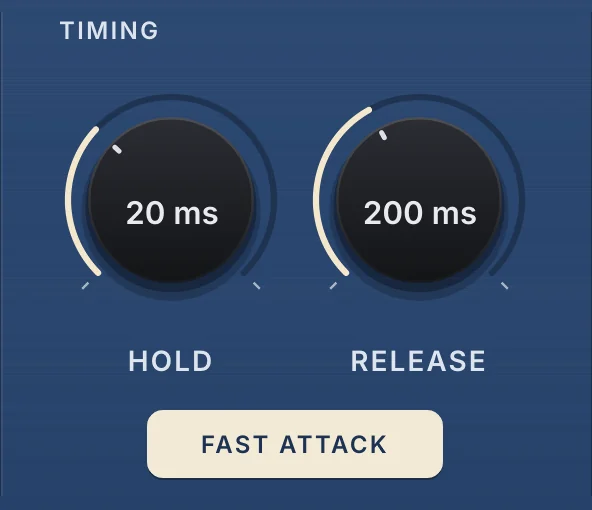
On the large British consoles of the 1970s, the channel strips carried a gate / expander: a threshold, a range, hold and release, a fast-attack switch and a choice of gate or expander, with the channel’s filters able to feed the side chain so a snare’s gate ignores the kick. Its gain cell opened along a curve in decibels, so the level snaps open in its last few dB, and closed in a straight line, with no lookahead at all. That attack is part of the sound of countless drum records, and the channel electronics added a gentle colour on the way through.
Set the threshold against the key
Whatever the gate, the aim is the same: the threshold over the loudest bleed or noise and under the quietest note you want to keep. Judge that on the key, the signal the gate actually listens to, not on the waveform you hear; with a filtered key the bleed can sit far lower than it looks. Then set hold so notes aren’t cut inside their decay, and release so the tail fades rather than stops.
Less range is often more
A gate doesn’t have to close all the way. Turning the gaps down by 10 to 20 dB instead of to silence keeps the room and the rest of the kit breathing, and makes the gate’s movement far less audible. Start there when a gate sounds too obvious, before you touch anything else.
Doing it with the VEIRA colour gates
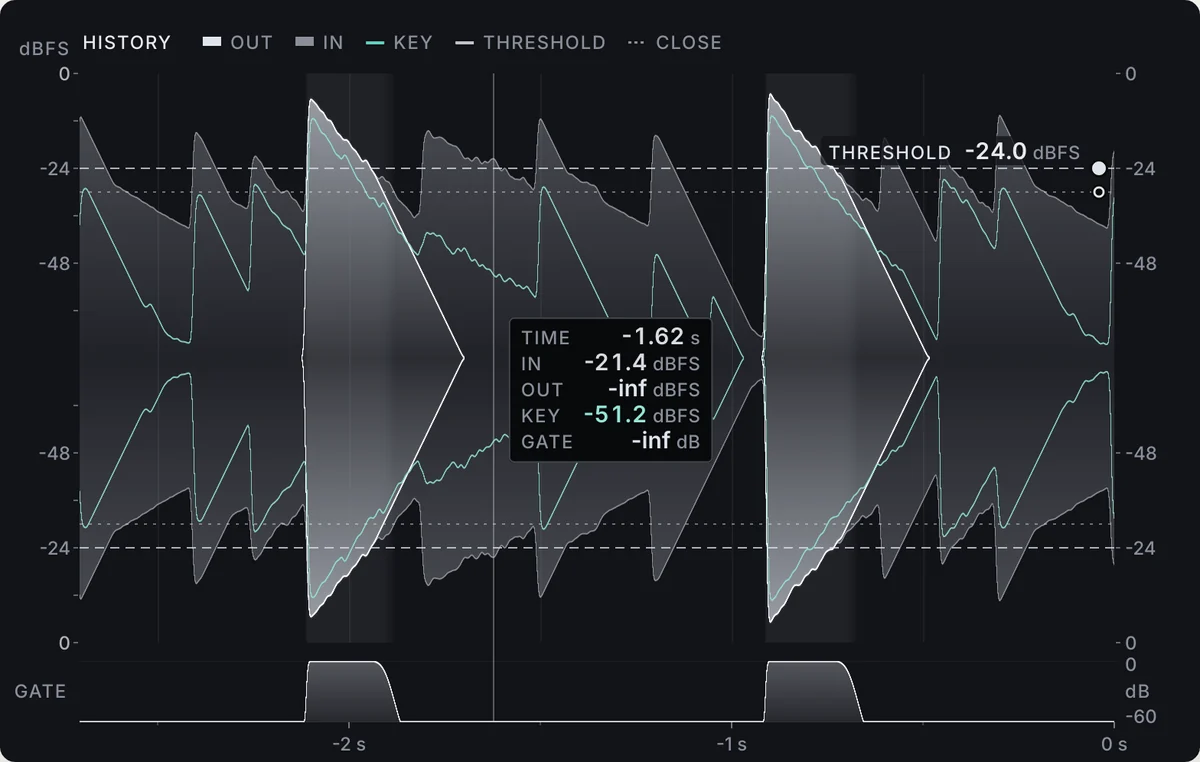
VEIRA Gate White is the clean one: a sample-exact trigger, HYSTERESIS, LOOKAHEAD up to 10 ms, key filters with LISTEN, an external key and FLIP ducking. VEIRA Gate Red is the punchy one, a drum gate with a band-pass KEY, SNAP and TIGHTEN. VEIRA Gate Gold is the smooth one, a downward expander with RATIO, KNEE, an AUTO release and BREATH for vocals, dialogue and acoustic instruments. VEIRA Gate Blue is the vintage one, a 1970s British console channel gate / expander with FAST ATTACK, GATE / EXPAND, FILTERS TO S/C and COLOUR. Each is painted like the colour compressor, limiter and EQ of the same name.