Four colours of EQ: clean, mid/side, warm and vintage
Why one equalizer is never enough: when to reach for a clean surgical EQ, a mid/side EQ, a warm passive tube program EQ or a vintage console EQ, and what each does that the others don’t.
Every equalizer turns frequencies up and down, so why would a mix need more than one? Because EQs differ in what they are for. Some are built to change only what you ask and nothing else; some work on the stereo picture rather than the whole signal; some are built around a few broad, flattering curves and the sound of the circuit they pass through. Picking the right kind for the job is half of good EQ.
Clean: precision you can’t hear
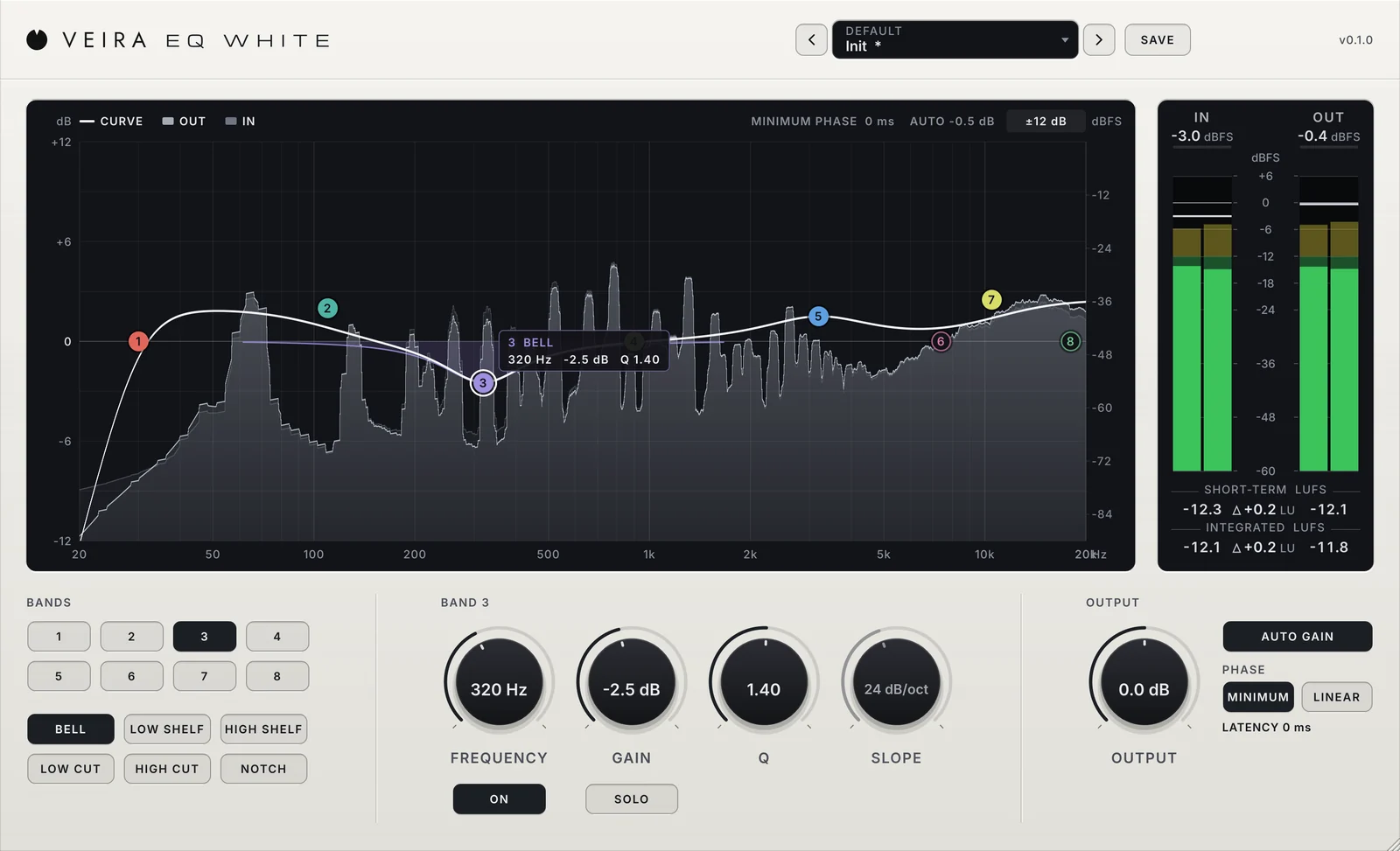
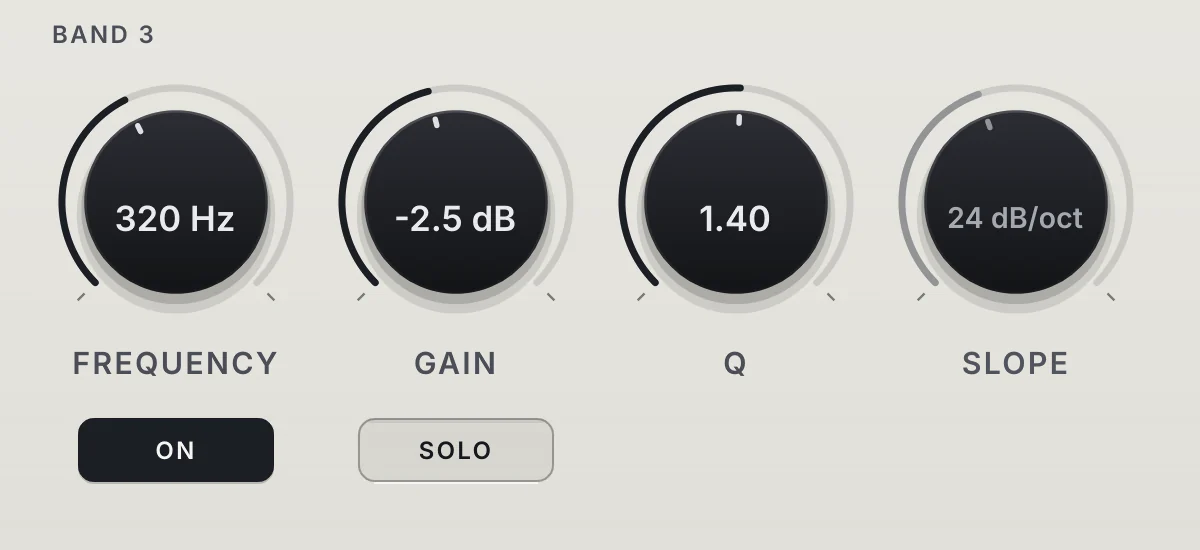
A clean parametric EQ is the tool for problems with a precise frequency: a ringing tom, a boxy spot in a vocal, mains hum, rumble. Narrow cuts, steep filters and notches do the work, and the EQ itself should add nothing. Two things help: a way to hear just the region a band works on, so the problem jumps out as you sweep, and a choice of phase. Minimum phase adds no latency and behaves like an analog EQ; linear phase leaves the phase of the music untouched for mastering, at the cost of latency and a faint pre-ring before sharp transients with steep, low cuts.
Mid/side: EQ the centre and the width separately
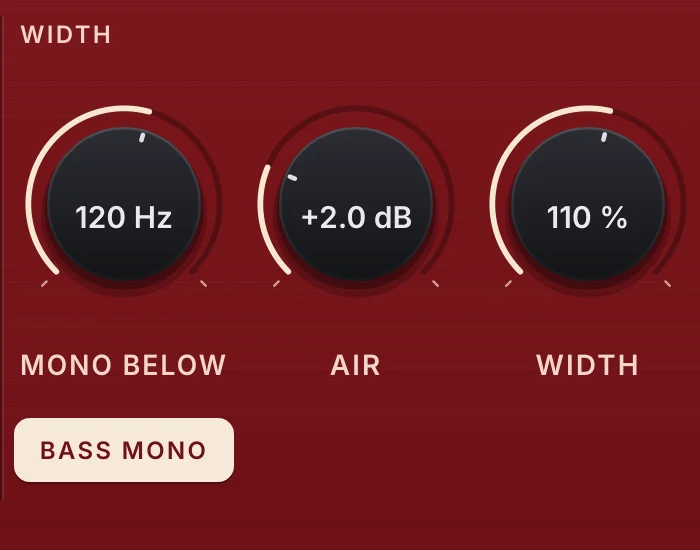
A stereo mix can be split into mid, what both speakers share, and side, what differs between them. The vocal, the kick, the snare and the bass usually live in the mid; the room, the reverbs, wide guitars and cymbals in the side. An EQ on the mid changes the centre, one on the side the width. So you can lift a vocal’s presence without brightening the cymbals, take the mud out of wide guitars without thinning the bass, or make the low end mono for clubs and vinyl. Side-only moves never change what a mono speaker plays.
Warm: broad curves and a tube
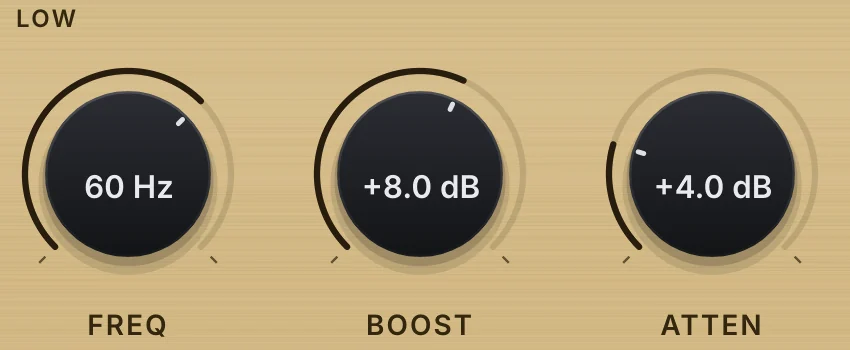
The passive program equalizers of the 1950s were built to shape whole programmes with a few broad curves on fixed frequencies, then bring the level back up with a tube amplifier. Their low section is famous: boost and attenuate the same frequency at once, and because the attenuation reaches higher than the boost, you get more weight underneath and a gentle dip above that clears the mud. A resonant high boost with a gentle high attenuation gives the silky top. It is hard to make sound bad, which is why it is so often on vocals, buses and masters.
Vintage: the console channel
The British inductor console EQs of the 1970s were built for fast, decisive moves on every channel: stepped frequencies, a steep high-pass, a low shelf that rounds off with a small bump and dip, a mid bell that narrows as you push it, and a high shelf that rises over several octaves. Their transformers saturate the lows first when driven. The result is punchy and forward: kicks thump, bass growls, vocals and guitars step out of the mix.
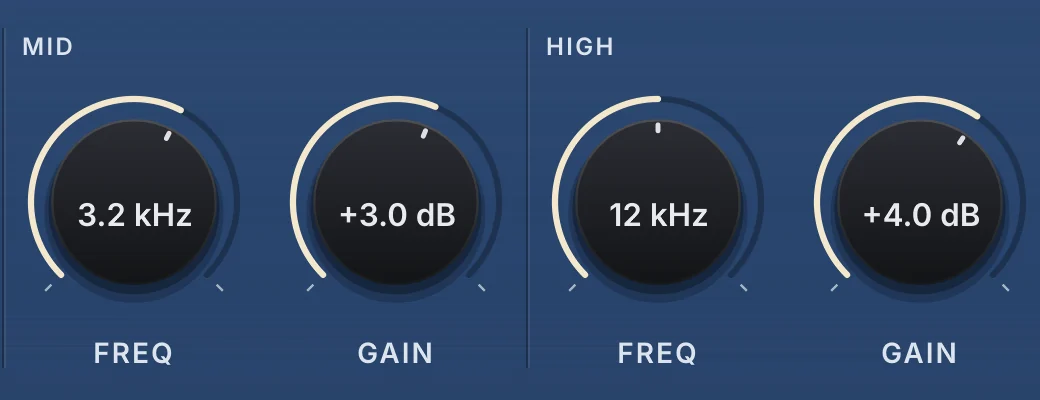
Judge every EQ at equal loudness
A boost makes music louder, and louder always sounds better for a moment. Whatever the EQ, match the level before you decide, with an automatic gain or by trimming the output until a loudness meter reads the same as bypass. Then you hear the tone, not the level.
Doing it with the VEIRA colour EQs
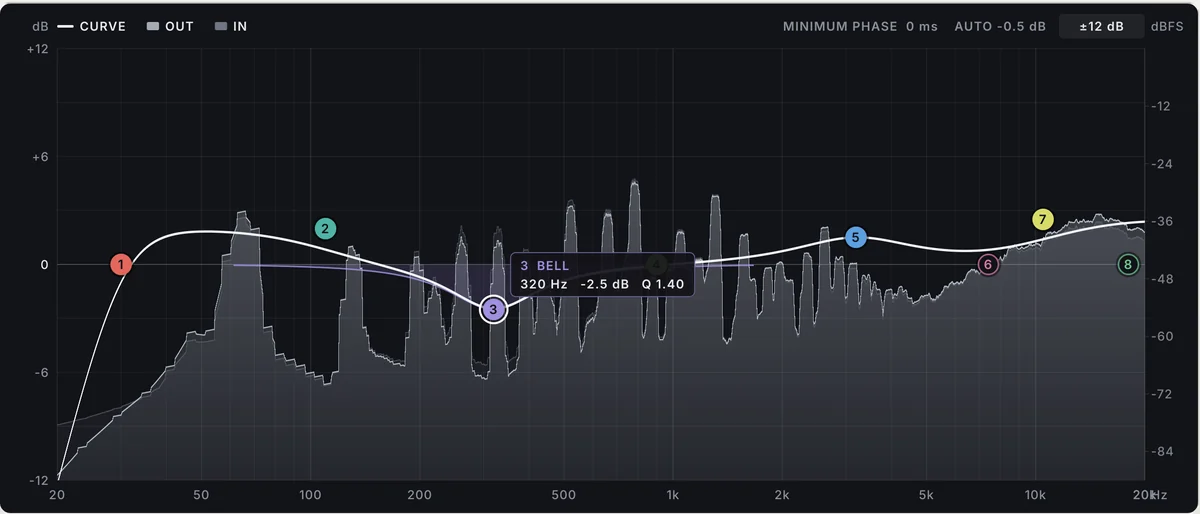
VEIRA EQ White is the clean one, with eight bands of any shape, SOLO, AUTO GAIN and minimum or linear phase. VEIRA EQ Red is the mid/side one: every band on the stereo signal, the mid, the side or one channel, with BASS MONO, AIR, WIDTH and LISTEN. VEIRA EQ Gold is the warm one, a tube program EQ in the tradition of the classic passive program EQs, with a mid-range section and TUBE drive. VEIRA EQ Blue is the vintage one, in the tradition of the 1970s British inductor consoles, with COLOUR. Each is painted like the colour limiter of the same name and draws its curve over the live spectrum.