Recording bass: the DI, the amp and the compressor
How a recorded bass sound is built with VEIRA Bass Rig: compression that holds the low end without distorting it, an amp channel, a miked cabinet, and a DI blended in phase so the low end adds up.
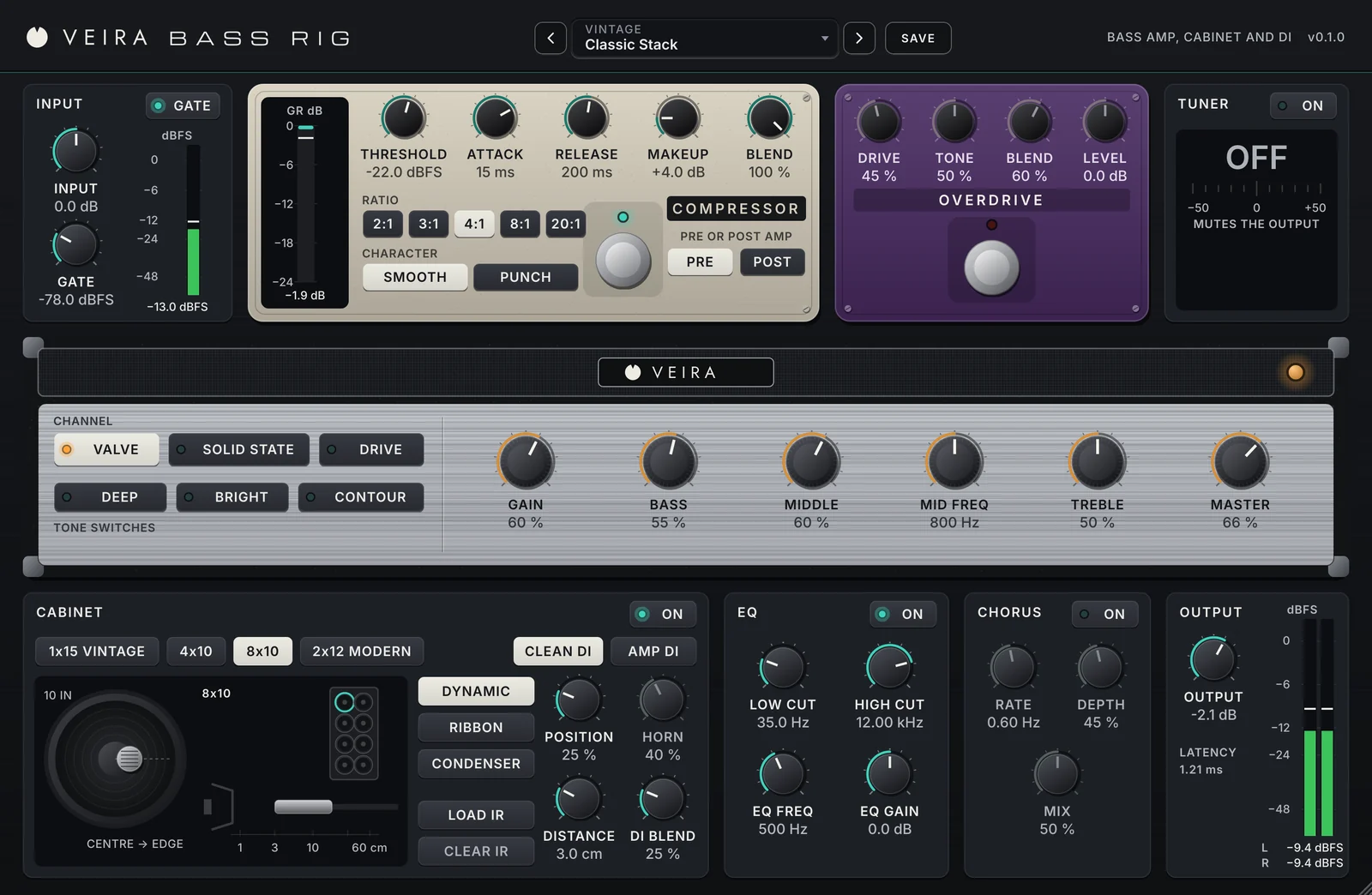
A bass in a finished mix rarely comes from one source. Engineers usually record it twice at once, through a DI box for a clean, solid low end and through an amp and a microphone for growl and character, and compress it so every note sits at the same level. Recording the bass straight in keeps all of those choices open until the mix. VEIRA Bass Rig puts them in one rig; this is how to build a recorded bass sound with it.
Compression comes first
A bass line only holds a mix up when its notes are even. Start with the compressor before the amp, on SMOOTH at 4:1, and lower THRESHOLD until the meter shows 3 to 6 dB of gain reduction on the loud notes. Bass is hard on compressors: one that is too fast follows a low note’s waveform and distorts it, and one that lets go too quickly pumps. This one listens above 30 Hz, holds each reading for one period of a five-string’s low B, and releases more slowly after long compression, so you can set it firmly.
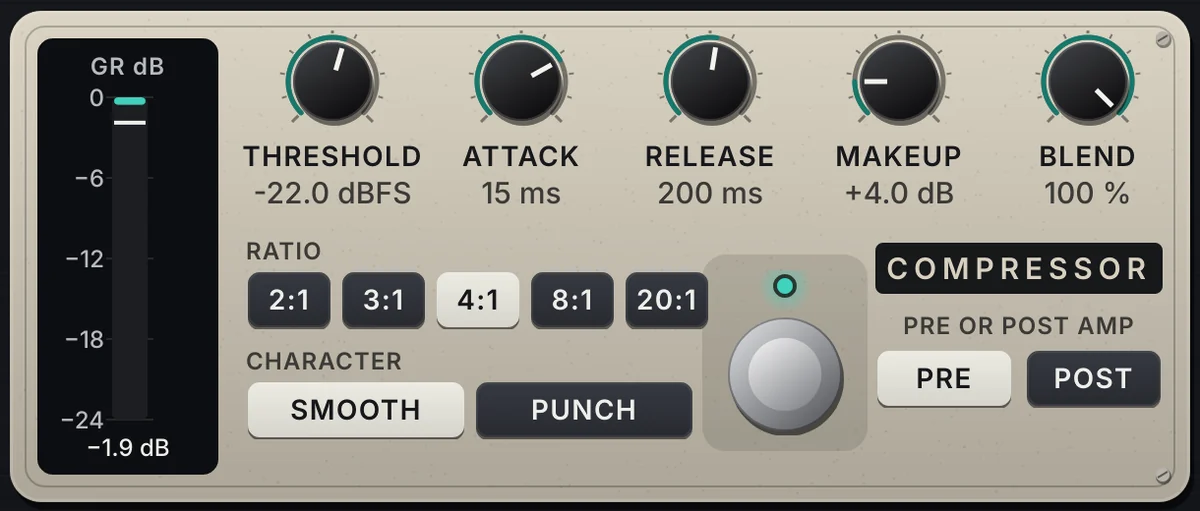
- For slap, choose PUNCH and 8:1: it grabs the thumb and lets the pops through.
- Raise ATTACK to let the pluck through before it compresses.
- Lower BLEND for parallel compression: the uncompressed bass keeps the attack while the compressed one holds the level.
- Move it POST to hold the whole recorded sound together, amp, cabinet and DI.
The amp and the cabinet
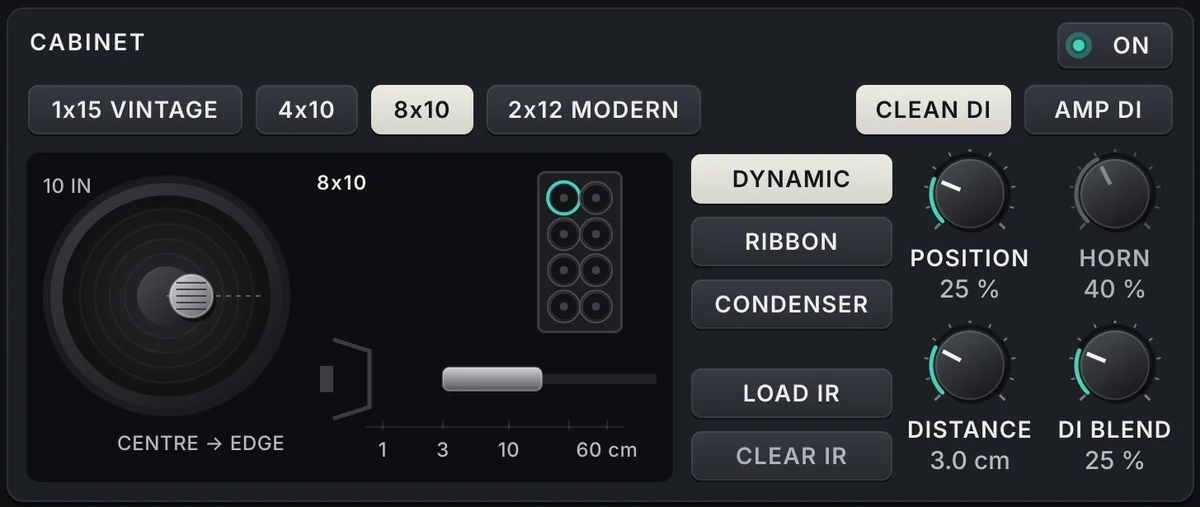
The channel sets the character: VALVE is warm and round and blooms when you dig in, SOLID STATE is punchy and hi-fi, and DRIVE adds grit to the middle while its lows stay clean. MIDDLE works at the MID FREQ you choose: low for body, 800 Hz for growl, high for finger noise. Then the cabinet: a 1x15 is deep and round, a 4x10 punchy with a clear growl, an 8x10 has a huge low middle. A microphone near the centre of the speaker is brighter, towards the edge darker; close in, it picks up more proximity bass.
Blending the DI in phase
The DI carries the fundamental and the attack, the miked cabinet the growl. But a cabinet turns the phase of the low end, so a DI mixed straight in partly cancels it: the blend sounds thinner than either on its own. In a studio, engineers nudge the DI track or flip its polarity until the low end comes back. VEIRA Bass Rig levels the DI to the cabinet and turns its phase with each cabinet’s, so DI BLEND only adds weight. Start around 30 % of CLEAN DI and raise it until the bass holds the bottom of the mix; use AMP DI when you want the channel’s grit without the speaker’s roll-off.
Grit that keeps the low end
Distorting a whole bass signal blurs its lows. The overdrive splits the bass at 160 Hz and drives only the mids and highs, and the DRIVE channel splits it at 200 Hz, so the fundamental stays clean under the grit. Keep some clean DI blended in for the solid bottom, as many rock and metal records do.
Read the page of VEIRA Bass Rig for every control, or start from its presets: Studio Clean, Sixties Thump, Slap Snap, Grit and Growl and Five String Deep.