Four colours of compressor: clean, punchy, warm and vintage
Why studios keep more than one compressor: when to reach for a clean modern compressor, a fast FET, a tube optical leveller or a vari-mu, and what each does to the sound that the others don’t.
Every compressor turns the loud parts down, so why do studios keep racks of them? Because compressors differ in how they decide when and how much to turn down, and in what their circuit adds on the way through. One grabs a transient in microseconds, another takes a phrase down gently and lets go over seconds, another bends its ratio as you push it. The kind of compressor shapes the sound as much as the settings do.
Clean: exactly what you ask for
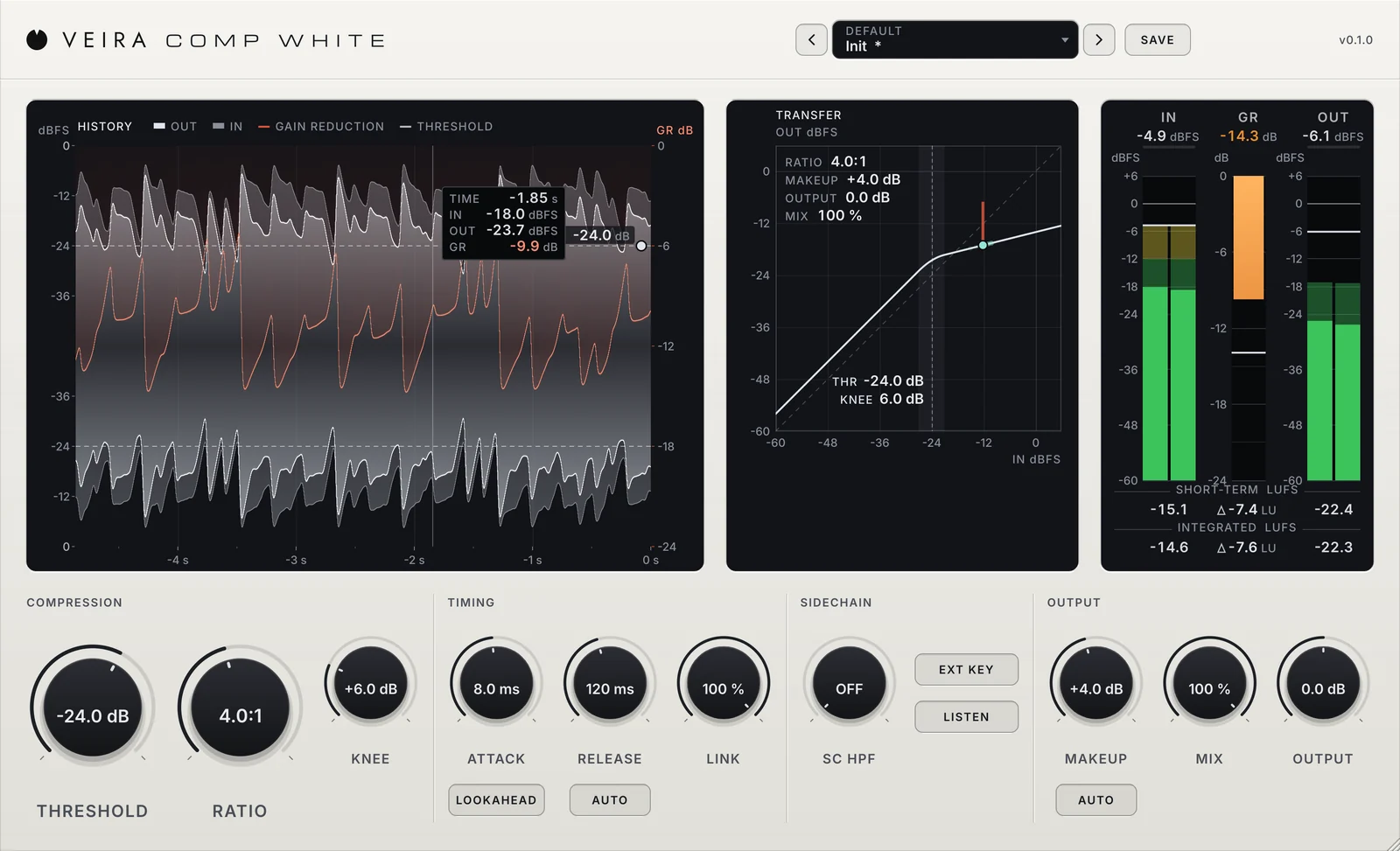
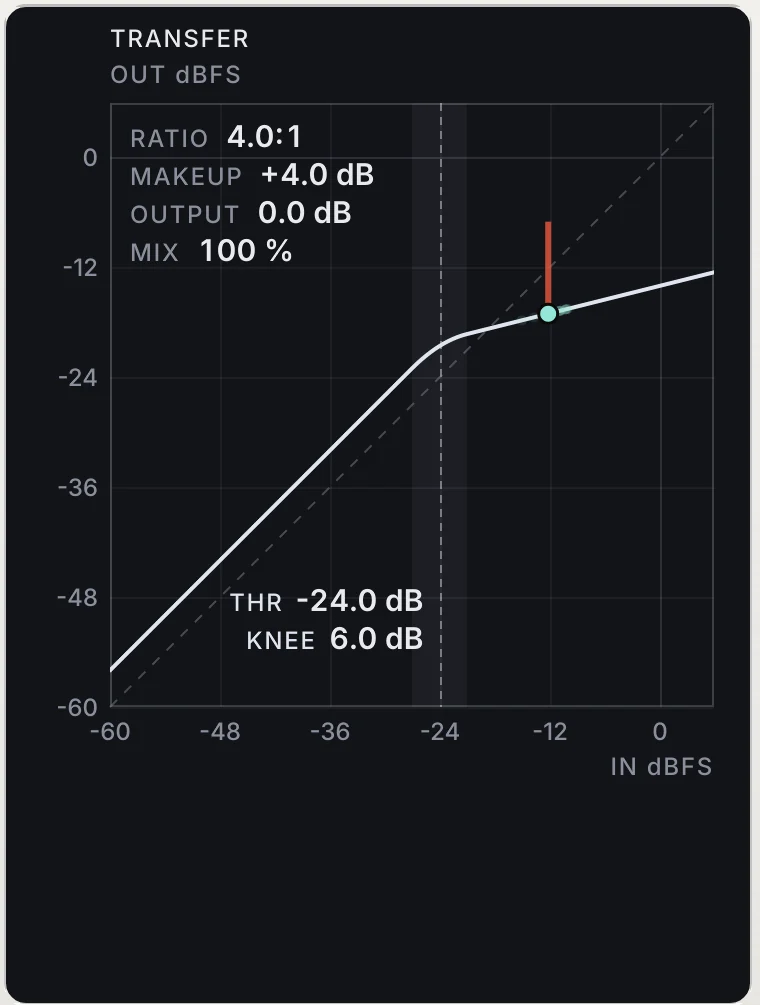
A clean, modern compressor does what its controls say and nothing else: a threshold, a ratio from gentle to infinite, a knee, attack and release times you can trust, and no colour of its own. It is the tool for control you shouldn’t hear and for jobs that need precise tools: an external key to duck a bass under the kick, a lookahead to catch consonants cleanly, a sidechain high-pass so the low end doesn’t pump the mix. One detail matters on bass: a detector that follows the wave makes the gain ripple and adds distortion, so a short hold before the release keeps low notes clean.
Punchy: the FET
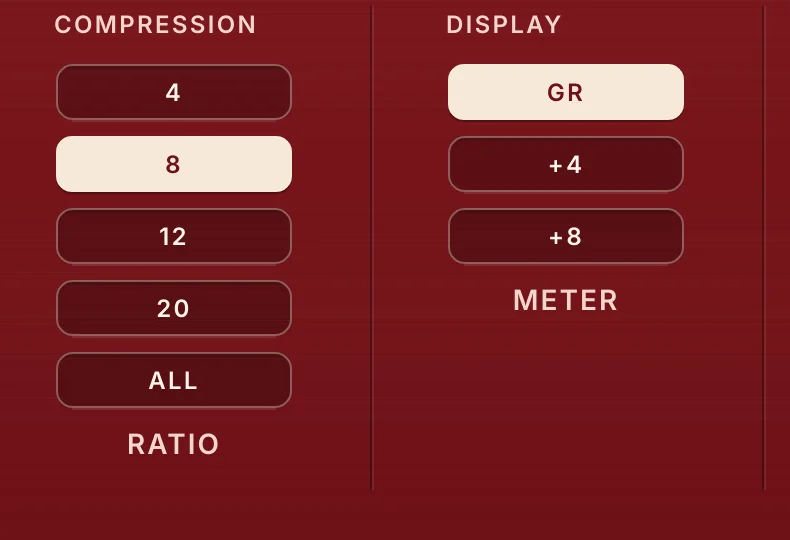
The classic FET studio compressor is fast: its attack is measured in microseconds, so even its slowest setting is quicker than most compressors’ fastest. It has no threshold knob; you drive the signal into a fixed threshold with the input and set the level with the output. A slow attack lets the front of each hit through and a fast release brings the room and the tail up behind it: that is the snare crack and the forward vocal. The FET adds a bite that grows with the compression, and pressing every ratio button at once, the famous all-buttons trick, makes room mics explode.
Warm: the tube optical leveller
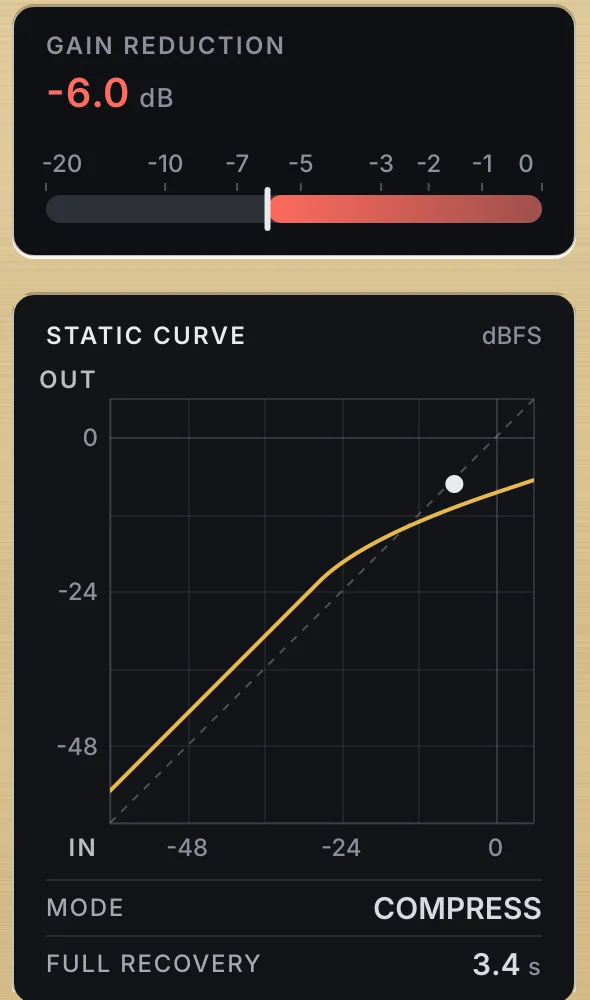
In an optical leveller the side chain lights a small panel, and a photoresistor in the audio path turns the music down with that light. A photoresistor is slow and it remembers: it catches a phrase in about ten milliseconds, lets go of half the reduction quickly, then releases the rest over seconds, the longer the harder it has worked. There is nothing to set but how much; the cell decides the rest. That is why the classic tube optical levellers sit on so many vocals and basses: the level stays put and nothing ever sounds grabbed.
Vintage: the vari-mu
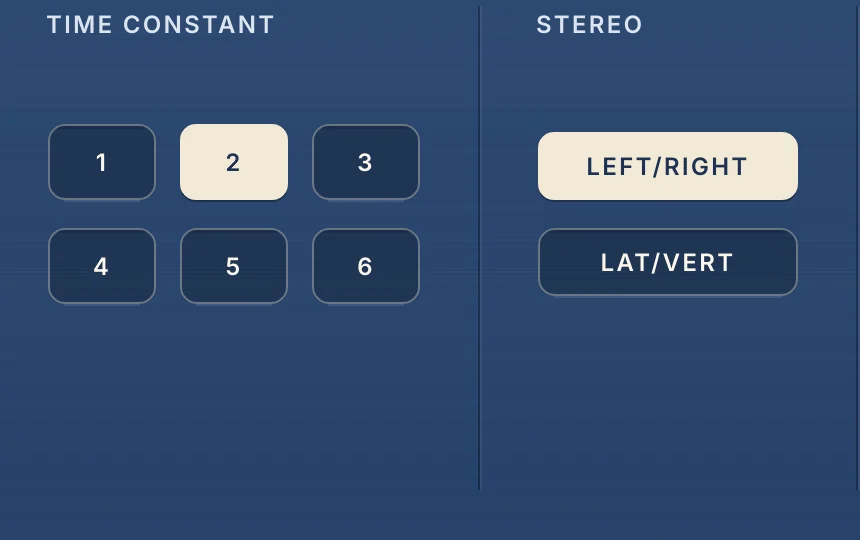
In a variable-mu compressor the tubes themselves are the gain control: their gain falls smoothly as the side chain biases them, so the ratio rises with level, barely compressing near the threshold and holding firmer the harder you push. With slow, switched time constants, some of which lengthen after sustained compression, it is the classic glue for mix buses and masters. The classic vari-mu tube compressors also offer a lateral / vertical mode that compresses the mid and the side of a stereo signal separately.
Parallel compression works with all of them
Compress a copy hard and blend it under the dry signal, and you keep the natural attack while the body and the room come up. It works with any kind of compressor, each bringing its own character to the blend: crushed FET drums, a slowly breathing optical layer, a thick vari-mu bus. The two paths must be in time, so a compressor with a built-in mix that delays its dry signal to match is the easy way to do it.
Judge every compressor at equal loudness
Compression changes the level, and louder always sounds better for a moment. Whatever the compressor, match the output to the bypassed signal on a loudness meter before you decide. Then you hear what the compression does to the sound.
Doing it with the VEIRA colour compressors
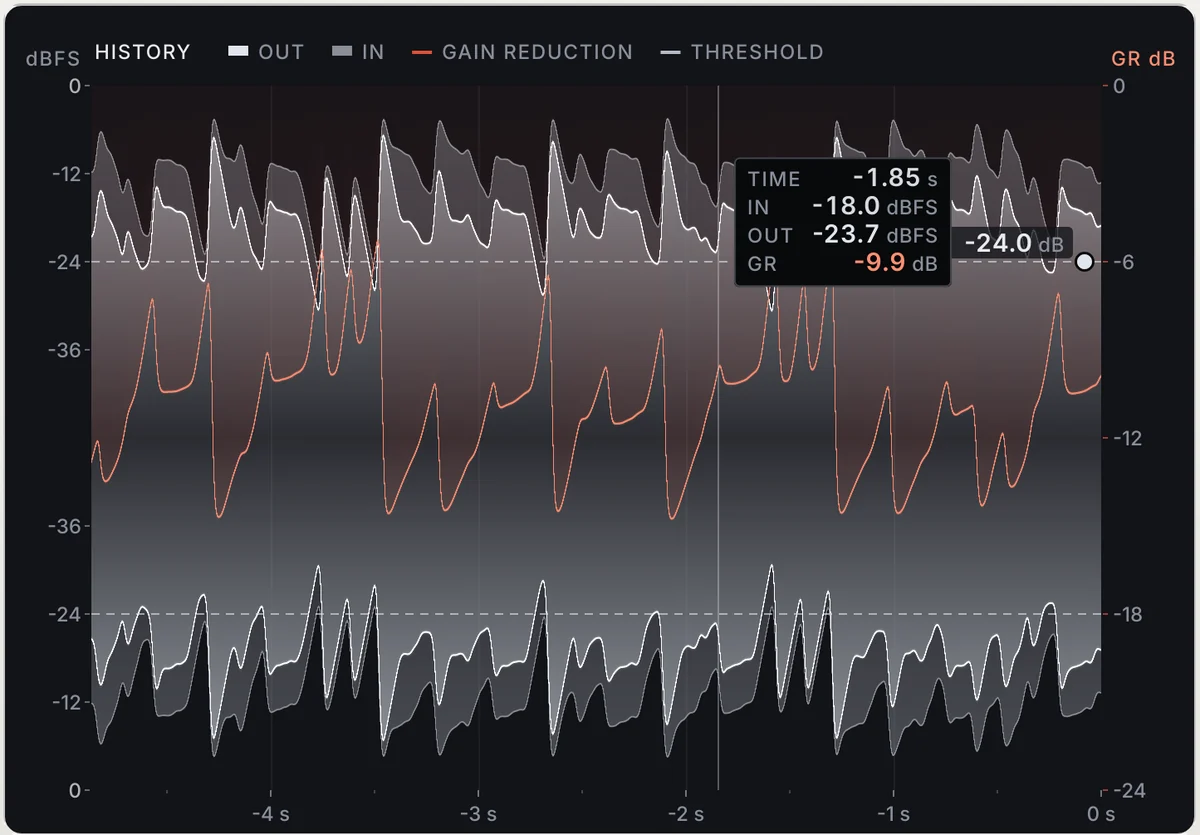
VEIRA Comp White is the clean one: an exact curve from 1:1 to infinity, LOOKAHEAD, an external key with LISTEN and AUTO release. VEIRA Comp Red is the punchy one, in the tradition of the classic FET studio compressor, with a 20 to 800 µs attack and ALL. VEIRA Comp Gold is the warm one, a tube optical leveller with the classic two-stage release, EMPHASIS and TUBE. VEIRA Comp Blue is the vintage one, a vari-mu with six time constants, LAT/VERT and COLOUR. Each has a parallel MIX in time with the dry signal and is painted like the colour limiter and EQ of the same name.