Four colours of limiter: clean, punchy, warm and vintage at −6 LUFS
What a limiter really does to a loud master, why every limiter shapes the peaks at −6 LUFS, and how to choose between a clean, a punchy, a warm and a vintage one by what the mix needs.
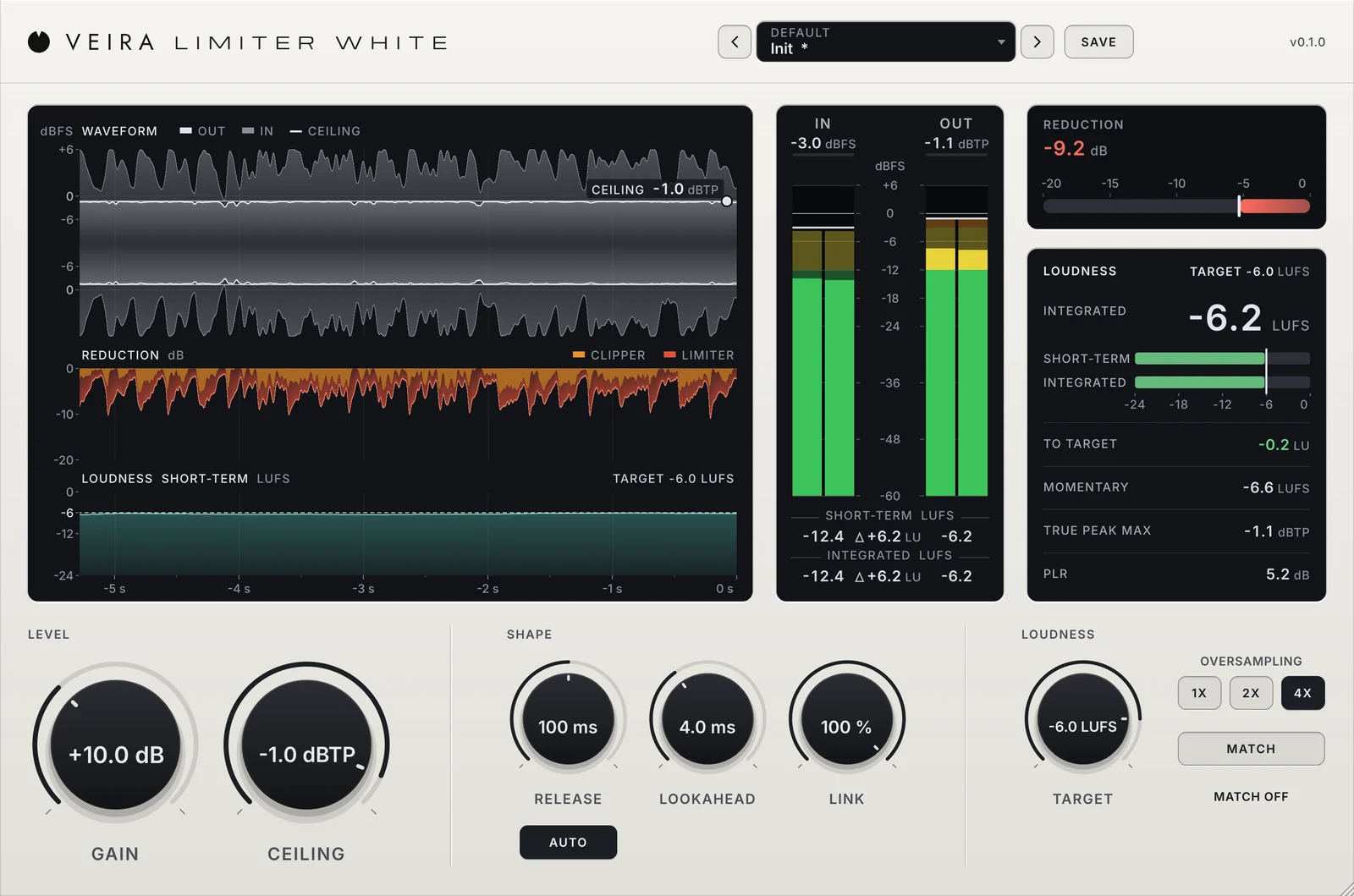
Every loud master ends in a limiter. You push the music in with gain, and whatever would cross the ceiling is held down to it: the quiet parts come up by the full amount, the peaks don’t move, and the song gets louder and denser. What sets one limiter apart from another is not that it does this, but how it decides which peaks to touch and what it does to them.
What −6 LUFS really costs
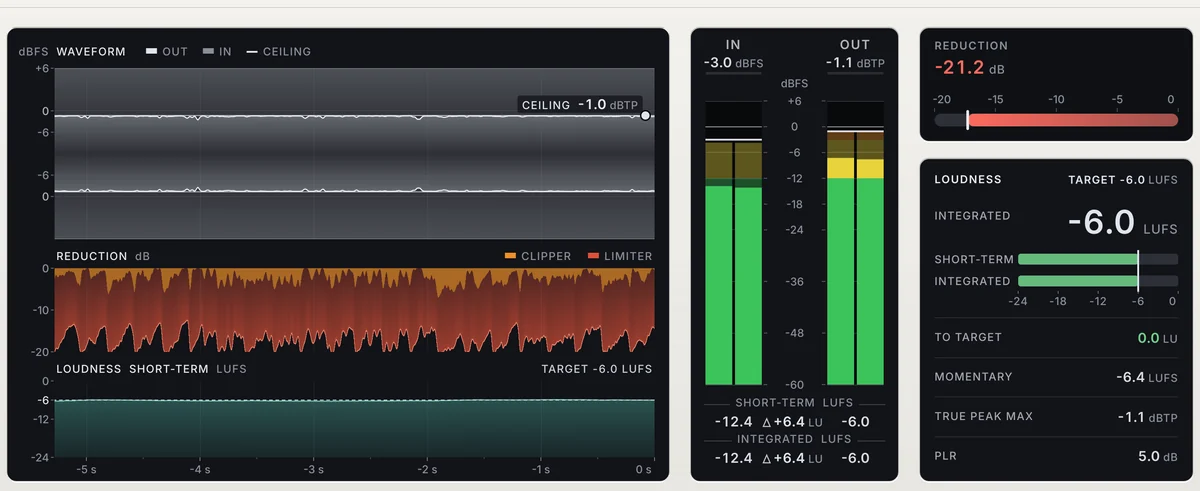
A dense premaster peaking at −3 dBFS usually reads about −12.5 LUFS: its peaks stand about 9.5 dB over its body. At −6 LUFS with a −1 dBTP ceiling there is room for only 5 dB between them. So the body has to come up 6.5 dB while the peaks may rise only 2. At that level any limiter shapes the peaks; the question is which peaks it shapes, and how. Measure the true peak too, not just the sample peak: the wave a converter or a codec rebuilds can rise between the samples.
Clean: keep the bass and the held notes whole
A clean limiter tries to change nothing but the level. The tell-tale damage of a hard-pushed limiter is in the low end and the held notes: bass waves get clipped into buzz, sustained chords and vowels get shaved, and the whole mix pumps with the kick. The cleanest approach is to let only the first milliseconds of the drum transients be rounded, and to turn the level down for everything else. That has a limit: a mix that is almost all sub-bass has no transients to give, so it stops short of the loudest targets.
Punchy: clip the hits, not the groove
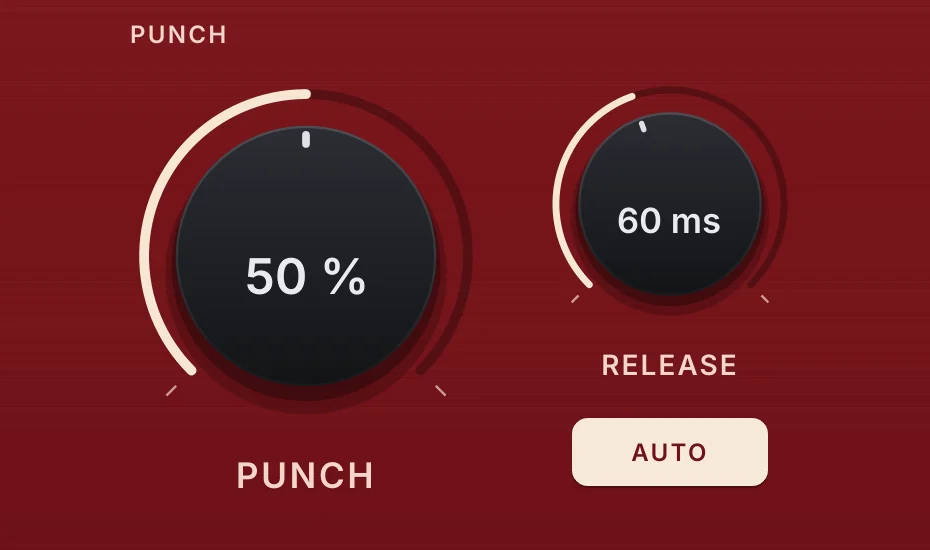
A limiter alone turns the whole mix down on every kick and snare, so the music between the hits dips and swells: the groove ducks. A clipper in front rounds the tips of the hits instead, and the limiter behind has little left to do. Set it so that only what jumps out of the music is clipped, and held notes always ride under it, and the drums keep their hit at loudness. Push it too far and the cymbals and snare turn edgy.
Warm: round the peaks with harmonics
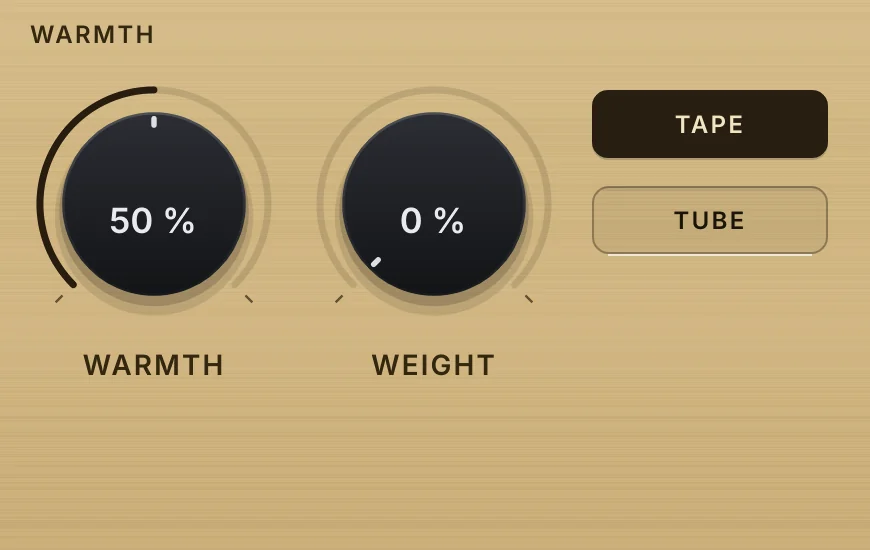
Tape and tubes pushed a little do the same job gently: quiet signals pass at their own level, and the louder the music gets, the more the peaks round off and the body gains low-order harmonics. Before a clean brickwall, that rounding reaches loudness a plain limiter can’t, and it sounds rich rather than hard. Tape’s odd harmonics glue and smooth; a tube’s second harmonic sounds fuller. Run it oversampled, so the harmonics don’t fold back.
Vintage: levelling you can hear
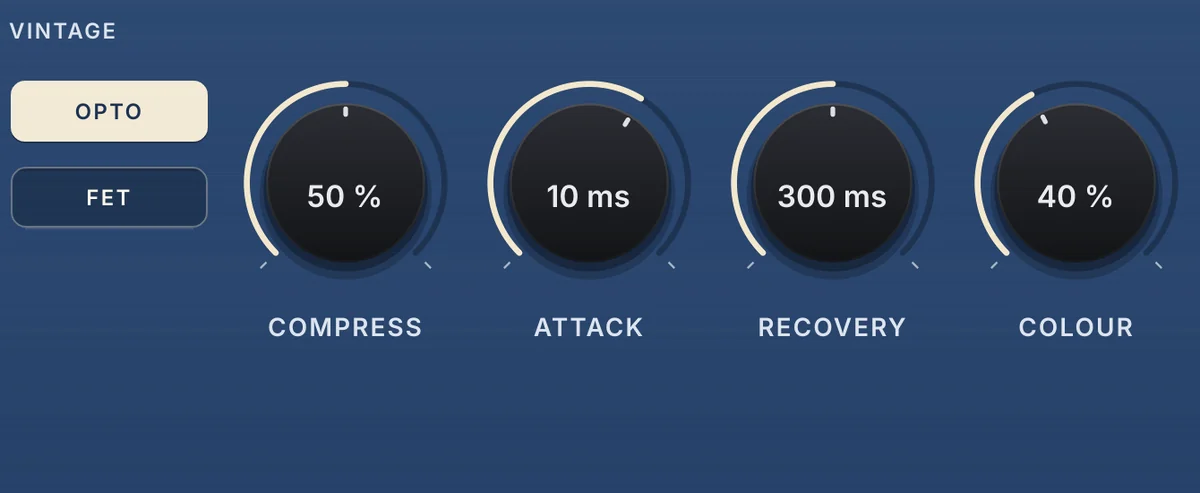
Optical and FET limiters from the 1970s were slower and programme-dependent: an optical cell holds part of its reduction longer the harder it has worked, a FET grabs the peaks fast. In front of a brickwall, that levelling makes a mix breathe and glue, and transformer iron adds weight to the lows while the mids pass clean. It is a sound, not a meter reading, so judge it at equal loudness.
Judge it at equal loudness
Louder always sounds better, so a limiter compared with its bypass always wins. Match the loudness before you decide: then you hear what the limiting did to the sound, not that it got louder. Watch the integrated loudness, the true-peak maximum and the PLR, and back off when more gain only adds reduction.
Doing it with the VEIRA colour limiters
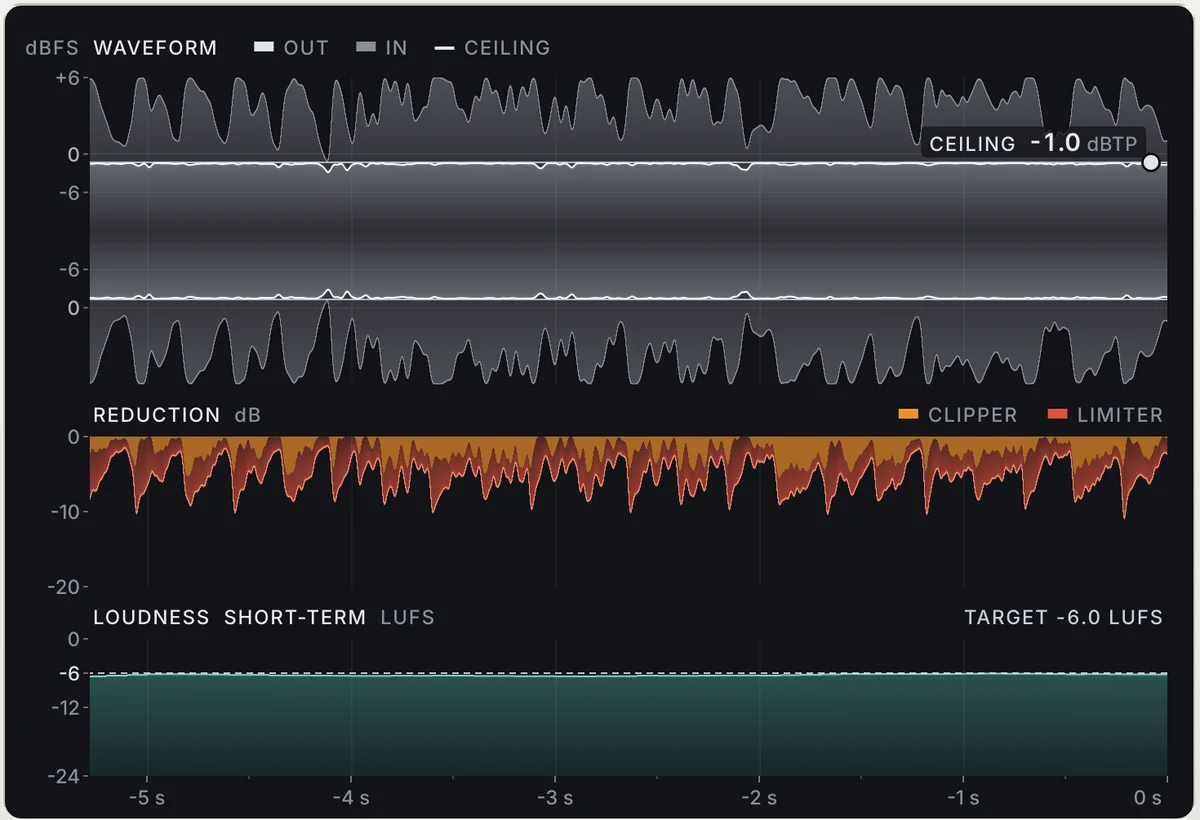
VEIRA Limiter White is the clean one, VEIRA Limiter Red the punchy one, VEIRA Limiter Gold the warm one and VEIRA Limiter Blue the vintage one, each painted its own colour. All four hold a true-peak ceiling with no overs, share the same loudness panel, TARGET and MATCH, and were built to reach −6 LUFS on a dense mix. Being honest about the limits: on very sub-heavy mixes White and Red can stop just short of −6, because they never clip held bass, and Blue lands about −5.8 LUFS on our test mixes at its defaults, so back its GAIN off a little.