Mastering with one knob: louder in even steps, kept clean
How to master a song with The Master Knob: match the premaster, turn MASTER until it is as loud as the song needs, compare fairly at the same loudness, and know where a clean limiter stops.
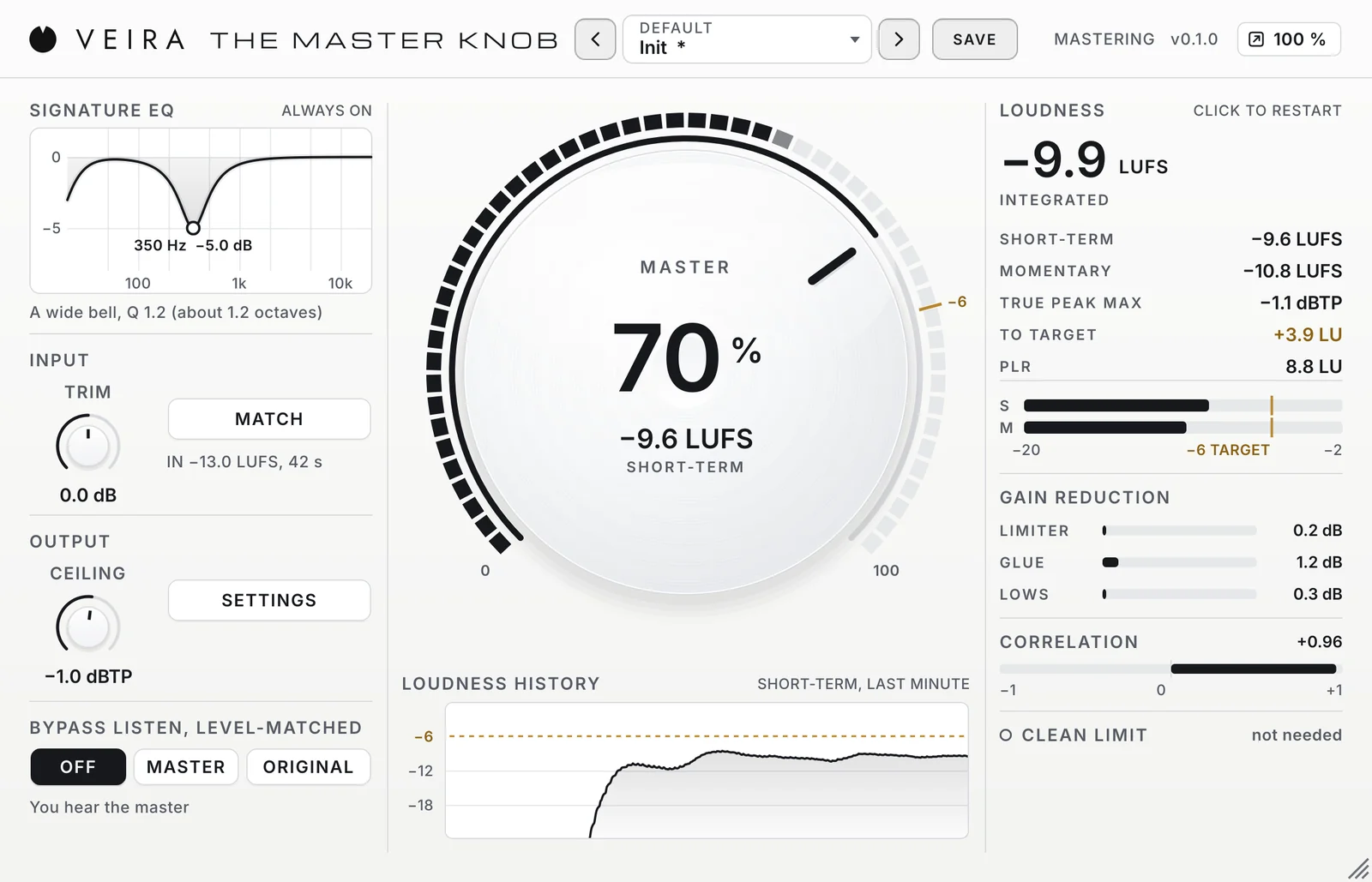
Mastering for loudness means bringing the body of a song up while its highest peaks stay under a ceiling. Done gently, the song sounds denser and finished; pushed too far, the bass gets fuzzy, the drums lose their snap and the whole song pumps. The Master Knob puts that whole job on one giant knob, and stops before the limiting is heard. This is how to use it.
Start from the right level
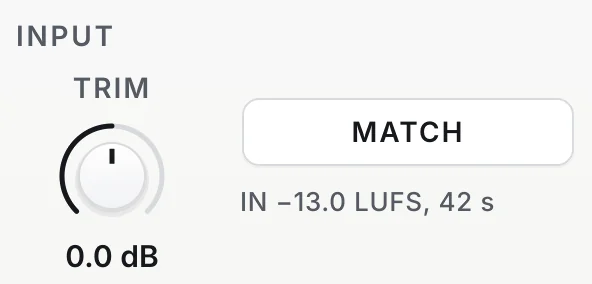
The knob’s curve was measured on premasters at about −13 LUFS integrated, so a mix that comes in much quieter or much hotter lands somewhere else at the same setting. Play the song from a typical part, a chorus is ideal, for ten seconds or more, and press MATCH: INPUT TRIM is set once, within ±12 dB, so the mix comes in at −13 LUFS. It is a button, not an automatic process, so the master then depends only on the mix and the knob, never on where playback started.
Turn the knob
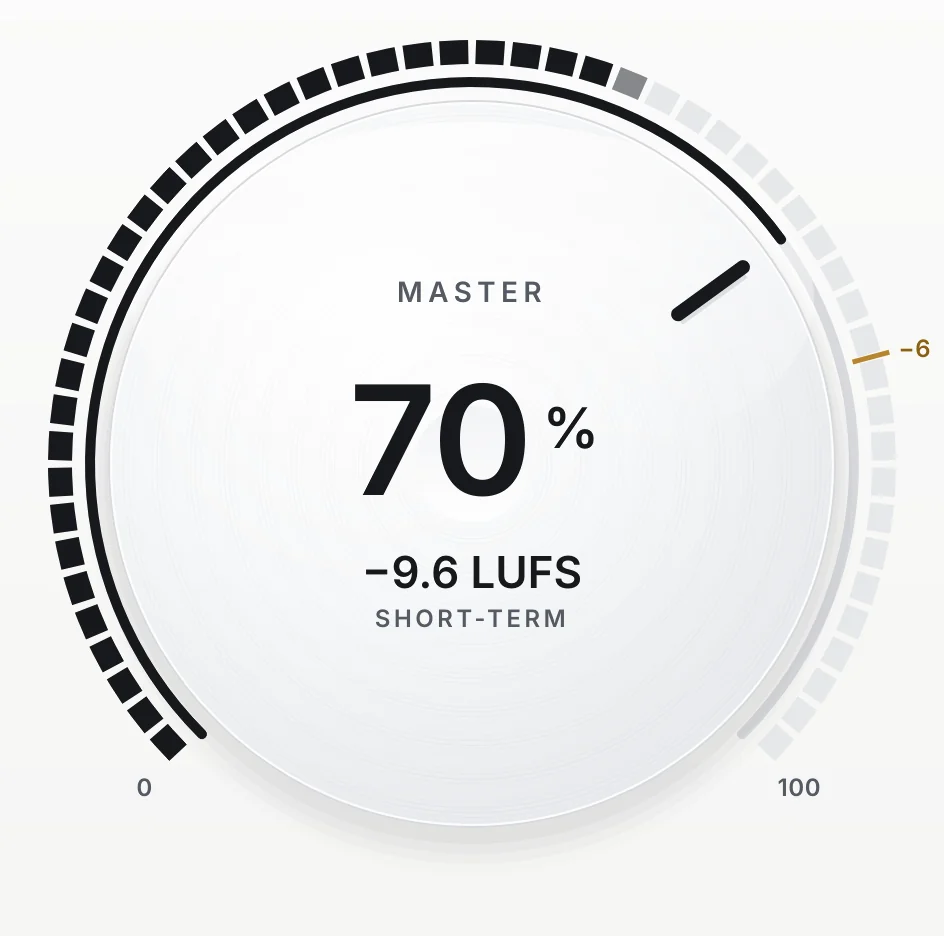
MASTER sets the drive into the limiter on a measured curve, and with it how firmly everything else works: a glue compressor from 1:1 to 1.7:1, four bands that even out only what rises over each band’s own slow level, an air shelf up to +1 dB, and the lows under 120 Hz made mono. On a typical mix each 10 % adds about 0.6 to 0.9 LU: about −13.7 LUFS at 0 %, −10.6 at 50 %, and −6 to −7 LUFS at 100 %.
- For streaming services that play every song at about −14 LUFS, 10 to 30 % keeps the song’s dynamics and only polishes it.
- Around 70 % is a finished, loud master for most songs.
- 100 % is as loud as it goes cleanly: about −6 to −7 LUFS on a typical dense mix.
Know where clean stops
A bass-heavy mix stops sooner, at about −8 LUFS. A loud, sustained bass wave fills the limiter long before the drums do, and the limiter never clips bass waves, because clipped bass is the fuzzy low end of an over-loud master. So a bass-heavy song rises evenly to about 70 % and then holds at its clean limit. If you need it louder, turn the bass down a little in the mix. When a mix is pushed too hard, CLEAN LIMIT lights and the drive backs off by itself.
Compare at the same loudness
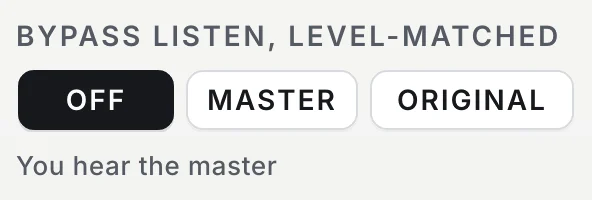
Louder always sounds better at first, so comparing a master with its mix by ear is unfair to the mix. BYPASS LISTEN plays the master turned down to the original’s loudness (MASTER) or the original itself (ORIGINAL), so switching between them tells you what the master does to the tone and the dynamics, not that it is louder. Nothing is ever turned up, and a bounce is always the master.
The signature tone
The Master Knob has a sound of its own: a wide cut of exactly −5.0 dB at 350 Hz, always on, at every position of the knob. It takes out the boxy part of the low mids where a dense mix collects build-up, so the low end and the voice have room. If a mix already sounds thin around 300 to 400 Hz, give some of that back in the mix before mastering. Read the page of The Master Knob for every control, or start from its presets: Quick Master, Streaming Natural, Codec Safe and Maximum Clean.