VEIRA Vocal Reverb

Six vocal reverbs on console faders: plate, hall, room, chamber, spring and ambience, each a complete reverb from VEIRA Space, with a de-esser on the send so the s sounds never splash into the tails.

$149.99, a one-time purchase with free updates

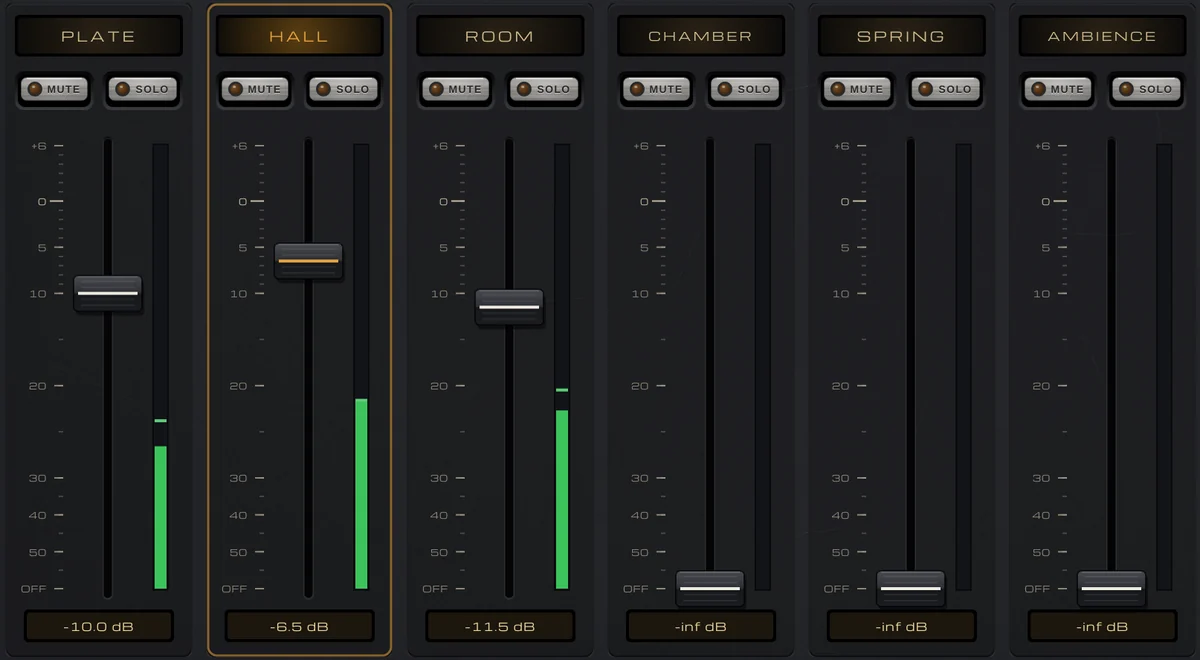
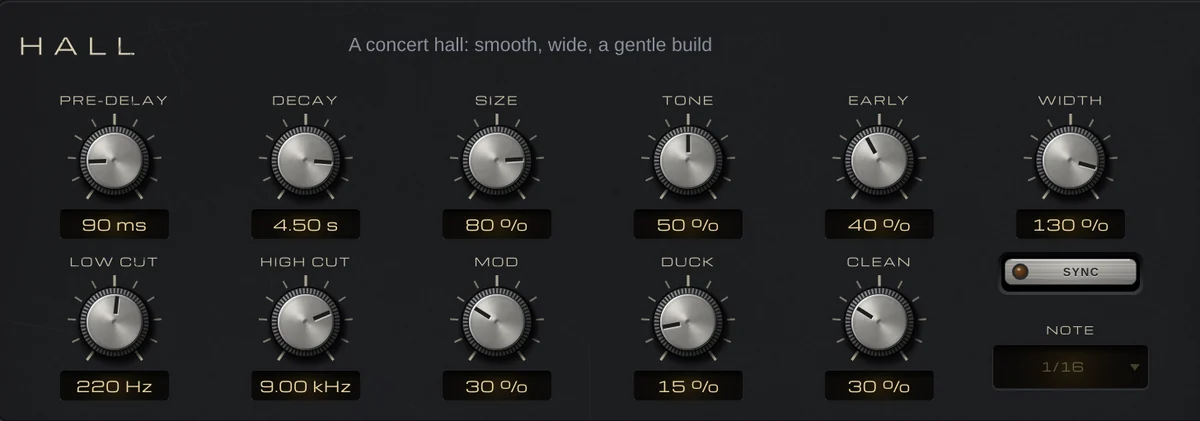
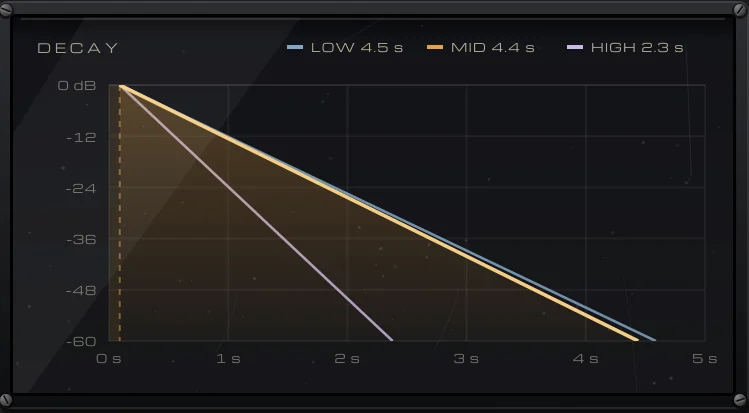
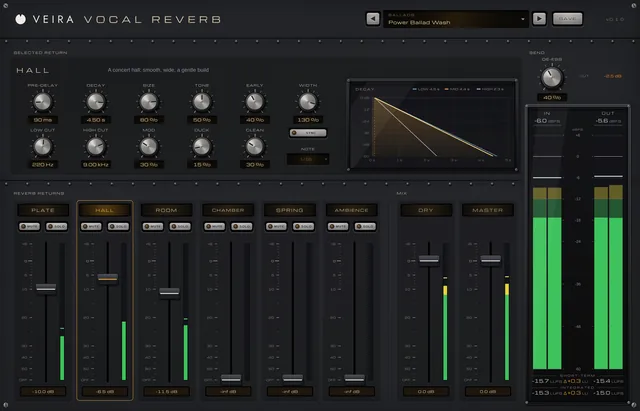
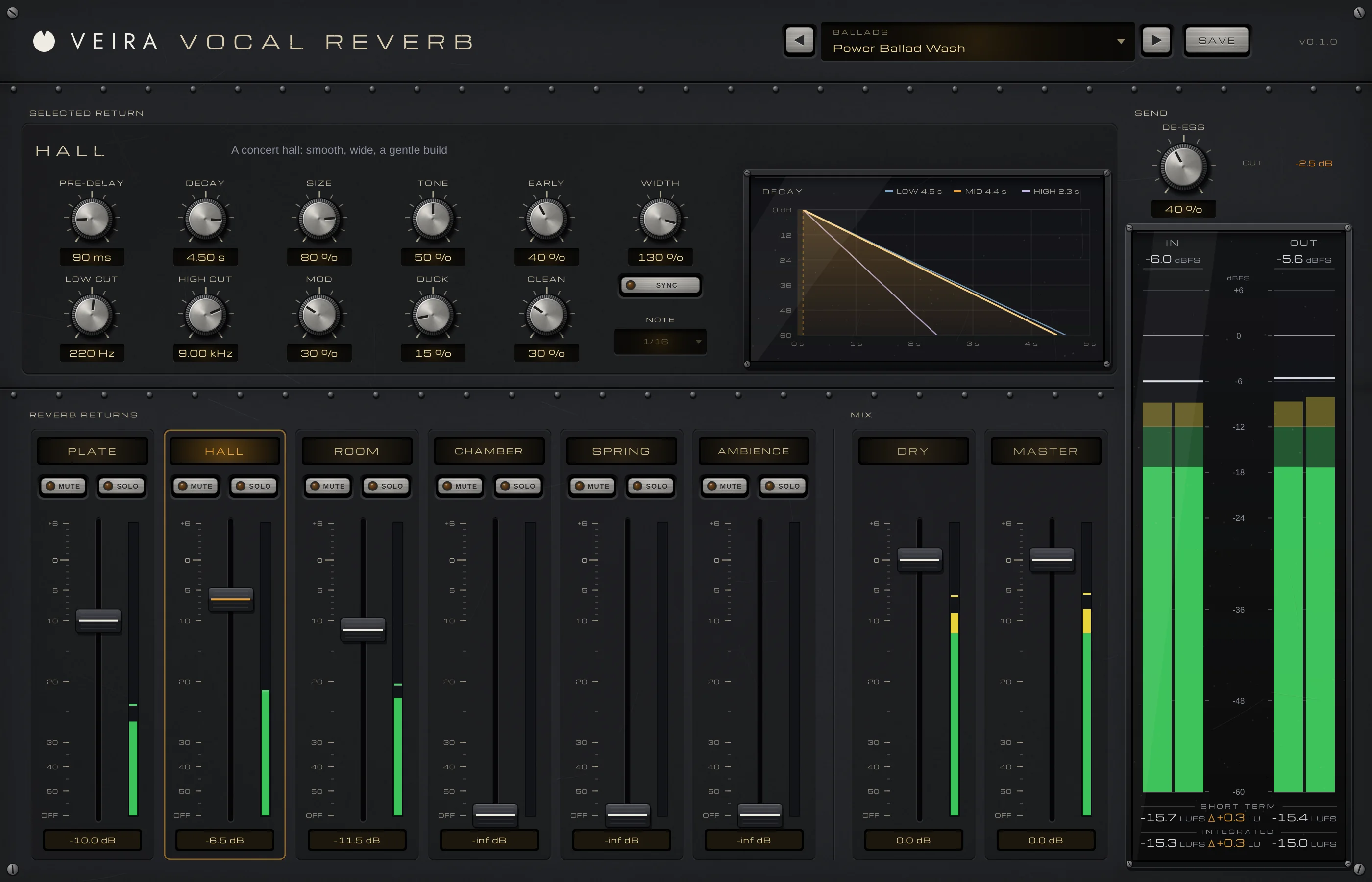
VEIRA Vocal Reverb with the Ballads preset Power Ballad Wash while a vocal plays: the HALL return selected at the top with its controls (PRE-DELAY 90 ms, DECAY 4.50 s, WIDTH 130 %, DUCK 15 %), its DECAY picture with LOW 4.5 s, MID 4.4 s and HIGH 2.3 s, SEND DE-ESS at 40 %, and below the six return strips with PLATE at −10.0 dB, HALL at −6.5 dB and ROOM at −11.5 dB, CHAMBER, SPRING and AMBIENCE down, DRY and MASTER at 0.0 dB, and the IN and OUT meters with loudness.

VEIRA Vocal Reverb is a vocal reverb laid out like the reverb returns of a mixing console, with a dark console face. Six reverbs sit side by side, PLATE, HALL, ROOM, CHAMBER, SPRING and AMBIENCE, each on a long fader with MUTE and SOLO, and DRY and MASTER faders sit at the end. Bring up the ones the voice needs and balance them the way an engineer rides the returns on a desk: a short room to place the voice, a plate for shine, a hall for size. Touch a fader, or click its name, and that reverb’s controls come up on screen: pre-delay, decay, size, tone, early reflections, width, low and high cut, movement, ducking and cleanup, with a DECAY picture of how it dies away.

Every return is VEIRA Space’s engine fixed to one type, level-matched so the six sit within about 0.1 dB of each other at the same fader. SEND DE-ESS takes the s sounds out of what feeds the reverbs, so they don’t splash into the tails, and leaves the dry voice untouched; DUCK lets each reverb step back while the voice sings. There is no latency, and a return that is down costs no processor time. The 75 factory presets in 11 folders, from Pop Vocals and Ballads to Podcast & Voice-Over and eight Sends for an aux, were each measured on a voice. Buy it once and VEIRA Manager installs it, like every plugin from VEIRA.

A tour of VEIRA Vocal Reverb

VEIRA Vocal Reverb with the Ballads preset Power Ballad Wash while a vocal plays: the HALL return selected at the top with its controls (PRE-DELAY 90 ms, DECAY 4.50 s, WIDTH 130 %, DUCK 15 %), its DECAY picture with LOW 4.5 s, MID 4.4 s and HIGH 2.3 s, SEND DE-ESS at 40 %, and below the six return strips with PLATE at −10.0 dB, HALL at −6.5 dB and ROOM at −11.5 dB, CHAMBER, SPRING and AMBIENCE down, DRY and MASTER at 0.0 dB, and the IN and OUT meters with loudness.
  1. The whole of VEIRA Vocal Reverb

    VEIRA Vocal Reverb is a vocal reverb laid out like the reverb returns of a mixing console. Six reverbs sit side by side, PLATE, HALL, ROOM, CHAMBER, SPRING and AMBIENCE, each on its own long fader with MUTE and SOLO, and you bring up the ones the voice needs, the way an engineer rides the returns on a desk. Touch a fader, or click its name, and that reverb’s 11 controls come up on screen, with a DECAY picture of how it dies away. SEND DE-ESS takes the s sounds out of what feeds the reverbs while the dry voice stays untouched, and DRY and MASTER faders sit at the end of the console. There is no latency, and with every return down the output is the input, bit for bit.

  2. Six reverb returns

    Each reverb on its own fader with MUTE, SOLO and a meter. Touch a fader to bring that reverb’s controls up.

  3. The selected return

    Pre-delay, decay, size, tone, early reflections, width, filters, movement, ducking and cleanup, separately for each return.

  4. DECAY picture

    How the selected reverb dies away in the lows, mids and highs, with their reverb times.

  5. Dry and master

    DRY at 0 dB on an insert, down to −inf on an aux send. MASTER sets the level of everything that comes out.

  6. In and out

    Peak and RMS for the input and the output, with short-term and integrated loudness.

What VEIRA Vocal Reverb does for you

The six return strips, PLATE, HALL, ROOM, CHAMBER, SPRING and AMBIENCE, each with MUTE and SOLO, a fader and a meter: PLATE at −10.0 dB, HALL selected at −6.5 dB, ROOM at −11.5 dB and the other three at −inf dB.

Six reverbs on a console

PLATE, HALL, ROOM, CHAMBER, SPRING and AMBIENCE sit side by side, each a channel strip with a backlit name plate, MUTE and SOLO, a long fader from −inf to +6 dB and a meter beside it with a 2 s peak hold. Layering a short room under a plate, or riding a hall up into the last chorus, is a fader move. The faders glide over 20 ms, so riding them by hand or with automation never clicks, and SOLO plays only the soloed returns with the dry voice, for setting one reverb at a time.

  • 6 returns
  • −inf to +6 dB
  • MUTE and SOLO
The HALL return’s controls: PRE-DELAY 90 ms, DECAY 4.50 s, SIZE 80 %, TONE 50 %, EARLY 40 %, WIDTH 130 %, LOW CUT 220 Hz, HIGH CUT 9.00 kHz, MOD 30 %, DUCK 15 %, CLEAN 30 %, and SYNC with NOTE.

Touch a fader, shape that reverb

Touch a return’s fader or click its name plate, and its controls come up at the top of the window: PRE-DELAY, DECAY, SIZE, TONE, EARLY, WIDTH, LOW CUT, HIGH CUT, MOD, DUCK and CLEAN, with SYNC and NOTE for the pre-delay. Each return keeps its own set, so changing the plate’s DECAY leaves the hall’s as it was, and every control is its own parameter for automation. The selected strip is lit amber, and it is saved with your session.

  • 11 controls per return
  • Separate for each return
  • Recalled with the session
The six returns’ name plates, PLATE, HALL (selected, lit amber), ROOM, CHAMBER, SPRING and AMBIENCE, each with MUTE and SOLO.

Six types, level-matched

Every return is VEIRA Space’s engine fixed to one type and fully wet, so each is a complete reverb: a steel plate, a concert hall, a studio live room, an echo chamber, a spring tank and an ambience of early reflections without a tail. Each has a fixed level trim measured on a sung vocal, so at the same fader and settings the six sit within about 0.1 dB of each other under a voice, and you compare their sound, not their loudness. Their starting settings are voiced for a lead vocal.

  • VEIRA Space’s engine
  • Within about 0.1 dB
  • Voiced for a lead vocal
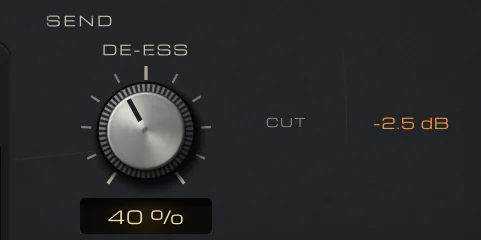
SEND DE-ESS at 40 %, with the CUT readout at −2.5 dB.

A de-esser on the send

A long tail turns every s into a hiss behind the words. SEND DE-ESS is VEIRA DeEss working on what feeds the six reverbs only, above 5 kHz, comparing the s with the voice’s own level, so it works at any recording level, with no lookahead. 30 % already catches a typical s, and at 100 % the reverbs’ energy above 5 kHz drops by about 10 dB on a sung vocal. The dry voice keeps every consonant, untouched, and the CUT readout shows what it takes off right now.

  • On the send only
  • Above 5 kHz
  • No latency
The HALL return’s LOW CUT at 220 Hz, HIGH CUT at 9.00 kHz, MOD at 30 %, DUCK at 15 % and CLEAN at 30 %, with SYNC off and NOTE dimmed at 1/16.

Words that stay clear

PRE-DELAY holds each reverb back by up to 500 ms, or with SYNC on follows the song’s tempo as a NOTE from 1/64 to 1/4, dotted and triplets included, so each word starts dry. DUCK dips the reverb while the voice sings, by 30 dB × DUCK, and lets it bloom back in the gaps over about 150 ms, following the voice’s own peaks. LOW CUT and HIGH CUT filter the reverb only, at 12 dB per octave.

  • 0 to 500 ms, or a note
  • DUCK up to 30 dB
  • Filters on the reverb only
The DECAY picture of the HALL: the lows, mids and highs falling from 0 to −60 dB after the pre-delay, with LOW 4.5 s, MID 4.4 s and HIGH 2.3 s.

See how it dies away

The DECAY picture draws how the selected reverb dies away after a short sound, from the pre-delay down to −60 dB: the lows at 125 Hz, the middle at 1 kHz in amber and the highs at 8 kHz, each with its reverb time. TONE sets how much sooner the highs die away, from 0 % bright to 100 % dark, MOD keeps the tail from ringing metallic, and CLEAN is VEIRA Space’s automatic removal of the reverb’s own ringing resonances.

  • Lows, mids and highs
  • Down to −60 dB
  • CLEAN on every return
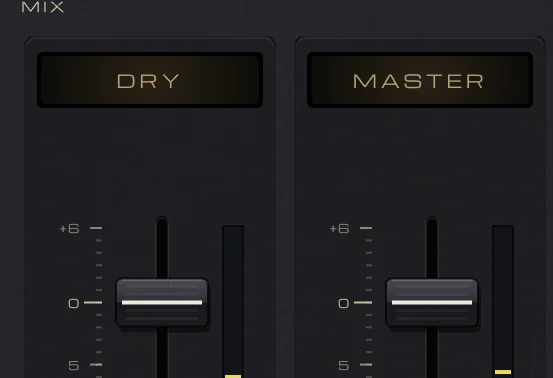
The DRY and MASTER faders under MIX, both at 0 dB.

On the vocal or on an aux

DRY and MASTER sit at the end of the console. On an insert, leave DRY at 0 dB and bring up the returns; on an aux send, pull DRY down to −inf so only the reverbs come back and the lead, its doubles and the harmonies share one space. The eight Sends presets are set that way, with one return at about 0 dB, and return the reverb 6 to 9.5 dB under the voice. MASTER trims the whole output.

  • Insert or send
  • DRY and MASTER
  • 8 Sends presets
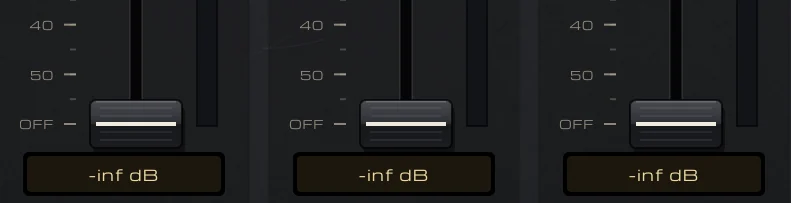
The CHAMBER, SPRING and AMBIENCE faders fully down at OFF, each reading −inf dB, their meters dark.

No latency, and no CPU for what you don’t use

VEIRA Vocal Reverb reports no latency. With every return down and DRY and MASTER at 0 dB, the output is the input, bit for bit, at any block size. A return that is down, muted or left out by SOLO stops running once it has faded out and costs nothing; each running return costs about 6 to 9 % of one core of a 2-core cloud machine, and most vocals use one to three. The IN and OUT meters show peak, RMS and loudness.

  • Zero latency
  • Bit-exact with every return down
  • 6 to 9 % per return
The preset browser showing Ballads: Power Ballad Wash, with previous, next and SAVE.

75 presets in 11 folders, each one measured

Default, Pop Vocals, R&B & Soul, Hip-Hop & Rap, Rock & Alternative, Singer-Songwriter, Ballads, Backing Vocals, Podcast & Voice-Over, Sends and Effects. Each preset was run on the real plugin on a sung vocal that suits its folder, or speech for Podcast & Voice-Over, and its faders set so the reverb sits where that style wants it. On an insert they stay within +0.5 dB of the input, every peak stays at −4.7 dBFS or under, and the ducked presets open up at least 2.7 dB between phrases.

  • 11 folders
  • Measured on a voice
  • Save your own

Get VEIRA Vocal Reverb

Pay once and it’s yours, with every future update included.

VEIRA Vocal Reverb

Six vocal reverbs on console faders: plate, hall, room, chamber, spring and ambience, each a complete reverb from VEIRA Space, with a de-esser on the send so the s sounds never splash into the tails.

  • Yours to keep: pay once, no subscription
  • Every future update, free for life
  • VST3, AU, Standalone on up to 3 computers
  • Changed your mind? Cancel within 14 days (refunds)
USD

One-time payment, in your cart.

Welcome offer

Get 10% off your first order

Leave your email and we’ll send you a code for 10% off your first order, on any plugins. One code per person.

Specifications

Type
A vocal reverb console: six returns on VEIRA Space’s engine, with a de-esser on the send
Returns
PLATE, HALL, ROOM, CHAMBER, SPRING and AMBIENCE, each with MUTE and SOLO; level-matched within about 0.1 dB
Return faders
−inf to +6 dB (default −inf; PLATE −12.0 dB), gliding over 20 ms; a meter on each with a 2 s peak hold
Pre-delay
0 to 500 ms, or with SYNC a note from 1/64 to 1/4, dotted and triplets included (default 1/16)
Decay
0.10 to 10.0 s at 1 kHz
Size, tone, early
0 to 100 % each (EARLY dimmed on SPRING, which has no early reflections)
Width
0 to 150 %, at the same level
Low cut, high cut
20 Hz to 2.00 kHz and 1.00 to 20.0 kHz (open from 19.5 kHz), 12 dB/oct, on the reverb only
Mod, duck, clean
0 to 100 % each; DUCK dips the reverb by up to 30 dB while the voice sings
Send de-ess
0 to 100 % (default 30 %), above 5 kHz, on the send only; threshold 6 to 24 dB under the voice, range up to 24 dB, no lookahead
Dry, master
−inf to +6 dB (default 0.0 dB each)
Display
DECAY picture: the lows (125 Hz), mids (1 kHz) and highs (8 kHz) down to −60 dB, with their reverb times; CUT readout
Latency
None; with every return down and DRY and MASTER at 0 dB, the output is the input, bit for bit, at any block size
Tail
12 s, reported to the host
Metering
IN and OUT peak and RMS; short-term and integrated LUFS
Presets
75 factory presets in 11 folders (Default, Pop Vocals, R&B & Soul, Hip-Hop & Rap, Rock & Alternative, Singer-Songwriter, Ballads, Backing Vocals, Podcast & Voice-Over, Sends, Effects), plus your own
Channels
Mono or stereo (the output matches the input)
Window
1400 x 900
CPU (measured)
A return that is down costs nothing; each running return about 6 to 9 % of one core of a 2-core cloud machine (stereo, 48 kHz), all six about 43 %
Formats
VST3, AU, Standalone
macOS
macOS 11 or later, Apple silicon or Intel (universal). VST3, AU and Standalone.
Windows
Windows 10 or later, 64-bit. VST3 and Standalone.
Pro Tools
Pro Tools (AAX) versions are built and tested, and arrive once they’re signed for Pro Tools.
Latest version
0.2.0, released November 17, 2026 · What’s new
Read more on the blog: Layering reverbs on a vocal: a short space, a long space, and the faders between them · Reverb in a mix: building the space with sends, pre-delay and decay

Questions? 10 answers about VEIRA Vocal Reverb

Works well with

VEIRA Space

An algorithmic reverb that takes the ringing out and leaves the space.

$149.99

VEIRA Chambers

An echo-chamber reverb you can watch: ten real rooms, ten materials.

$179.99

VEIRA Vocal Strip

A whole vocal chain in one console: nine modules in any order, from clean-up and pitch correction to compression, de-essing, echo and reverb, each with its own display.

$149.99