Layering reverbs on a vocal: a short space, a long space, and the faders between them
Why engineers put a vocal into two or three reverbs at once, how to pair a short space with a long one, keep the s sounds out of the tails, and ride the reverbs through a song.
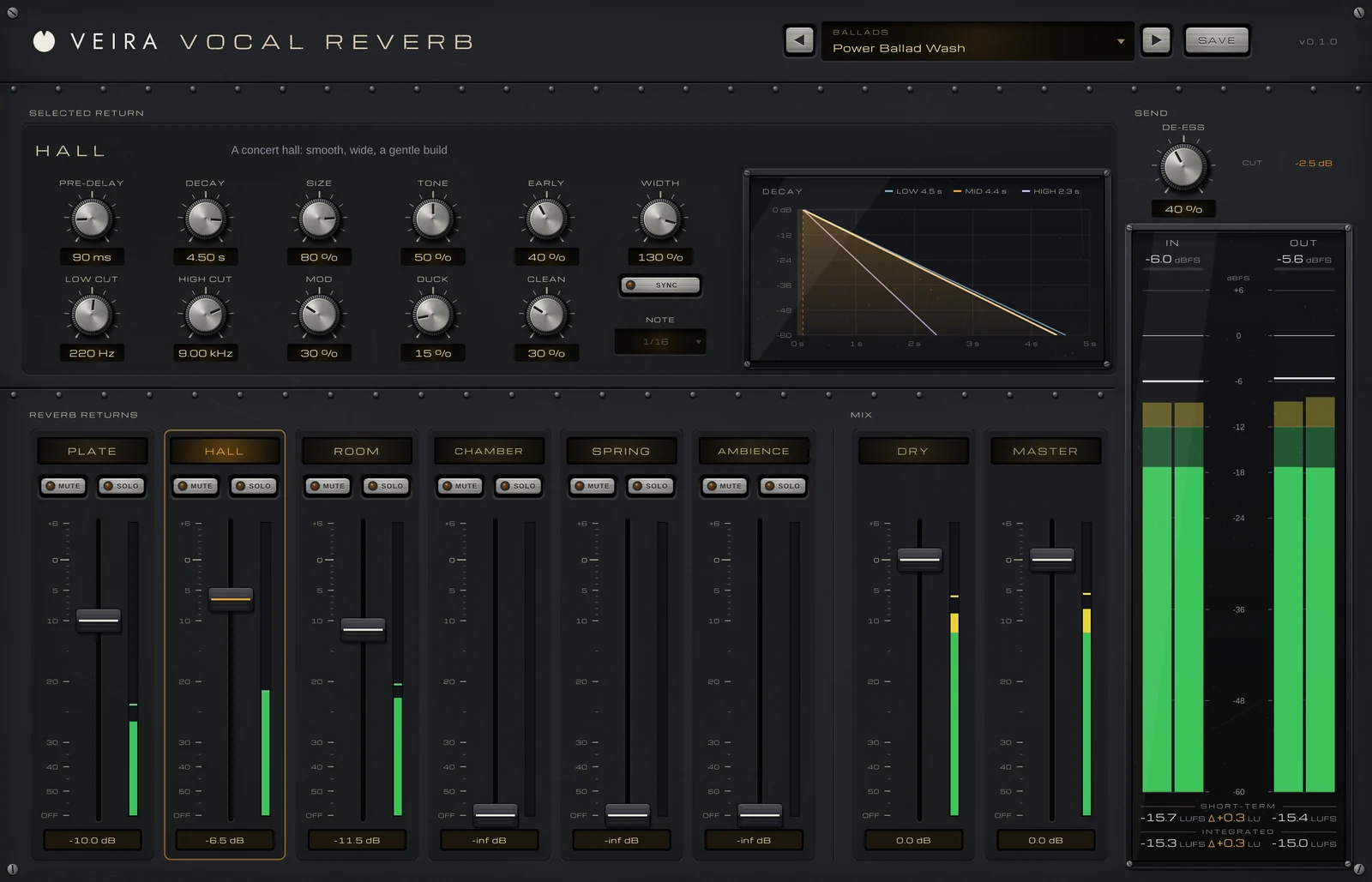
One reverb on a vocal often has to do two jobs that pull against each other. It has to place the singer in a space, close and real, and it has to fill the gaps between phrases with something smooth and long. A single setting that does both tends to be too long for the words or too short for the gaps. That is why, on a console, a lead vocal is usually sent to several reverbs at once, each coming back on its own fader.
Pair a short space with a long one
Start with a short space to place the voice: a room or an ambience, with little or no tail, just enough to take the deadness off a close microphone. Then add a longer one for shine or size: a plate for a bright, dense sheen that doesn’t push the singer back, or a hall for a big chorus or a ballad. Set each one on its own, then balance them against each other, and only then against the voice.
Keep the words clear
A long tail that starts with the word blurs it. A pre-delay of 20 to 60 ms lets each word start dry before the space answers. Ducking goes further: the reverb steps back while the voice sings and swells up in the pauses, so a long hall can sound big without covering the lyric. Filtering the reverb, not the voice, keeps it from thickening the low mids or hissing on top.
Take the s out of what feeds the reverb
A sharp s on a dry voice lasts a fraction of a second. In a two-second plate it becomes a hiss hanging behind every word. De-essing the whole vocal to fix that would dull the dry voice too. The better place is the send: turn the s sounds down only in what goes into the reverbs, and leave the dry voice with every consonant.
Ride the reverbs like the vocal
A verse and a chorus rarely want the same amount of space. Bring the long reverb up a couple of dB into the chorus, pull it back for an intimate verse, and let it bloom on the last word of a section. Because each reverb has its own fader, these are small moves, and automation does them the same way on every playback.
Doing it with VEIRA Vocal Reverb
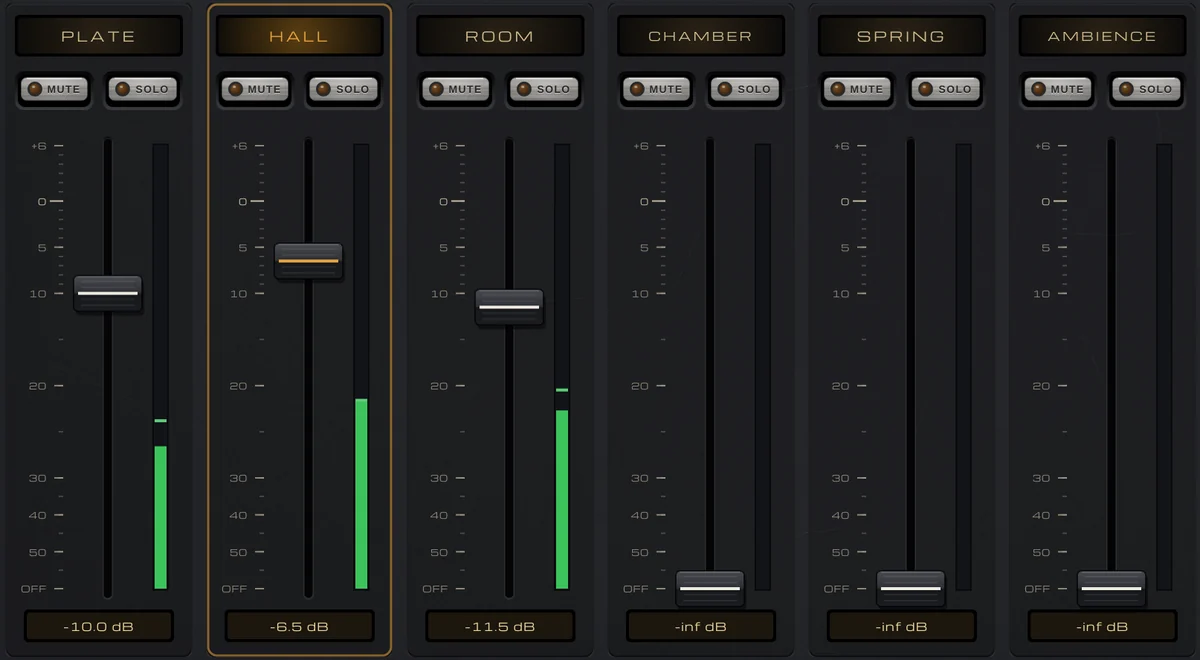
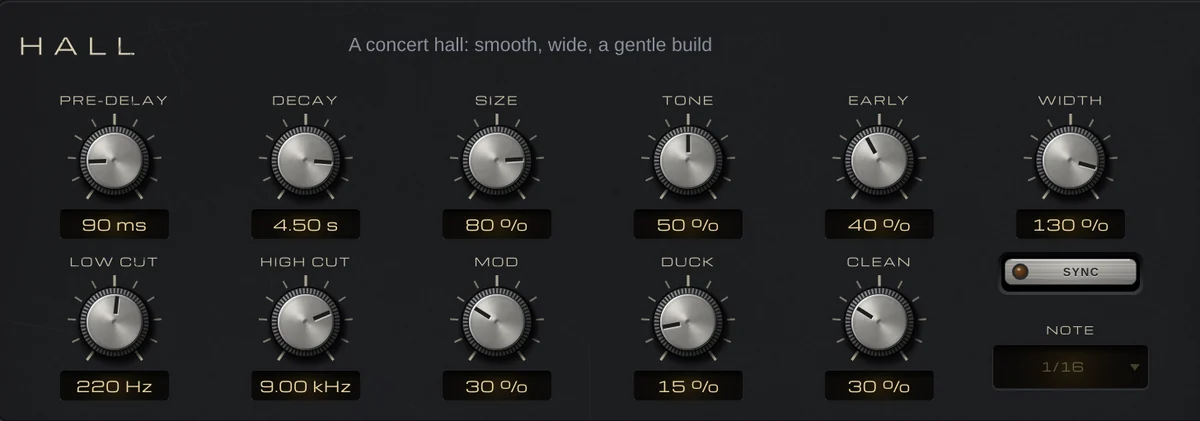
VEIRA Vocal Reverb puts that console inside one plugin. Six reverbs, PLATE, HALL, ROOM, CHAMBER, SPRING and AMBIENCE, sit side by side on long faders with MUTE and SOLO, level-matched so you compare their sound and not their loudness. Touch a fader and that reverb’s controls come up: pre-delay, in milliseconds or in note values at the song’s tempo, decay, size, tone, early reflections, width, low and high cut, movement, DUCK and CLEAN.
SEND DE-ESS takes the s sounds out of what feeds all six reverbs, while the dry voice is never touched. Leave DRY at 0 dB on the vocal track, or pull it to −inf on an aux so the lead, its doubles and the harmonies share one space. There is no latency, a reverb whose fader is down costs no processor time, and the 75 factory presets include pairs such as Room And Plate and Short Room Long Hall to start from.