Octave doubles on a vocal: weight below, lift above, and why the formants matter
How an octave under or over a lead vocal adds weight or lift without a new harmony, where to set the levels and pans, what an octaver needs from the voice, and why most octavers sound fake.
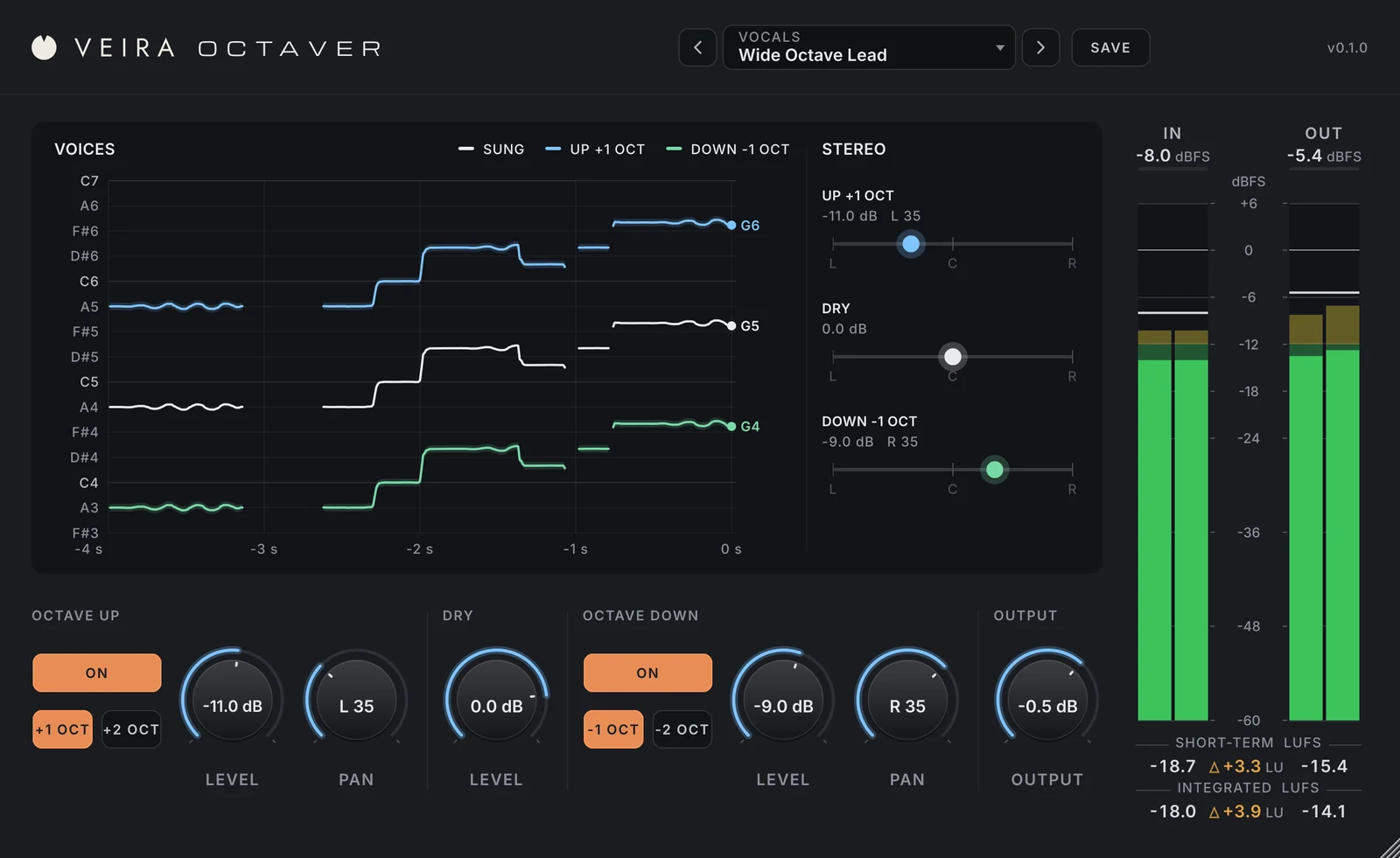
An octave double is the oldest trick for a bigger voice. A singer, or a second singer, sings the same line an octave lower or higher, and the part grows without adding a new harmony: our ears hear notes an octave apart as the same note. An octave under adds weight and depth, the sound of a baritone under a tenor. An octave over adds lift and shine, the sound of a choir joining the chorus.
Why most octavers sound fake
A voice is a row of harmonics shaped by the resonances of the throat and mouth, the formants. They are a large part of what makes a voice sound like that person. An ordinary pitch shifter moves them with the pitch: an octave up, the singer’s head seems to shrink to half its size, the chipmunk; an octave down, it doubles, the monster. A natural octave keeps the formants where they are and moves only the pitch, the way a higher or lower singer with the same mouth would sound.
Set the levels under the voice
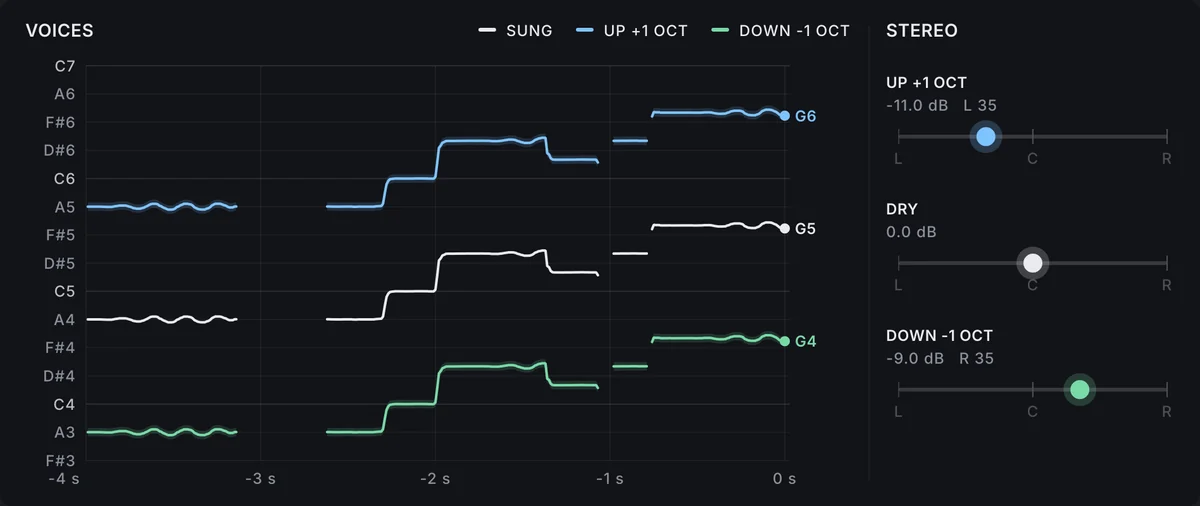
Most octave doubles sit well under the lead. An octave below at 10 to 12 dB under the voice is weight you feel more than hear; at 6 dB under it is a clear second voice. An octave above usually sits a little lower still, 10 to 12 dB under, and two octaves above lower again: they carry a long way. For a hook or a last chorus, bring both up together.
Spread them, or keep them centred
Centred, the octaves make one bigger voice. Panned a little apart, the octave above to one side and the octave below to the other, they make a lead wider without moving it off the centre. Panned wide, they turn a single backing vocal into a pad across the stereo field. Keep the two pans roughly mirrored so the lead stays where it was.
Give the octaver one dry voice
An octaver follows one note at a time. Put it before reverb, delay and chorus, on a single voice rather than a group, and let consonants and breaths through: a good octaver leaves them with the dry voice, so the octaves never double an s. Low bass notes and chords are where octavers run out of road, so check the bottom of the range on a bass line.
Doing it with VEIRA Octaver
VEIRA Octaver keeps the formants where they are, so its octaves sound like singers doubling the part. OCTAVE UP and OCTAVE DOWN each have ON, one or two octaves, LEVEL and PAN, and each is level-matched to the dry voice, so 0 dB means as loud as the singer. Consonants, breaths and chords pass through the octave voices quietly and unshifted.
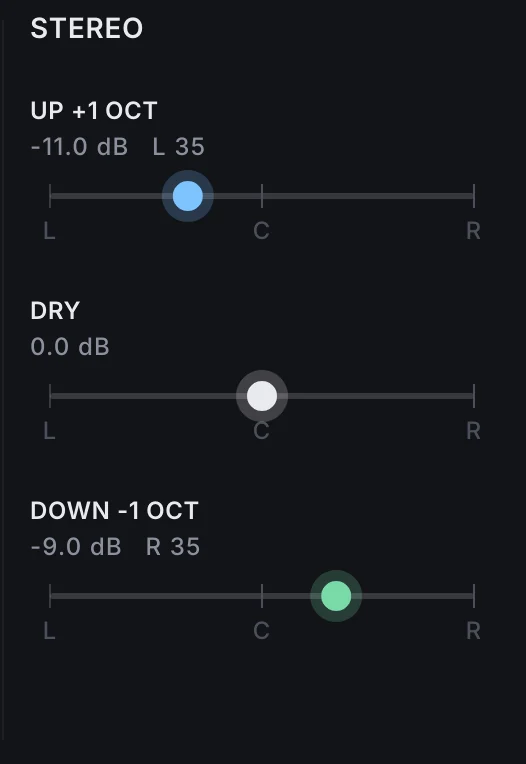
The latency is a constant 29.1 ms, reported to your DAW, and the 37 factory presets start from Low Octave Double, Wide Octave Lead and Chorus Lift for a lead, Octave Pad for backing vocals and Rap Low Double for a rap vocal.