VEIRA Harmonic Saturator

Harmonic colour, by the band: a warm tube or exactly the harmonics you set, at the same level.

$29.99, a one-time purchase with free updates

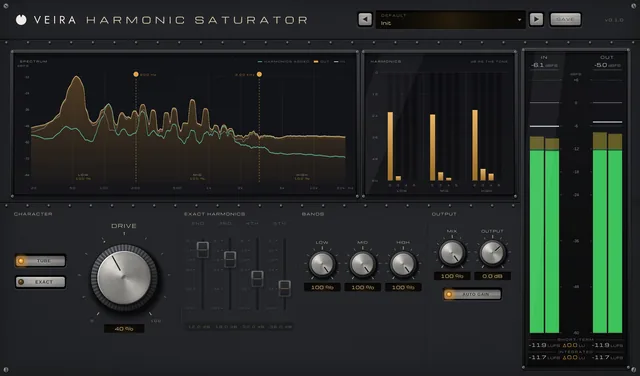
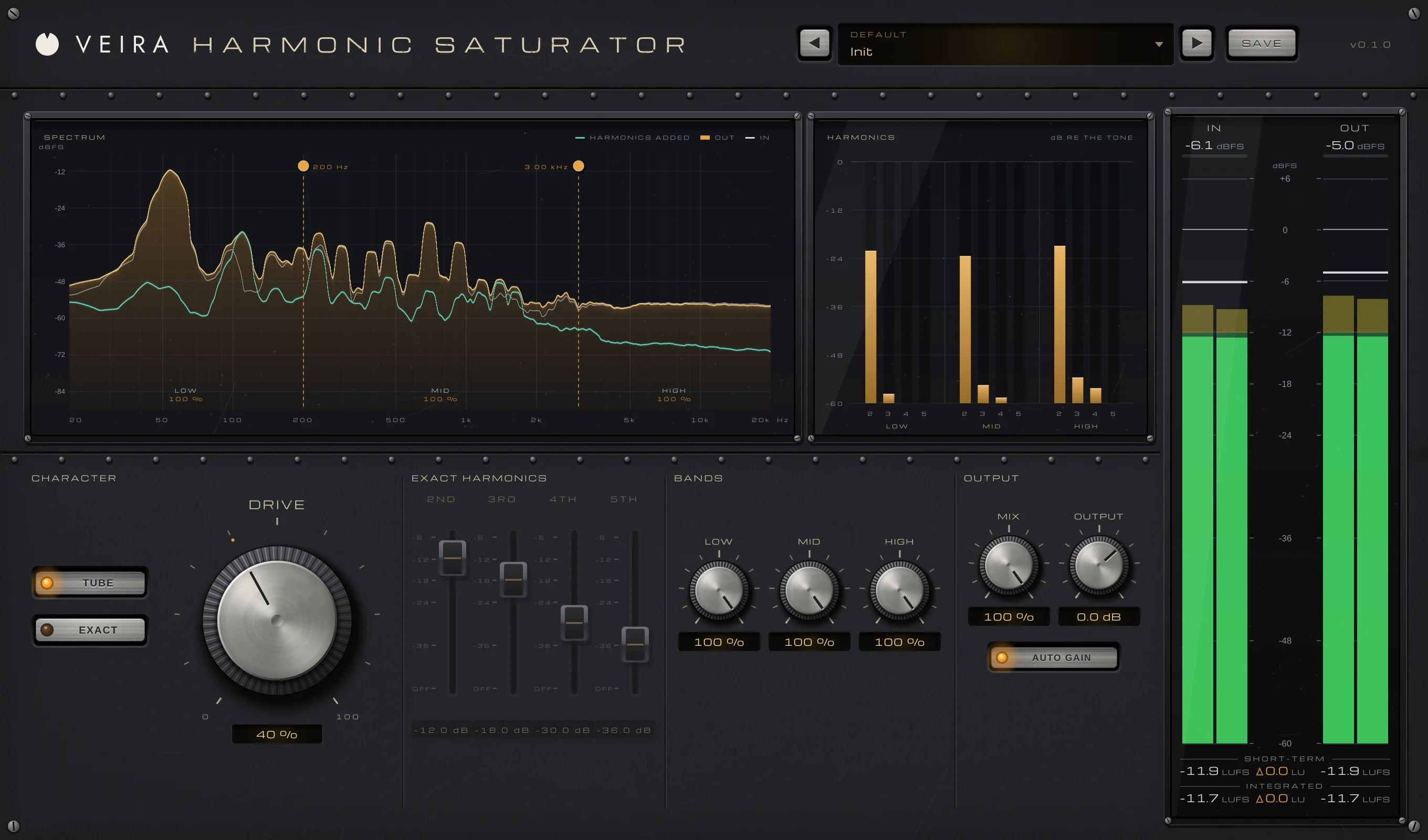
VEIRA Harmonic Saturator with the Init preset while a mix plays: the SPECTRUM display with the output, the input and the harmonics added, the LOW | MID split at 200 Hz and the MID | HIGH split at 3 kHz; the HARMONICS display with the 2nd to 5th harmonic per band; TUBE lit with DRIVE at 40 %, the four EXACT HARMONICS faders dimmed, the LOW, MID and HIGH knobs at 100 %, MIX, OUTPUT and AUTO GAIN, and the IN and OUT meters with loudness.

VEIRA Harmonic Saturator adds harmonic colour, by the band. TUBE drives a warm triode curve, mostly the 2nd harmonic with more of the 3rd and above as it’s pushed, the peaks rounded softly; EXACT adds exactly the 2nd, 3rd, 4th and 5th harmonics you set on four faders. DRIVE sets how much, and LOW, MID and HIGH set how much of the colour is made from each band: warm only the lows, add edge only to the mids, or air only to the top.

What sets it apart is that your signal is never filtered: it passes straight through, and only what the colour adds is mixed in, made from linear-phase bands that stay in time with it. EXACT keeps the same balance at any level and rounds nothing, TUBE drives each band against its own level so a quiet track and a loud one saturate alike, and AUTO GAIN keeps the loudness within half a dB. The split costs 1,216 samples of latency at 48 kHz, which your DAW compensates on playback.

A tour of VEIRA Harmonic Saturator

VEIRA Harmonic Saturator with the Init preset while a mix plays: the SPECTRUM display with the output, the input and the harmonics added, the LOW | MID split at 200 Hz and the MID | HIGH split at 3 kHz; the HARMONICS display with the 2nd to 5th harmonic per band; TUBE lit with DRIVE at 40 %, the four EXACT HARMONICS faders dimmed, the LOW, MID and HIGH knobs at 100 %, MIX, OUTPUT and AUTO GAIN, and the IN and OUT meters with loudness.
  1. The whole of VEIRA Harmonic Saturator

    VEIRA Harmonic Saturator adds harmonic colour, band by band. TUBE drives a warm triode curve that adds mostly the 2nd harmonic and rounds the peaks softly; EXACT adds exactly the 2nd, 3rd, 4th and 5th harmonics you set on four faders, at the same ratio at any level. DRIVE sets how much, the LOW, MID and HIGH knobs set how much of the colour is made from each band, with the splits dragged on the SPECTRUM display, and AUTO GAIN keeps the loudness where it was. MIX blends it with the dry signal, in time.

  2. The spectrum

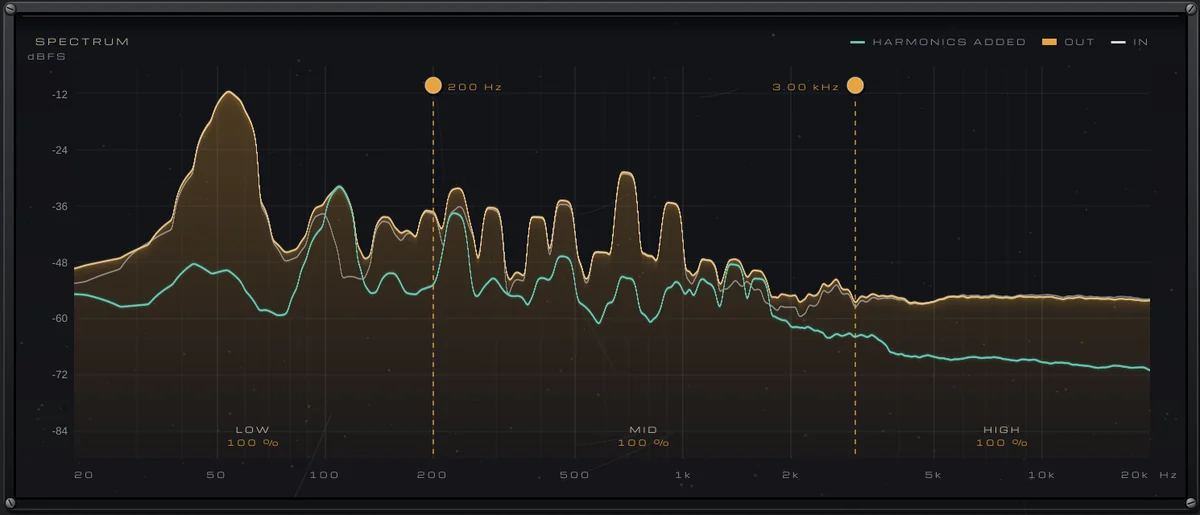
    What goes out, what came in and the harmonics added on their own, with the bands and the splits you drag.

  3. The harmonics

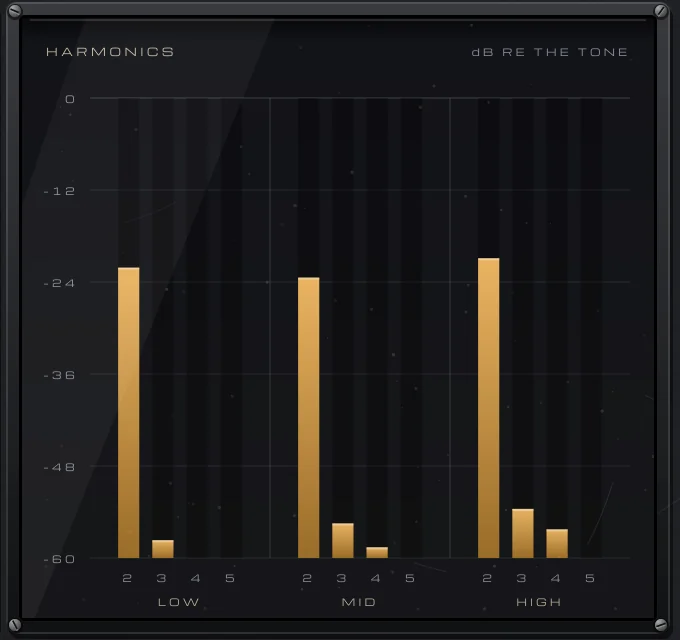
    Per band, how loud the 2nd to 5th harmonics are right now, against the tone they come from.

  4. Tube or exact

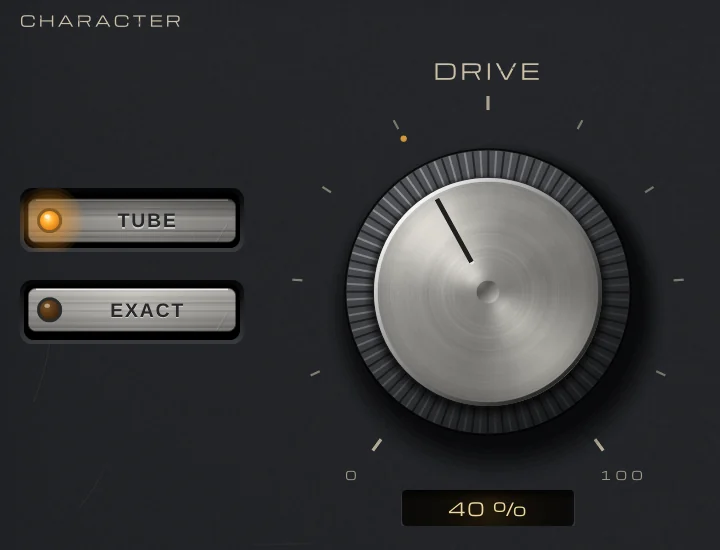
    TUBE for a warm curve that follows the playing, EXACT for the harmonics you set; DRIVE for how much.

  5. Exact harmonics

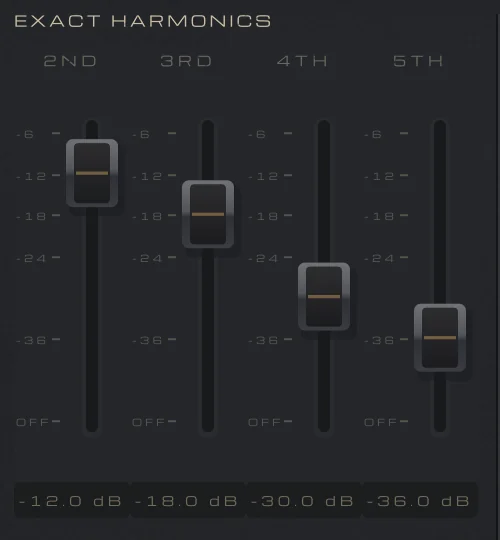
    The 2nd to 5th harmonic, each in dB against the signal, at the same balance at any level.

  6. The bands

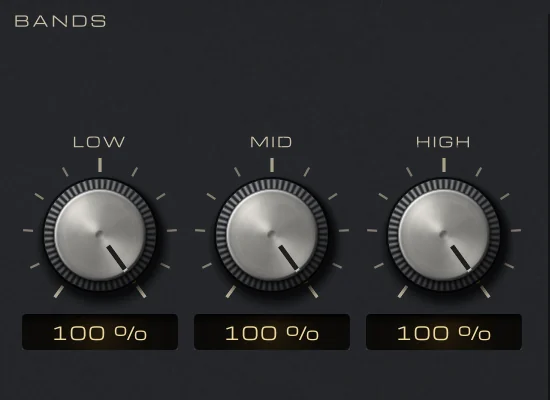
    How much of the colour is made from the lows, the mids and the top.

  7. In and out

    Peak and RMS for the input and the output, with short-term and integrated loudness.

What VEIRA Harmonic Saturator does for you

The CHARACTER group: the TUBE button lit, the EXACT button and the DRIVE knob at 40 %.

A warm tube or exact harmonics

TUBE drives a warm triode curve: mostly the 2nd harmonic, more of the 3rd and above as it is pushed, the peaks rounded softly, like a valve stage. EXACT makes the 2nd, 3rd, 4th and 5th harmonics directly, at the levels you set, without bending or rounding anything. Switch between them while the music plays: the change crossfades over 30 ms. At DRIVE 0 % the output is the input, bit for bit.

  • TUBE or EXACT
  • Crossfades in 30 ms
  • Bit for bit at 0 %
The EXACT HARMONICS faders 2ND, 3RD, 4TH and 5TH at −12.0, −18.0, −30.0 and −36.0 dB, dimmed while TUBE is on.

Exactly the harmonics you set

Four faders set the 2nd (warmth, an octave up), the 3rd (edge and presence), the 4th (brightness) and the 5th (bite), each from Off to −6 dB against the signal. The balance stays the same at any level: tested within 0.35 dB of the faders at 0, −20 and −40 dBFS. DRIVE moves all four together (100 % as set, 50 % 12 dB under), so you set the balance once, then the strength.

  • 2nd to 5th, in dB
  • The same at any level
  • Nothing rounded
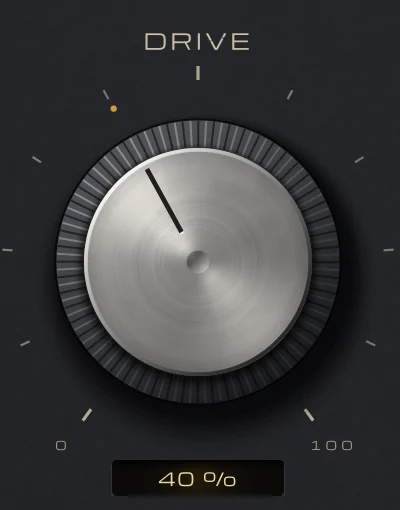
The DRIVE knob at 40 %, its scale marked 0 and 100.

Tube warmth that follows the playing

TUBE drives each band against that band’s own long-term level, so a quiet recording and a hot one saturate alike, while louder moments still saturate more. On a 220 Hz tone at its own level, DRIVE at 25 % gives the 2nd harmonic at −24 dB and the 3rd at −61 dB; at 50 %, −16 and −39 dB. What the curve changes is computed at 4x, so nothing aliases. On an already limited master its lopsided curve can raise the peaks by up to 2 dB at high DRIVE, so the Mastering presets keep it at 12 to 14 %.

  • Against each band’s own level
  • Mostly the 2nd
  • Oversampled 4x
The BANDS knobs LOW, MID and HIGH, each at 100 %.

Colour by the band

The signal is split into LOW, MID and HIGH, and each band’s knob sets how much of the colour is made from it: warm only the lows, add edge only to the mids, or air only to the top. Drag the two splits on the SPECTRUM display (40 Hz to 1 kHz and 1 to 12 kHz). The split is linear phase, so every band stays in time with the dry signal, and what a band’s colour makes below the band is filtered out, so air stays on top. EXACT makes its 2nd and 3rd from what is under 6.4 kHz (at 48 kHz) so nothing folds back: for air, set the upper split to 2 or 3 kHz, as the air presets do.

  • LOW, MID, HIGH
  • Splits you drag
  • Linear phase
The SPECTRUM display from 20 Hz to 20 kHz: the output filled in amber, the input as a grey line and the harmonics added as a teal line, with the bands LOW, MID and HIGH at 100 % and the split handles at 200 Hz and 3 kHz.

Your signal is never filtered

The input goes straight through, only delayed: the bands decide what the harmonics are made from, and only what the colour adds is mixed in. The SPECTRUM display shows the output, the input and the harmonics added on their own, from 20 Hz to 20 kHz, with the bands named and their split handles. The linear-phase split costs latency: 1,216 samples at 44.1 and 48 kHz (about 25 ms), which your DAW compensates on playback but which is too much to play through while recording.

  • Harmonics drawn on their own
  • 1,216 samples of latency
  • Compensated by your DAW
The HARMONICS display: for LOW, MID and HIGH, bars for the 2nd, 3rd, 4th and 5th harmonic in dB against the tone, from 0 to −60 dB.

See the colour’s balance

The HARMONICS display shows, for each band, how loud the 2nd to 5th harmonics are right now against the tone they come from, from 0 to −60 dB. With TUBE the bars rise and fall with the music, as louder moments drive the curve harder; with EXACT they are the faders, scaled by DRIVE and the band’s amount.

  • Per band
  • 2nd to 5th
  • Moves with TUBE
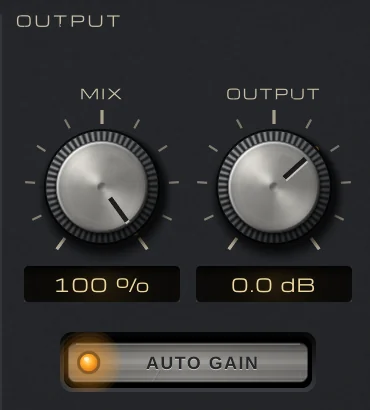
MIX at 100 %, OUTPUT at 0.0 dB and AUTO GAIN switched on.

Hear the colour, not the level

AUTO GAIN takes back the loudness the harmonics add (or, with TUBE, the rounding takes off), so turning DRIVE changes the colour while the level stays where it was. Measured at 15 to 100 % DRIVE on a mix, drums, a vocal and a master: TUBE within 0.45 dB, EXACT within 0.25 dB. MIX blends the saturated signal with the dry one, delayed to stay in time, for parallel saturation.

  • AUTO GAIN
  • Within 0.45 dB, measured
  • Parallel with MIX
The preset browser showing Default: Init, with previous, next and SAVE.

70 presets, each one measured

Twelve folders: Drums, Bass, Guitar, Keyboards, Strings, Brass, Woodwinds and Vocals, plus Mix Bus, Mastering and Creative FX. Each was measured through the real processor on material that matches its folder: tracks stay within −0.30 to +0.22 dB of the input’s loudness, Mix Bus within 0.05 dB and Mastering within 0.03 dB, where the harmonics sit 27 to 36 dB under the master.

  • 12 folders
  • Save your own
  • Recalled with your session

Get VEIRA Harmonic Saturator

Pay once and it’s yours, with every future update included.

VEIRA Harmonic Saturator

Harmonic colour, by the band: a warm tube or exactly the harmonics you set, at the same level.

  • Yours to keep: pay once, no subscription
  • Every future update, free for life
  • VST3, AU, Standalone on up to 3 computers
  • Changed your mind? Cancel within 14 days (refunds)
USD

One-time payment, in your cart.

Welcome offer

Get 10% off your first order

Leave your email and we’ll send you a code for 10% off your first order, on any plugins. One code per person.

Specifications

Type
Harmonic saturator by the band: a triode curve (TUBE) or exact 2nd to 5th harmonics (EXACT), with automatic gain
Mode
TUBE or EXACT (default TUBE); a change crossfades over 30 ms
Drive
0 to 100 % (default 40 %). TUBE: how hard each band drives the curve, against the band’s own long-term level. EXACT: all four faders together (100 % as set, 50 % 12 dB under, 25 % 24 dB under)
Harmonics (EXACT)
2ND, 3RD, 4TH, 5TH, each Off (−48 dB) to −6 dB against the signal (defaults −12, −18, −30, −36 dB); the same balance at any level, within 0.35 dB at 0, −20 and −40 dBFS
Bands
LOW, MID, HIGH, 0 to 100 % each (default 100 %); splits 40 Hz to 1 kHz (default 200 Hz) and 1 to 12 kHz (default 3 kHz), linear phase, 48 dB/octave
Tube
A lopsided tanh curve driven against each band’s own level; what it changes computed at 4x (2x at 88.2 and 96 kHz). A 220 Hz tone: 2nd −24 dB and 3rd −61 dB at 25 %, −16 and −39 dB at 50 %
Exact
The 2nd and 3rd made from what is under 6.4 kHz, the 4th and 5th from what is under 3.84 kHz (at 48 kHz), so nothing aliases
Mix
0 to 100 % (default 100 %), the dry signal delayed to stay in time
Output
−24 to +12 dB
Level
AUTO GAIN, on by default: measured at 15 to 100 % DRIVE on a mix, drums, a vocal and a master, TUBE within 0.45 dB and EXACT within 0.25 dB. TUBE can raise an already limited master’s peaks by up to 2 dB at high DRIVE
Latency
1,216 samples at 44.1 and 48 kHz (about 25 ms), 2,368 at 88.2 and 96 kHz, 4,608 at 176.4 and 192 kHz, reported to your DAW; at DRIVE 0 %, MIX 0 % and bypassed, the input delayed by the latency, bit for bit
Metering
SPECTRUM (output, input and harmonics added, 20 Hz to 20 kHz, with the bands and their split handles); HARMONICS (per band, the 2nd to 5th, 0 to −60 dB against the tone); IN and OUT peak and RMS; short-term and integrated LUFS
Presets
70 factory presets in 12 folders (by instrument, Mix Bus, Mastering and Creative FX), plus your own
Channels
Mono or stereo
CPU (measured)
About 6 to 8 % of one core of a 2-core cloud machine (stereo, 48 kHz)
Formats
VST3, AU, Standalone
macOS
macOS 11 or later, Apple silicon or Intel (universal). VST3, AU and Standalone.
Windows
Windows 10 or later, 64-bit. VST3 and Standalone.
Pro Tools
Pro Tools (AAX) versions are built and tested, and arrive once they’re signed for Pro Tools.
Latest version
0.2.1, released October 31, 2026 · What’s new
Read more on the blog: Using saturation so a sound cuts through without turning it up · Saturation in a mix: adding harmonics and colour with tape and tube

Questions? 9 answers about VEIRA Harmonic Saturator

Works well with

VEIRA Tape Saturator

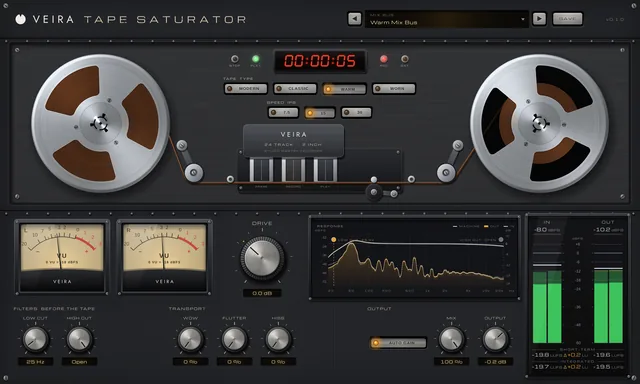
A 2-inch, 24-track tape machine: four tapes, three speeds, and reels that turn with your song.

$39.99

VEIRA Multiband Compressor

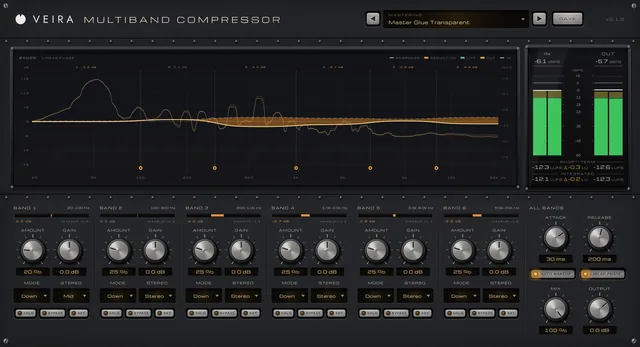
A six-band compressor with one knob per band, that works the same at any level.

$149.99

VEIRA Max

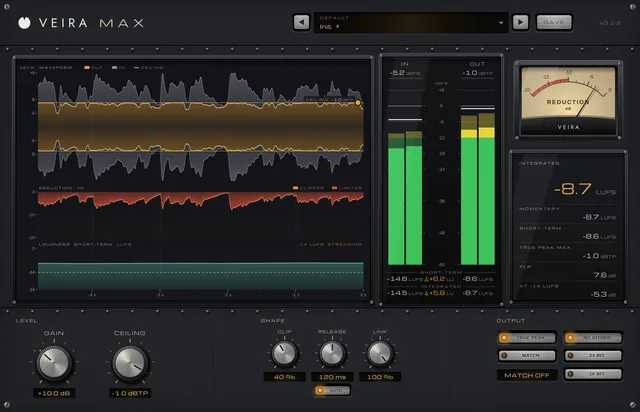
A loud, clean mastering limiter that shows every decibel it takes.

$149.99