VEIRA Mix Bus

A very simple, very gentle processor for the mix bus, the last thing before mastering: glue, three broad tone moves and width, at the same loudness.

$149.99, a one-time purchase with free updates

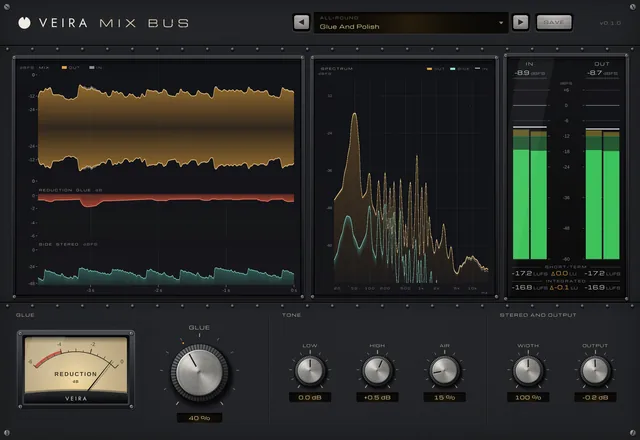
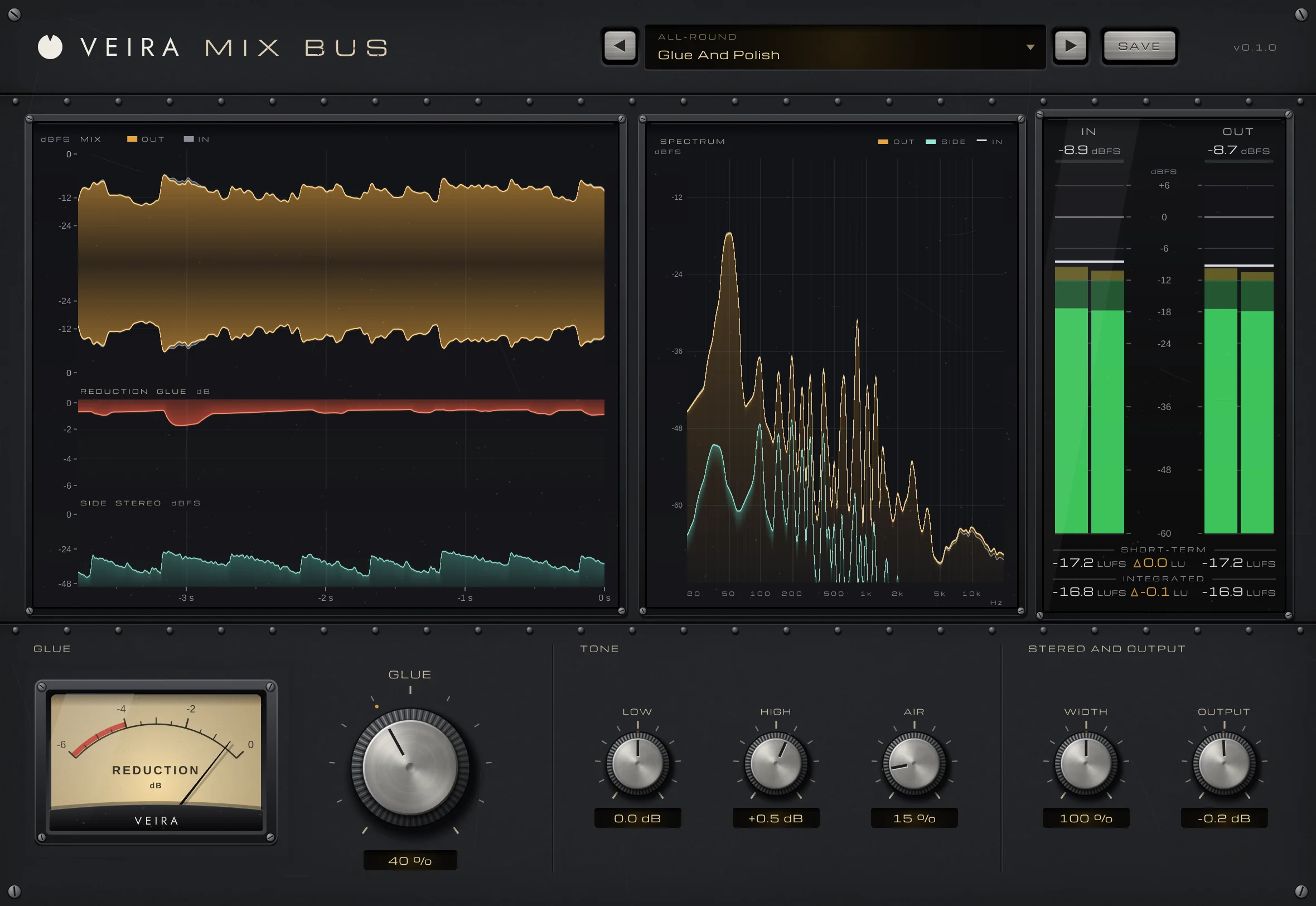
VEIRA Mix Bus with the Glue And Polish preset while a mix plays: the MIX display with the mix going out and coming in, the REDUCTION GLUE and SIDE STEREO lanes, the SPECTRUM with the output, its side and the input, the IN and OUT meters with loudness, and the controls: the REDUCTION needle, GLUE at 40 %, LOW, HIGH and AIR, WIDTH and OUTPUT.

VEIRA Mix Bus is a very simple, very gentle processor for the mix bus, the last thing before mastering. GLUE is one big knob of bus compression that pulls the mix together without squashing it. TONE has three broad moves, LOW, HIGH and AIR, WIDTH opens or narrows the stereo image above the low end, and OUTPUT sets the level.

What sets it apart is how little it asks of you. GLUE follows the mix’s own loudness, so the same setting works on a quiet mix and a loud one, and it gives the level back, so a move changes the feel, not the loudness. Its 30 ms attack keeps the transients, its automatic release keeps a dense chorus from pumping, and WIDTH leaves the low end where it is. There’s no latency, and at its neutral settings the mix passes untouched, bit for bit.

A tour of VEIRA Mix Bus

VEIRA Mix Bus with the Glue And Polish preset while a mix plays: the MIX display with the mix going out and coming in, the REDUCTION GLUE and SIDE STEREO lanes, the SPECTRUM with the output, its side and the input, the IN and OUT meters with loudness, and the controls: the REDUCTION needle, GLUE at 40 %, LOW, HIGH and AIR, WIDTH and OUTPUT.
  1. The whole of VEIRA Mix Bus

    VEIRA Mix Bus is a very simple, very gentle processor for the mix bus, the last thing before mastering. GLUE is one big knob of bus compression that pulls the mix together without squashing it. TONE has three broad moves, LOW, HIGH and AIR. WIDTH opens or narrows the stereo image above the low end, and OUTPUT sets the level. GLUE keeps the loudness, so a move changes the feel, not the level, and at its neutral settings the plugin passes the mix untouched, bit for bit.

  2. The mix

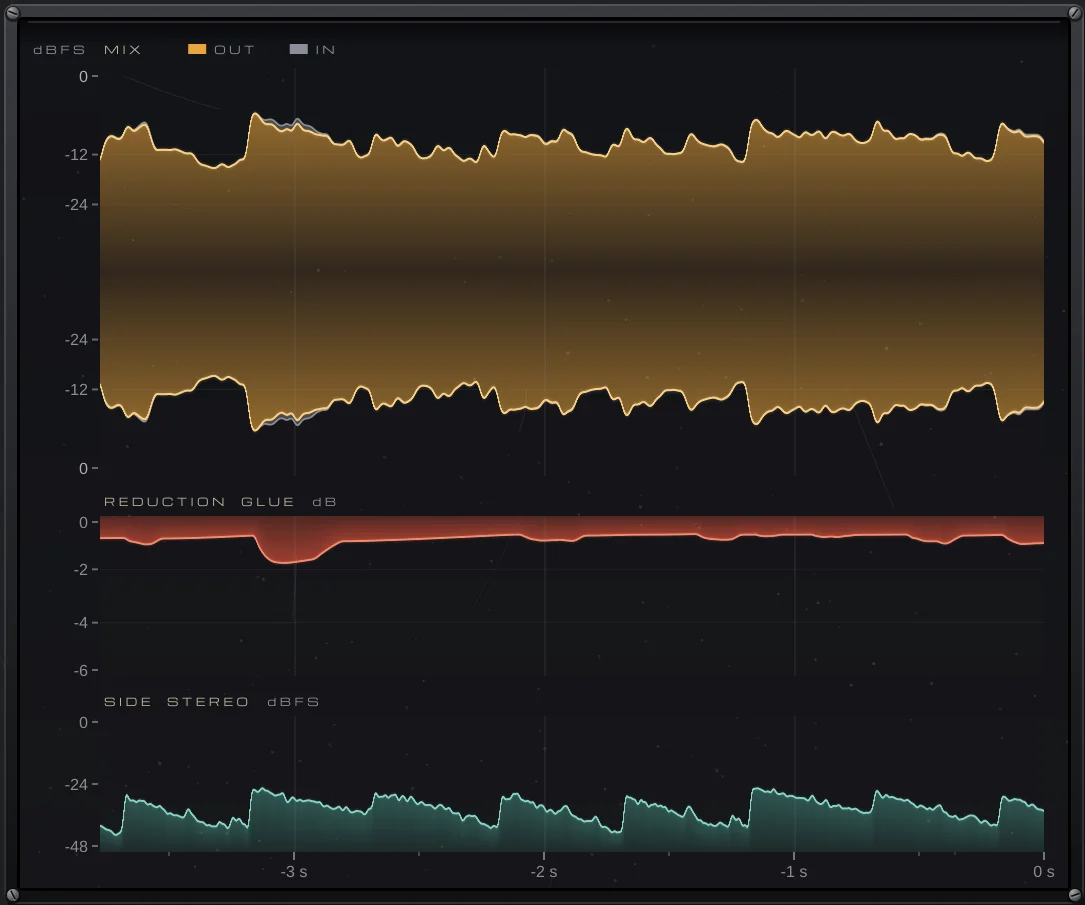
    The last 4 seconds going out and coming in, with what GLUE takes off and the side’s level underneath.

  3. The spectrum

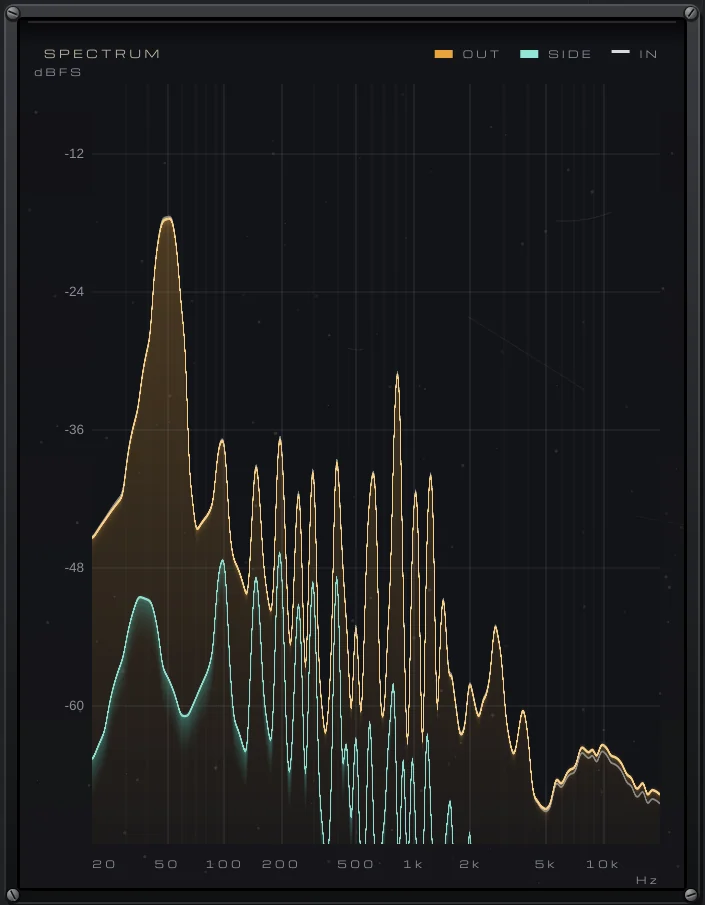
    The output, its side and the input: the tone moves and the width, drawn as you make them.

  4. In and out

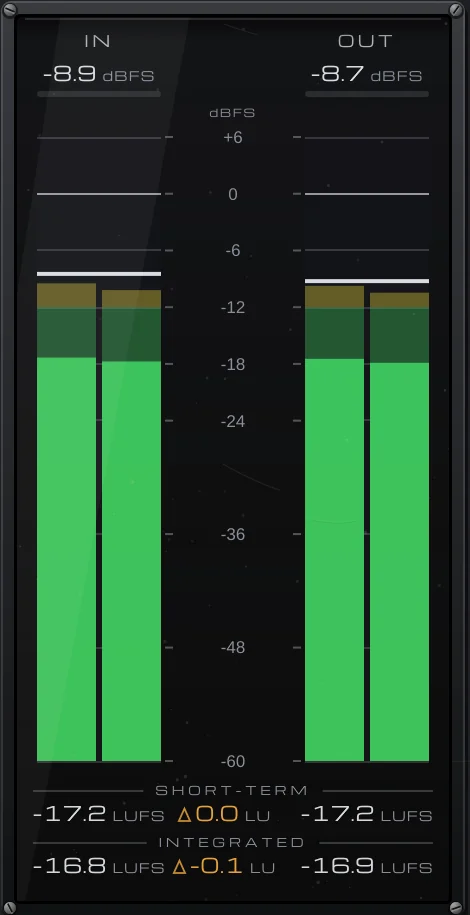
    Peak and RMS for the input and the output, with short-term and integrated loudness.

  5. Glue

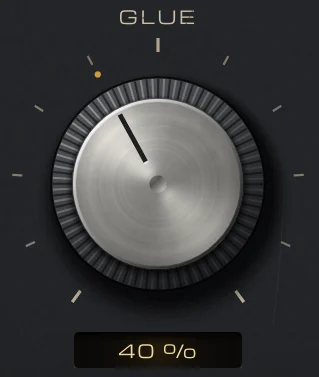
    One knob of gentle bus compression, and a needle that shows how much it takes.

  6. Tone

    Three broad moves: weight with LOW, brightness with HIGH, a lift of the very top with AIR.

  7. Width and output

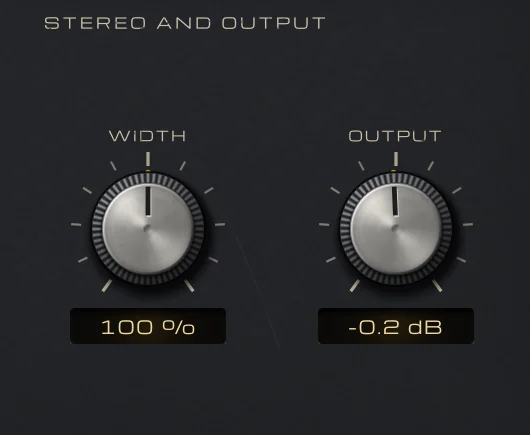
    The stereo width above 150 Hz, and the level going out.

What VEIRA Mix Bus does for you

The GLUE knob at 40 %.

One knob of gentle glue

GLUE is bus compression for the whole mix that pulls it together without squashing it. On a mix the average reduction is about 0.55 dB at 30 %, 1 dB at 50 %, 1.6 dB at 70 % and 2.4 dB at 100 %, and the most it takes is about 3.6 dB. The knob has a square-root taper, so its first half already does something. The threshold and ratio move together along it, up to a gentle 2:1 with a 10 dB knee.

  • One knob
  • Up to 2:1
  • About 2.4 dB at 100 %
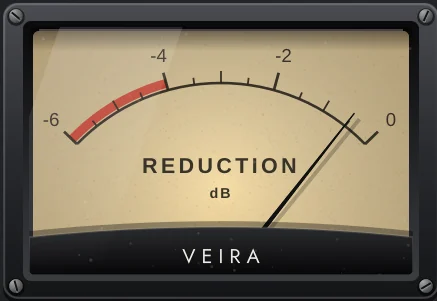
The REDUCTION needle on its 0 to −6 dB scale, behind glass.

It follows the mix and keeps the level

GLUE hears the mix through a 90 Hz high-pass, so the kick and bass don’t pump it, and compares it with the mix’s own long-term loudness, so the same setting does the same on a quiet mix and a loud one: tested, the same reduction at −4 and −30 dBFS. The level is given back automatically and kept within 0.02 dB at 30, 60 and 100 %, so a move changes the feel, not the loudness. The REDUCTION needle reads 0 to 6 dB.

  • Level independent
  • Loudness kept
  • REDUCTION needle
The MIX display over the last 4 seconds: the mix going out in amber and coming in in grey, the REDUCTION GLUE lane underneath and the SIDE STEREO lane at the bottom.

The transients stay, the chorus doesn’t pump

GLUE’s 30 ms attack lets the front of every hit through, so it thickens the body without shaving the peaks: across the factory presets the crest factor changes by −0.2 to +1.0 dB. The release is automatic, a fast envelope for single peaks over a slow one that holds sustained compression, so a dense chorus doesn’t pump. The MIX display shows the mix going out and coming in, with what GLUE takes off and the side’s level underneath.

  • 30 ms attack
  • Automatic release
  • 4-second display
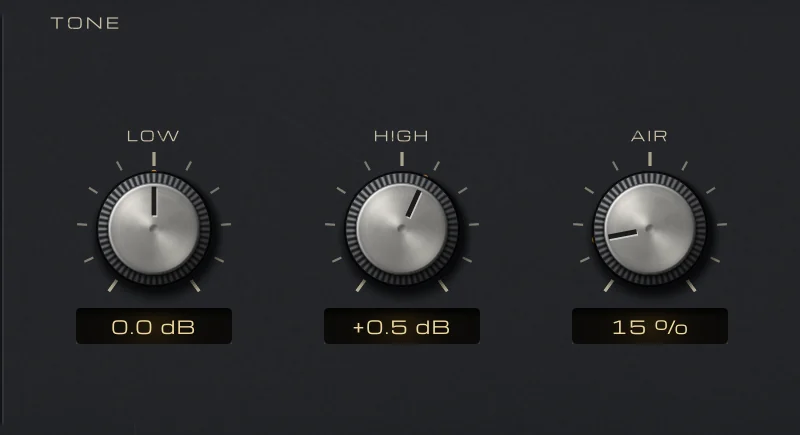
The TONE group: LOW at 0.0 dB, HIGH at +0.5 dB and AIR at 15 %.

Three broad tone moves

LOW is a broad low shelf at 100 Hz and HIGH a broad high shelf at 5 kHz, each from −3 to +3 dB. AIR is a soft lift of the very top, a shelf centred at 14 kHz: at 100 % about +2 dB at 14 kHz and +2.5 dB at 18 kHz. They are VEIRA EQ’s analog-matched shelves, and they glide when moved, so they don’t click.

  • LOW, HIGH, AIR
  • ±3 dB
  • Analog-matched
The STEREO AND OUTPUT group: WIDTH at 100 % and OUTPUT at −0.2 dB.

Width above the low end

WIDTH (50 to 150 %) opens or narrows the stereo image above 150 Hz. The side is split at 150 Hz into its lows and the exact remainder, and only the remainder is scaled, so there’s no bump at the split, the low end stays where it is and mono compatibility holds. Tested: a 3 kHz side tone comes out +3.5 dB at 150 % and −5.9 dB at 50 %, and the mid is untouched.

  • 50 to 150 %
  • Above 150 Hz
  • Mid untouched
The meter bridge: IN and OUT peak and RMS in dBFS, with short-term and integrated loudness in LUFS and the difference in LU.

Neutral is exact, and there’s no latency

At GLUE 0 %, LOW, HIGH and AIR at 0, WIDTH 100 % and OUTPUT 0 dB, the output is the input, bit for bit, and the host’s bypass is bit-exact too. There’s no latency, so it can stay on the mix bus while you record. The meter bridge shows IN and OUT level and loudness, with the difference in LU, so you can check the level stays where it was.

  • Bit for bit
  • No latency
  • IN and OUT loudness
The SPECTRUM display from 20 Hz to 20 kHz: the output filled in amber, its side in teal and the input as a light line.

See the tone and the width

The SPECTRUM display draws the output, its side and the input from 20 Hz to 20 kHz. The TONE moves show as the output moving away from the input, and WIDTH as the side rising or falling, so you can see how small a gentle move is.

  • Output, side, input
  • 20 Hz to 20 kHz
  • Gentle moves, visible
The preset browser showing All-Round: Glue And Polish, with previous, next and SAVE.

61 presets, each one measured

Nine folders: Default, All-Round, Pop, Rock, Hip-Hop & R&B, Electronic, Acoustic & Jazz, Orchestral & Film and Tone Only, which leaves GLUE at 0 %. Most are small moves, and only the presets named “More” go further. Each was measured on the real plugin on a mix that suits its folder, with OUTPUT set so it lands within 0.15 dB of bypass, so A/B comparisons are fair.

  • 9 folders
  • Within 0.15 dB of bypass
  • Save your own

Get VEIRA Mix Bus

Pay once and it’s yours, with every future update included.

VEIRA Mix Bus

A very simple, very gentle processor for the mix bus, the last thing before mastering: glue, three broad tone moves and width, at the same loudness.

  • Yours to keep: pay once, no subscription
  • Every future update, free for life
  • VST3, AU, Standalone on up to 3 computers
  • Changed your mind? Cancel within 14 days (refunds)
USD

One-time payment, in your cart.

Welcome offer

Get 10% off your first order

Leave your email and we’ll send you a code for 10% off your first order, on any plugins. One code per person.

Specifications

Type
Mix bus processor: gentle bus compression, three broad tone shelves and stereo width, for the last touch before mastering
Glue
0 to 100 % (default 30 %): on a mix about 0.55 dB of reduction at 30 %, 1 dB at 50 %, 1.6 dB at 70 % and 2.4 dB at 100 % on average, at most about 3.6 dB; up to 2:1 with a 10 dB knee, against the mix’s own long-term loudness
Detection
Stereo-linked, 5 ms RMS through a 90 Hz high-pass; attack 30 ms; automatic release (150 ms over 1.5 s)
Level
Automatic makeup: tested, the loudness kept within 0.02 dB at 30, 60 and 100 %; the same reduction at −4 and −30 dBFS
Low
−3 to +3 dB, a broad shelf at 100 Hz
High
−3 to +3 dB, a broad shelf at 5 kHz
Air
0 to 100 %: a shelf centred at 14 kHz with a +4 dB top (at 100 % about +2 dB at 14 kHz, +2.5 dB at 18 kHz)
Width
50 to 150 % (default 100 %), the side above 150 Hz only; the mid untouched; stereo only
Output
−12 to +12 dB
Latency
None
Transparency
At GLUE 0 %, the TONE at 0, WIDTH 100 % and OUTPUT 0 dB, and bypassed, the output is the input, bit for bit
Metering
MIX (4 s: out and in, GLUE’s reduction, the side’s level); SPECTRUM (output, side and input, 20 Hz to 20 kHz); REDUCTION needle (0 to 6 dB); IN and OUT peak and RMS; short-term and integrated LUFS
Presets
61 factory presets in 9 folders (by style, plus Tone Only), each within 0.15 dB of bypass, plus your own
Channels
Mono or stereo
CPU (measured)
About 1 % of one core of a 2-core cloud machine (stereo, 48 kHz, every control in use)
Formats
VST3, AU, Standalone
macOS
macOS 11 or later, Apple silicon or Intel (universal). VST3, AU and Standalone.
Windows
Windows 10 or later, 64-bit. VST3 and Standalone.
Pro Tools
Pro Tools (AAX) versions are built and tested, and arrive once they’re signed for Pro Tools.
Latest version
0.2.0, released October 30, 2026 · What’s new
Read more on the blog: Mix bus compression: glue without squashing the mix · Processing the mix bus: gentle glue, broad tone and what to leave alone

Questions? 8 answers about VEIRA Mix Bus

Works well with

VEIRA Mastering Suite

A whole mastering console in one plugin: nine modules in any order, a true-peak maximizer always last, and a reference track to match.

$189.99

VEIRA Comp

A tube-coloured compressor you can read like an instrument.

$149.99

VEIRA Max

A loud, clean mastering limiter that shows every decibel it takes.

$149.99