Riding the bass: keep a bass line steady from verse to chorus
Why a bass line drifts in level between sections, why heavy compression isn’t the only answer, and how to ride the bass so it holds its place under the kick all song long.
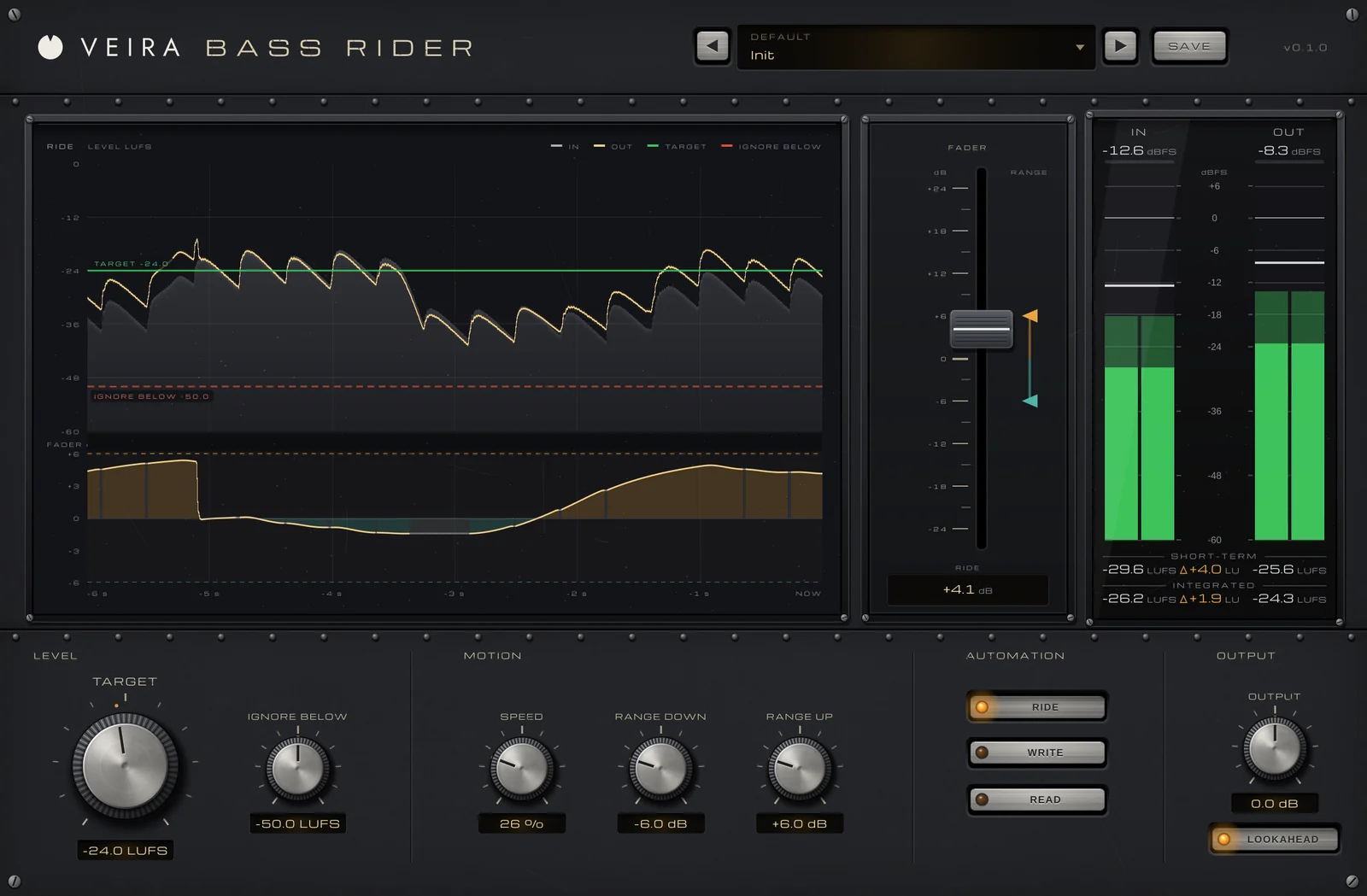
A bass line that feels right in the verse can disappear in the chorus, or swell up and crowd the kick when the player digs in. Players change their touch from section to section, synth patches change between parts, and an 808’s level depends on which notes it plays. The low end is where these changes hurt most: a few decibels too little and the song loses its weight, a few too many and it turns to mud. Riding the bass fader through the song keeps it in place without flattening the playing.
Sections drift, notes breathe
It helps to separate two kinds of level change. Inside a phrase, notes have their own attacks, decays and accents: that’s the groove, and it’s part of the performance. Between sections, the whole line gets louder or quieter: a softer verse, a chorus played harder, a breakdown on a different string. The first kind usually wants to be left alone or lightly compressed. The second kind is what riding is for.
Why heavy compression isn’t the answer
You can level a bass with a compressor, but a compressor works note by note. Push it hard enough to even out a quiet verse and a loud chorus and it also flattens every attack, pumps against the kick and pulls up the decay of each note, so long tails and string noise come up between notes. A slower move, like a hand on the fader, evens out the sections and leaves the notes as they were played. Many engineers ride first and then use a little compression for consistency within each phrase.
How to ride a bass line
- Set the bass against the kick in the busiest section of the song, then ride the other sections to match.
- Ride whole sections or phrases, not single notes: a move on every note starts to sound like compression.
- Don’t lift the tails. As a note dies away, hold the fader where it is, or long 808 notes swell up instead of decaying.
- Leave rests and bleed alone, so the gaps stay quiet.
- Judge the low end on more than one system, and at a moderate level, since bass is hard to judge when it’s loud.
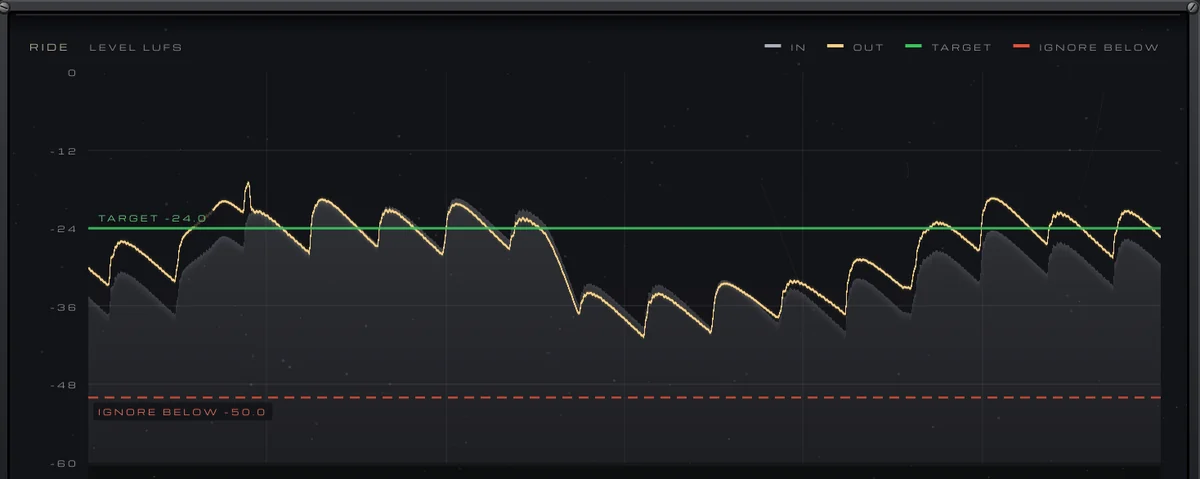
Measure with a loudness meter rather than a peak meter. Low notes carry a lot of energy and their peaks swing widely from one cycle to the next, so a short-term loudness reading over a phrase tells you more about where the bass sits.
Write the ride down
Recording the ride as volume automation lets you see the moves, adjust one fill or one booming note, and keep the ride when you change other things in the mix. It also makes it easy to compare: switch the automation off and you hear how much the line was moving before.
Doing it with VEIRA Bass Rider
VEIRA Bass Rider does what your hand does on the bass fader: up for a quiet verse, down for a hard-hit chorus. You set TARGET, where the bass should sit in LUFS, and one console fader moves smoothly to keep it there, within RANGE DOWN and RANGE UP. It hears loudness K-weighted and low-passed at 1.5 kHz, so string, fret and slap noise don’t count, and averaged over several cycles of a low note, so a held low note doesn’t make the fader ripple.
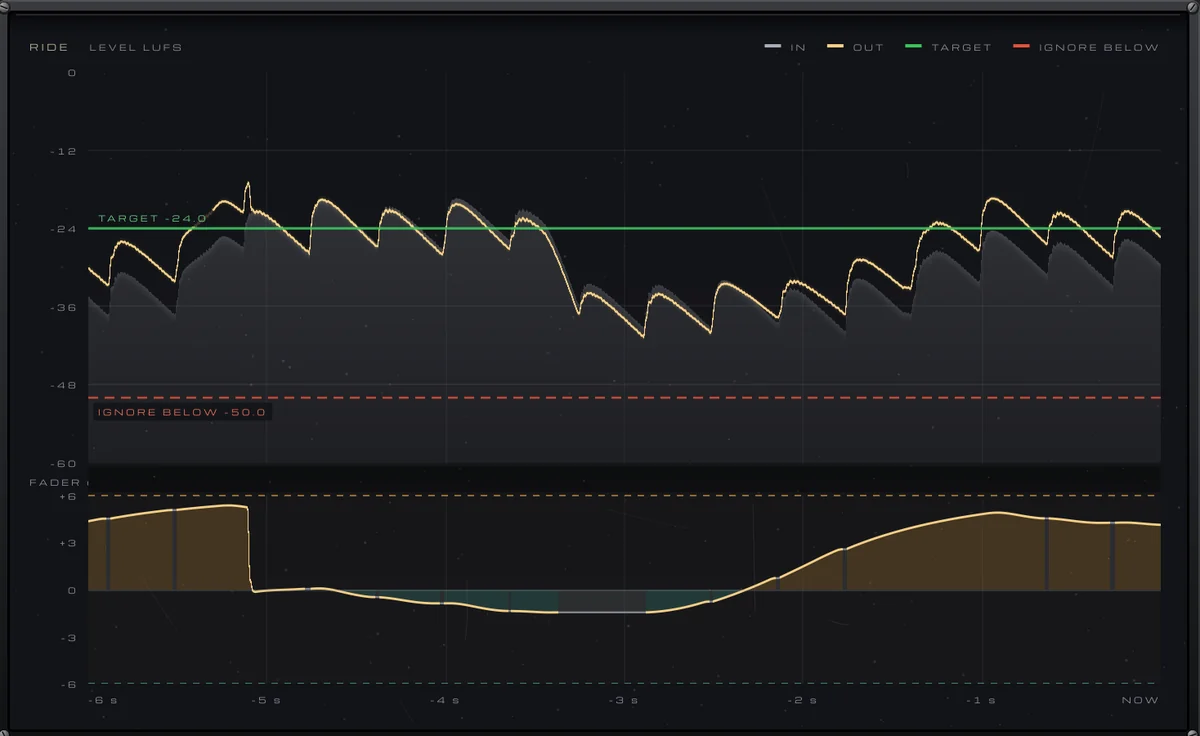
While a note dies away the fader holds, following each note’s body rather than its decay: an 808’s long tail isn’t lifted, the next attack isn’t ducked, and a rest doesn’t move the fader. SPEED goes from a slow hand that rides whole sections to a fast one that rides phrases, and the fader turns down twice as fast as it lifts. LOOKAHEAD lets it hear 25 ms ahead, so a loud chorus is already turned down when it plays; the 25 ms are reported to your DAW, which keeps the bass in time with the kick.
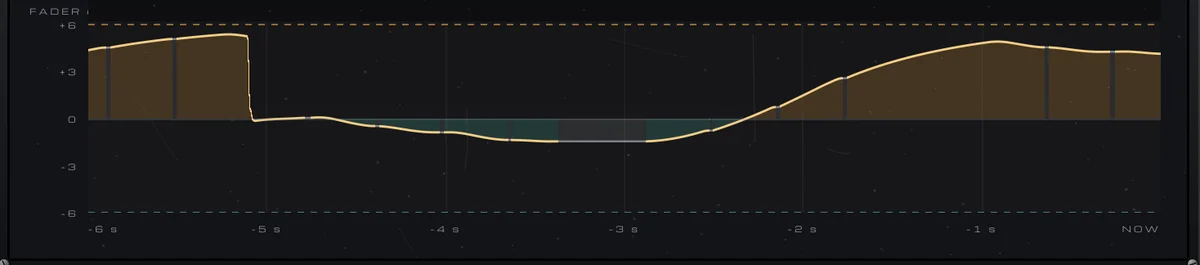
WRITE sends every move to the FADER parameter so your DAW records the ride as automation, and READ plays it back while you drag the fader by hand to lift a fill. Across the factory bank, the notes sit within 1.4 LU of TARGET while the player’s attacks and decays stay as played.