Making bass heard on phones and laptops
Why a sub or 808 vanishes on small speakers, how harmonics let the ear hear notes the speaker can’t play, and how to keep the low end steady without the kick pumping it.
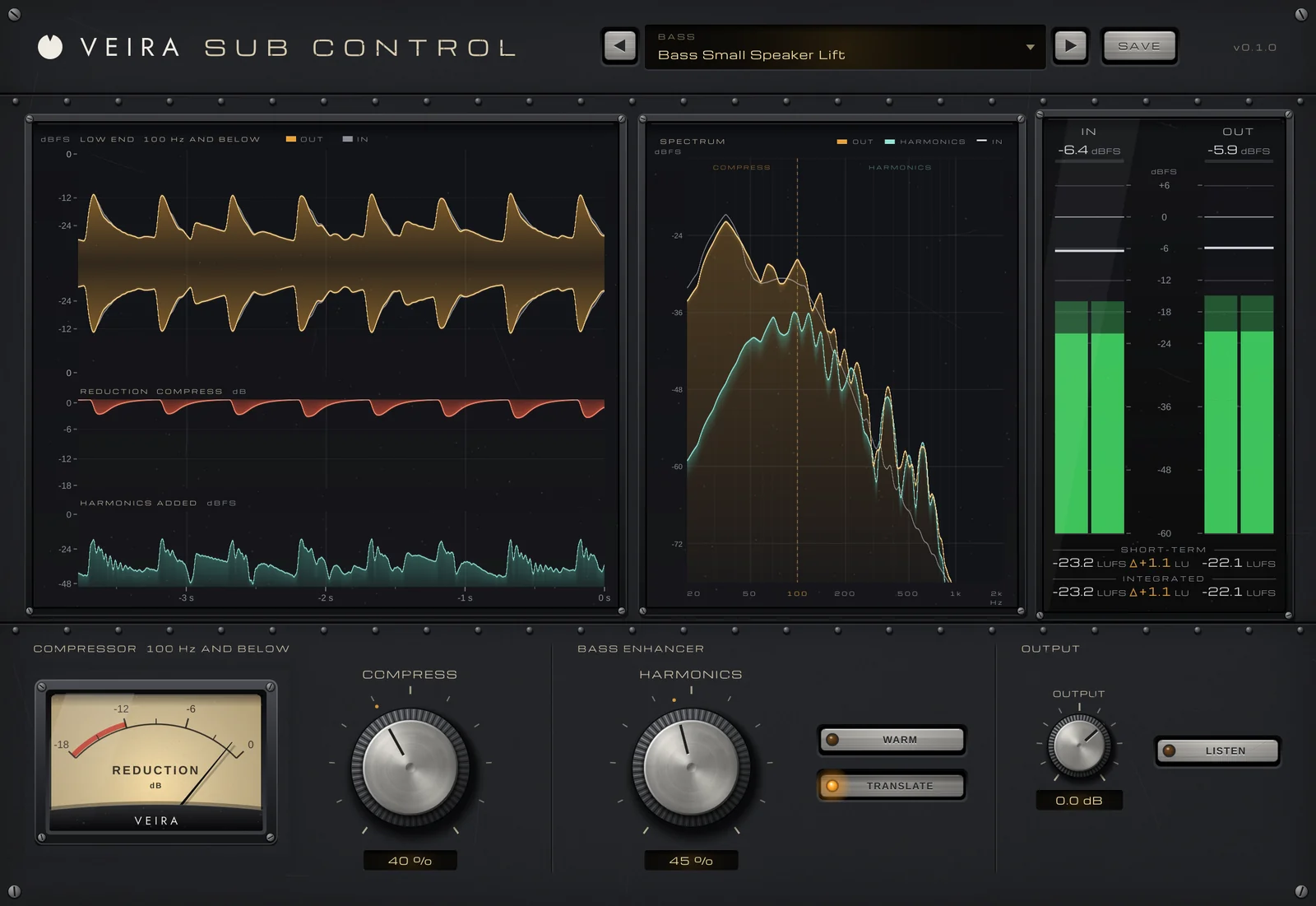
A bass line that shakes the room on studio monitors can disappear entirely on a phone. The reason is simple: small speakers can’t move enough air to play the lowest notes, and the fundamental of a sub bass or an 808, often somewhere between 30 and 60 Hz, is far below what they reproduce. Since a large share of music is now heard on phones, laptops and earbuds, a mix has to work there too.
Let the harmonics carry the note
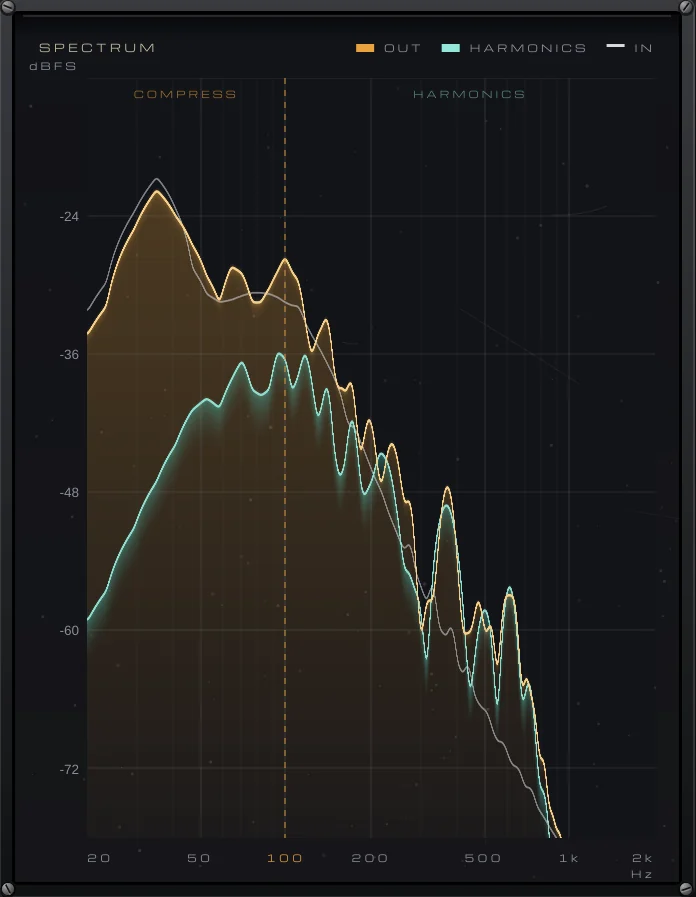
The good news is that the ear doesn’t need the fundamental to hear a pitch. A note is made of its fundamental and a series of harmonics above it, at two, three, four and five times its frequency, and when the harmonics are there, the brain fills in the missing note. So the way to make bass carry on a small speaker isn’t to turn up the lows, which only eats headroom: it’s to make sure the bass has harmonics in the range the speaker can play.
- Saturation adds harmonics. A little tube or tape saturation on the bass, or on a parallel copy of it, often does more for small speakers than any EQ move.
- Layering helps. A second, brighter bass sound an octave up, or the bass guitar’s own midrange, carries the line where the sub can’t.
- Check the 100–300 Hz range carefully: it’s where the bass is heard on small speakers, but too much of it is also where mixes get muddy.
Keep the low end steady
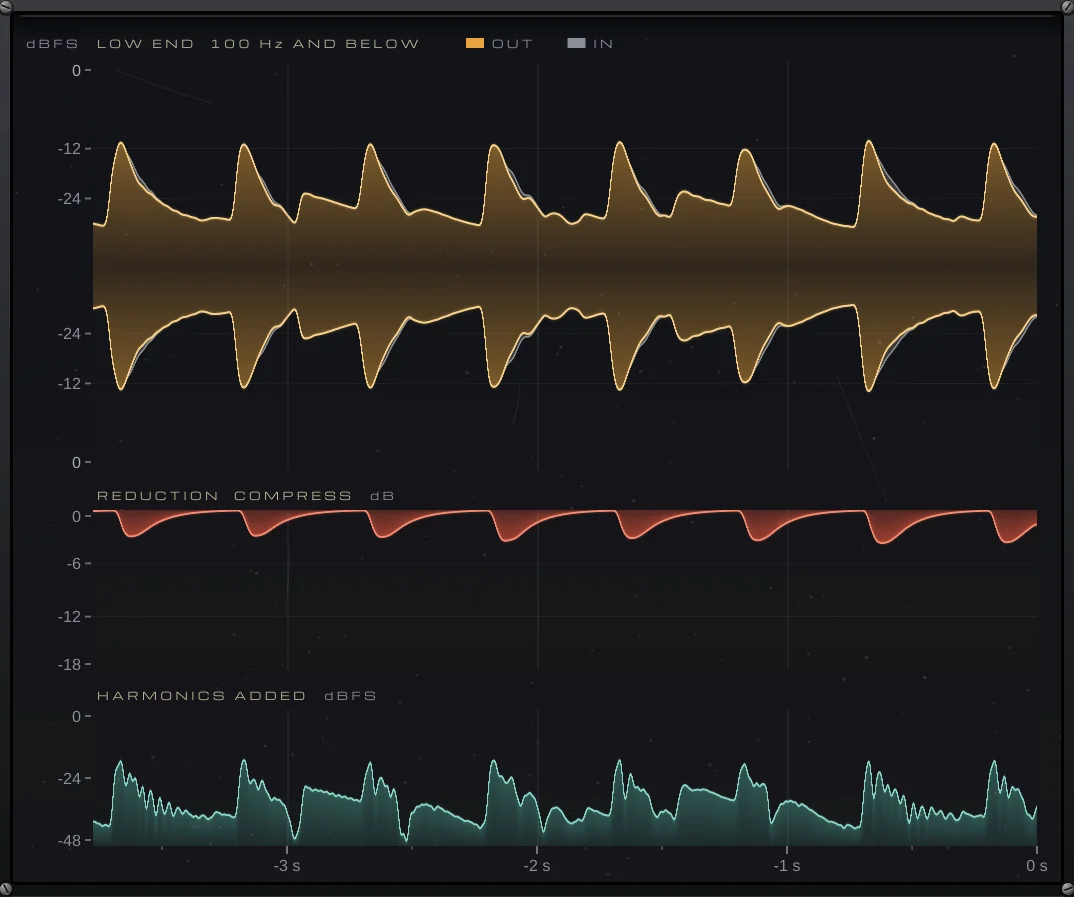
An uneven low end is the other common problem: some notes boom and others vanish, because of the instrument, the room it was recorded in, or the way the part was played. A normal compressor on the bass helps, but it hears the whole signal, so a loud pick attack or a bright slap pulls the low end down with it. Compressing only the lows, and only with the lows deciding how much, evens out the notes without touching the bass’s tone above them.
Give the kick and the bass room too. Decide which one owns the very bottom, keep the low end in mono, and if they still fight, duck the bass a little each time the kick hits.
Check it where people will hear it
Play the mix on a phone, on a laptop and on earbuds before calling it done. If you can follow the bass line on all three, and it doesn’t overwhelm the mix on full-range speakers, it’s in good shape.
Doing it with VEIRA Sub Control
VEIRA Sub Control does both jobs. COMPRESS is one knob that evens out everything under 100 Hz: it listens to the lows through a steep 100 Hz low-pass, so a snare, a vocal or a cymbal never pumps the bass, and it changes nothing from 400 Hz up. On a bass line whose notes vary by 12 dB, 50 % leaves 7.3 dB of difference.

HARMONICS adds harmonics of the lows, never more of the note itself. WARM saturates them like a tube for weight and grit; TRANSLATE adds the exact 2nd to 5th harmonics of the sub, so phones and laptops that can’t play it still carry the line. Its Small Speakers presets make an 808 line 7 to 9 dB louder on a phone-sized speaker, and LISTEN plays only what it’s working on.