Adding air and presence to a master without making it harsh
How harmonic excitement differs from EQ, which bands and amounts tend to work on a master, and how to listen to what you add so the top end opens up without turning harsh.
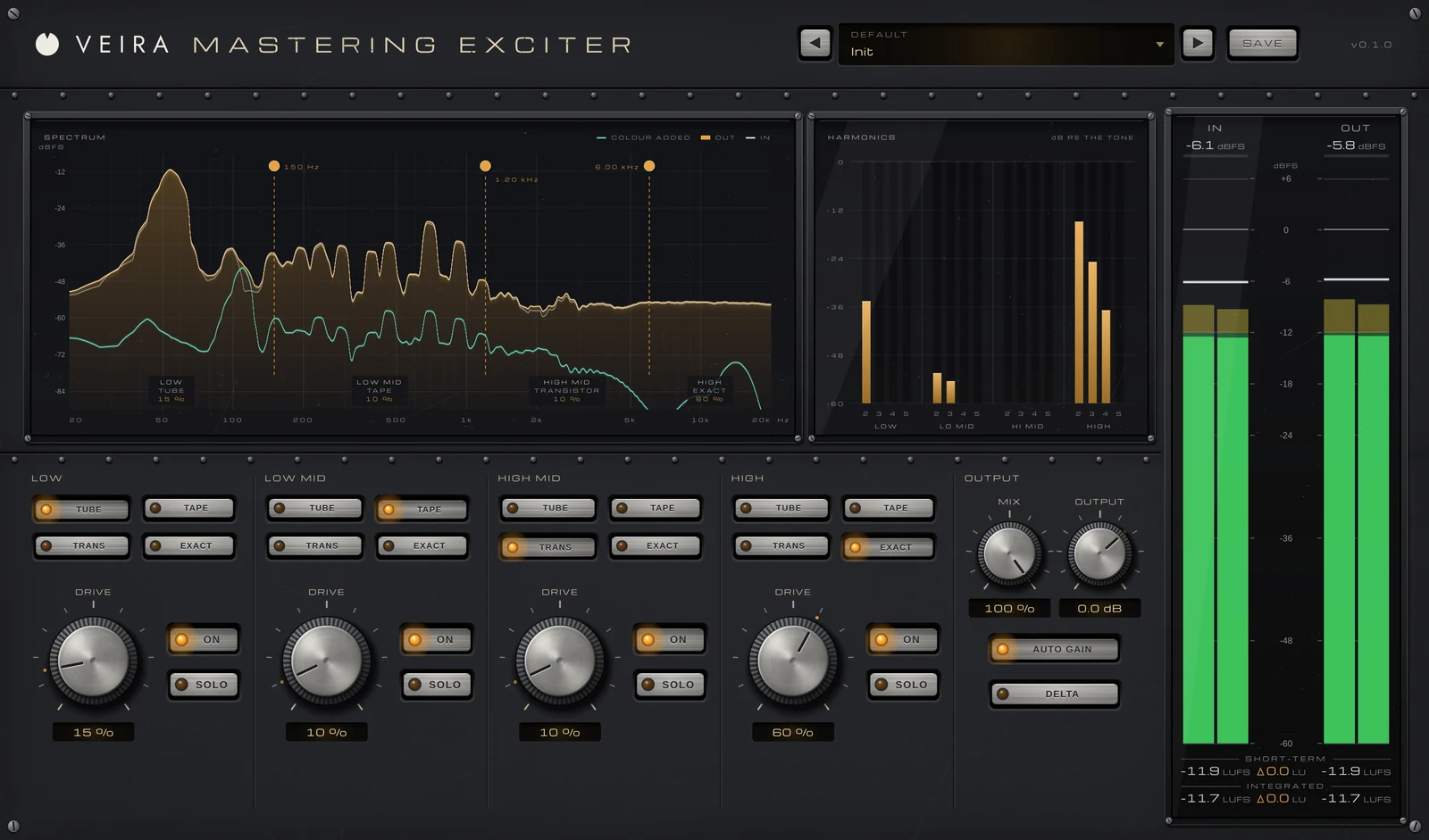
A master can be well balanced and still sound a little closed: the cymbals lack sheen, the vocal sits behind a thin veil, and next to other records the top end feels dull. The first move is usually a high shelf, but boosting the top of a finished mix also lifts hiss, sibilance and every harsh edge already in it. Adding harmonics, often called exciting or saturating, is another way to bring presence and air, and used with care it opens up a master without making it tiring.
EQ boosts what’s there, harmonics add something new
An EQ can only turn up frequencies that already exist in the mix. If a recording has little real content above 10 kHz, a shelf there brings up mostly noise. An exciter works differently: it generates new harmonics, multiples of the frequencies already present, so a vocal’s upper mids gain overtones higher up and a cymbal gets more shimmer. Because the new content follows the music, it tends to sound like detail rather than hiss. The two tools work well together: a gentle shelf for balance, a little excitement for life.
Different harmonics, different characters
Not all harmonics sound alike. Even harmonics, especially the 2nd, an octave above, sound warm and musical; it’s the sound often associated with tubes. Odd harmonics, especially the 3rd, sound denser and edgier, the character often associated with tape and transistor circuits. On a master, a little of the 2nd tends to add sweetness and air, while too much of the odd harmonics in the upper mids is the quickest route to harshness.
Work in bands, and keep it subtle
Exciting the whole master at once gives the low end and the top end the same treatment, which is rarely what you want. Splitting it into bands lets you choose what each range gets:
- Lows: a touch of even harmonics adds weight that small speakers can reproduce, but keep it light or the bottom gets muddy.
- Low mids: usually the band to leave alone or treat gently, since this is where mixes get thick.
- Upper mids, roughly 2 to 6 kHz: a small amount adds presence to vocals and guitars, and it’s also where the ear is most sensitive to harshness.
- Highs, above about 6 kHz: clean, mostly even harmonics here give the “air” most people mean when they ask for it.
On a master, the right amount is usually small: you should notice it more when you switch it off than when you switch it on.
Listen to what you add, at the same level
Two things fool the ear. First, louder sounds better, so any process that raises the level will seem like an improvement: match the level before you compare with bypass. Second, a subtle addition is hard to hear inside a full mix. Listening to the added signal on its own, the difference, makes it obvious whether a band is adding a sweet octave or a gritty edge. Then check the result at a normal listening level, on more than one system, and over the loudest part of the song, where cymbals and sibilants pile up.
Doing it with VEIRA Mastering Exciter
VEIRA Mastering Exciter splits the master into LOW, LOW MID, HIGH MID and HIGH and gives each band its own color and its own DRIVE: TUBE for warmth and weight, TAPE for density and glue, TRANSISTOR for edge and presence, and EXACT for clean shine and air with no peak rounded. Your master itself is never filtered: the input goes straight through, and only what each color adds is mixed in.
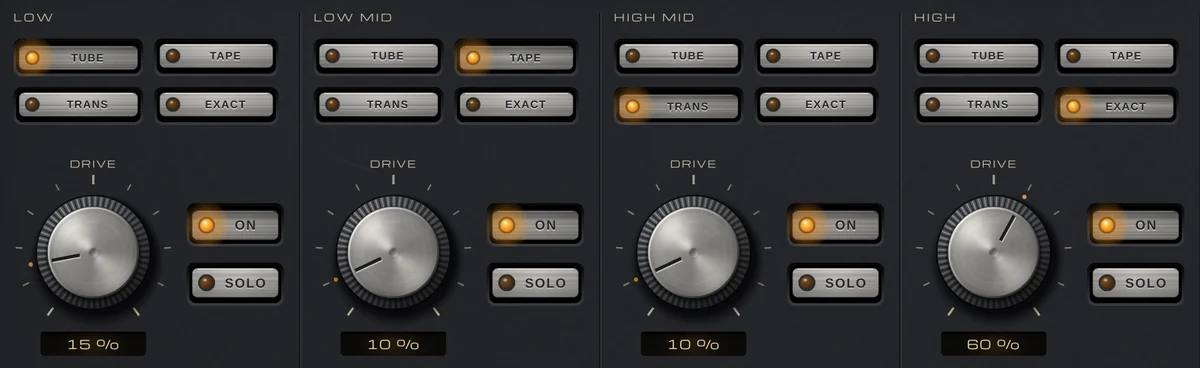
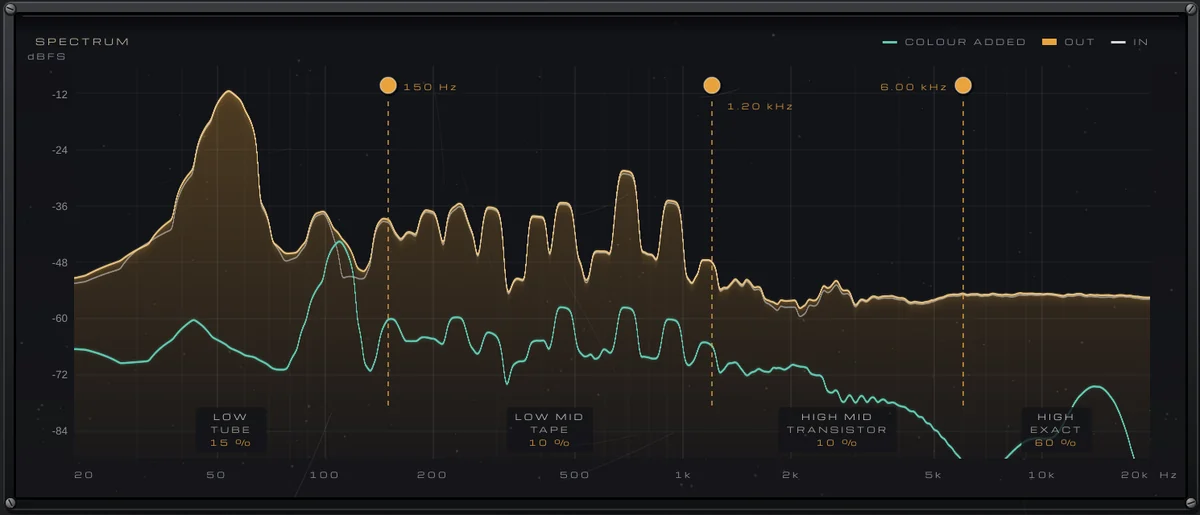
For air, EXACT on the HIGH band is a natural place to start: it makes the 2nd, 3rd and 4th harmonics directly, at the same ratio at any level. You set the splits by dragging three handles on the SPECTRUM display, by default at 150 Hz, 1.2 kHz and 6 kHz, and what a band’s color makes below the band is filtered out, so the air stays on top and the low end stays clean.
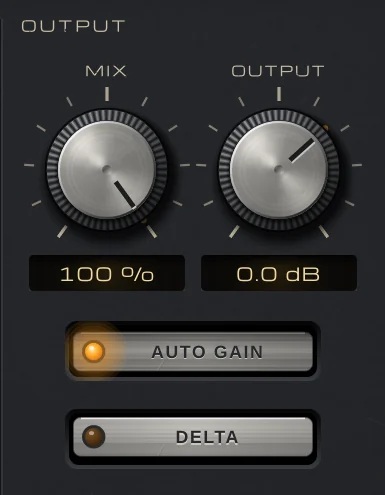
DELTA plays only what the exciter adds, and SOLO plays one band with its color as it sits in the master; together they play one band’s color on its own. AUTO GAIN takes back the loudness the color adds, so turning DRIVE changes the color, not the volume, and your comparison with bypass is a fair one. MIX blends the excited signal with the dry one, kept in time.