Lo-fi vinyl texture: crackle, wow and an old record’s sound, used with taste
What makes a track sound like an old record, how much crackle, band-limiting and wow to add, and how to keep the texture from burying the music.
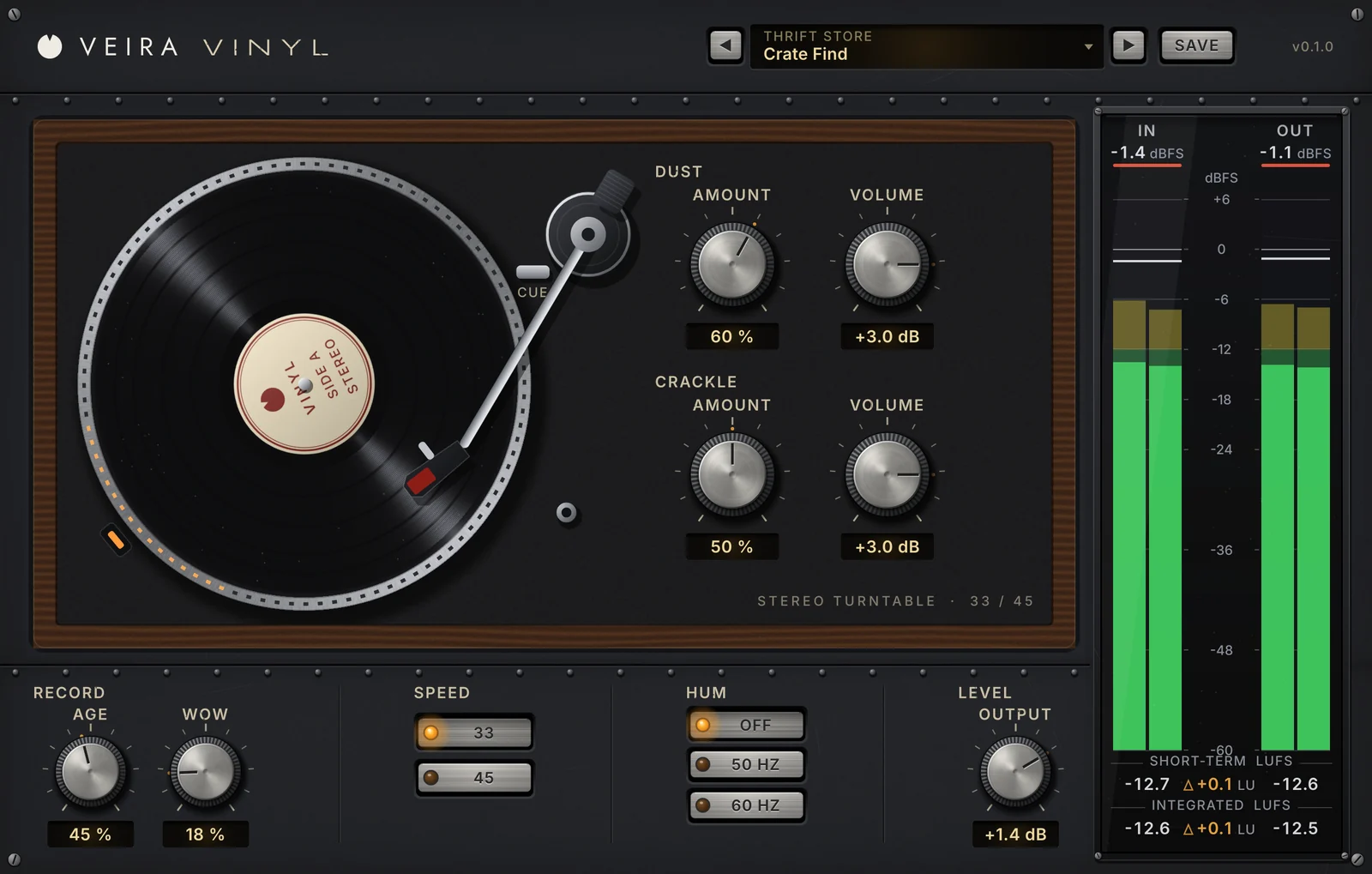
A little record noise can make a beat feel warm, lived-in and a bit nostalgic. Too much, and the song sounds like it’s playing through a wall: the hiss fights the vocal, the pops distract from the groove and the whole mix loses its low end and its sparkle. The trick is to treat vinyl texture as several separate ingredients, each with its own job, and to add each one only as far as the song needs.
Know the ingredients
An old record’s sound isn’t one thing. It helps to think of it as layers you can set independently.
- Surface noise: a soft, steady hiss with fine ticks, the sound of the needle in the groove.
- Crackle and pops: louder, irregular clicks, sometimes with a scratch that comes back once per turn.
- Band-limiting: an old record and cartridge lose the deep lows and the top highs, and the stereo image narrows.
- Wow: the speed wavering slowly once per turn, bending the pitch a little.
- Hum: a low mains hum from a turntable with a bad ground, at 50 or 60 Hz depending on the country.
Set the noise under the music, not on top of it
Bring the hiss and crackle up with the music playing, until you can just hear them in the quiet moments, then back off a touch. In a busy chorus the texture should mostly disappear; in a sparse intro it can step forward. Watch the loudest pops in particular: a click that peaks above the music is what makes listeners think something is broken. Keeping the crackle near the center of the stereo picture, as if it came from one groove, also sounds more like a real record than noise spread wide.
Age the tone, but keep the mix working
Rolling off the lows and highs is what really sells the old-record sound, but it’s also what can drain the mix. A gentle high-pass and a low-pass somewhere in the upper treble are usually enough on a full mix; save heavier band-limiting for an intro, a breakdown or a sample you want to sound distant. Wow works the same way: a waver of well under a percent of pitch reads as character, while a lot sounds seasick, especially on sustained notes and vocals. Use hum sparingly, if at all, and keep it far below the music.
Make it part of the arrangement
Texture works best when it moves with the song. Try a heavily aged intro that opens up into the full-range track, crackle that drops back when the drums come in, or a breakdown that sinks back onto the record. And compare the result with the clean version at the same loudness, so you’re choosing the texture, not just a change in level.
Doing it with VEIRA Vinyl
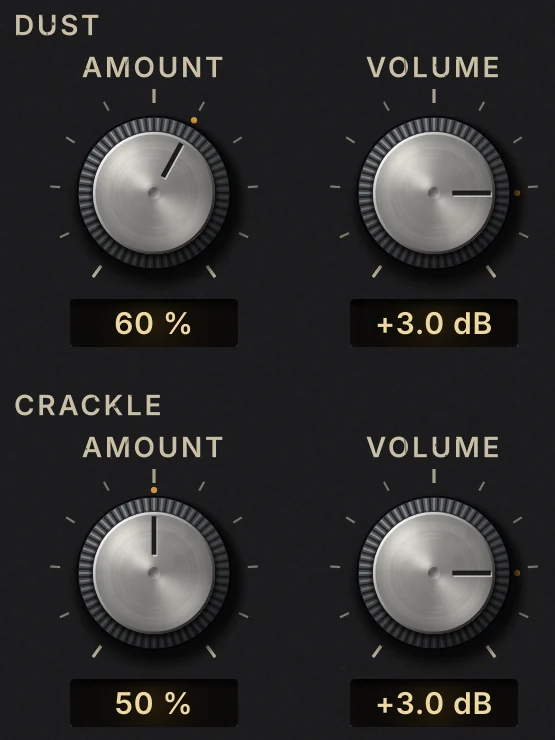
VEIRA Vinyl puts your music on a record, with each ingredient on its own control. DUST adds the surface’s hiss, limited to 250 Hz to 7 kHz as a needle hears it, and fine ticks; CRACKLE adds pops, bursts of crackle and, from 60 %, a scratch on every turn of the record. Each has its own AMOUNT for how much and VOLUME for how loud, so you can set the density and the level separately.
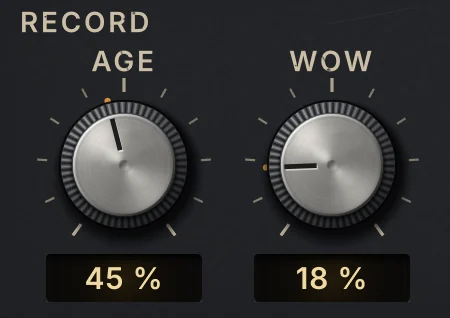
AGE rolls off the lows and highs the way an old record and its cartridge do and narrows the stereo, and at 0 % the music passes untouched. WOW makes the speed waver once a turn, about ±1 % of pitch at 100 %, SPEED turns the record at 33 or 45, and HUM adds a turntable’s mains hum at 50 or 60 Hz, low under the music.
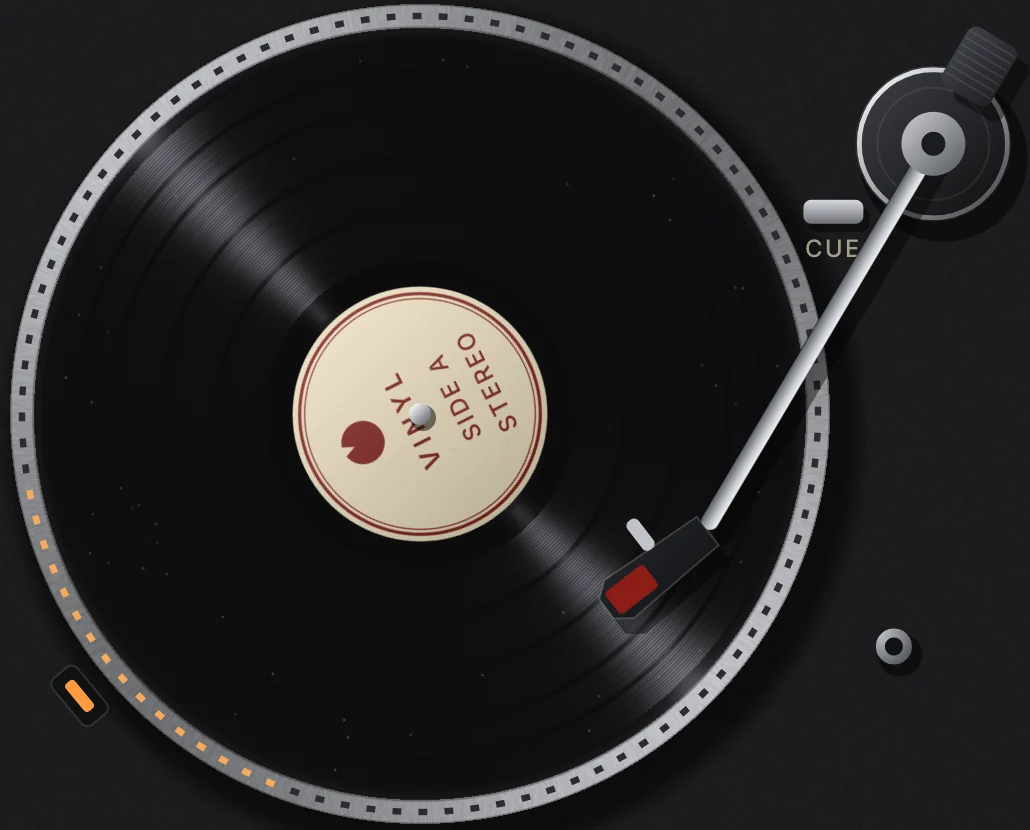
While your song plays, the record turns and the arm goes down; when the song stops, the noise fades out with it, so a stopped session is silent and nothing thumps. With DUST, CRACKLE, AGE and WOW at 0 % and HUM off, the output is the input, bit for bit, delayed by a fixed latency that’s reported to your DAW.