Writing for woodwinds
How to write for woodwinds with VEIRA Woodwinds: the four instruments and their registers, slurs and tonguing, dynamics on the mod wheel or a breath controller, pairs and sections, the wind choir, and the articulations.
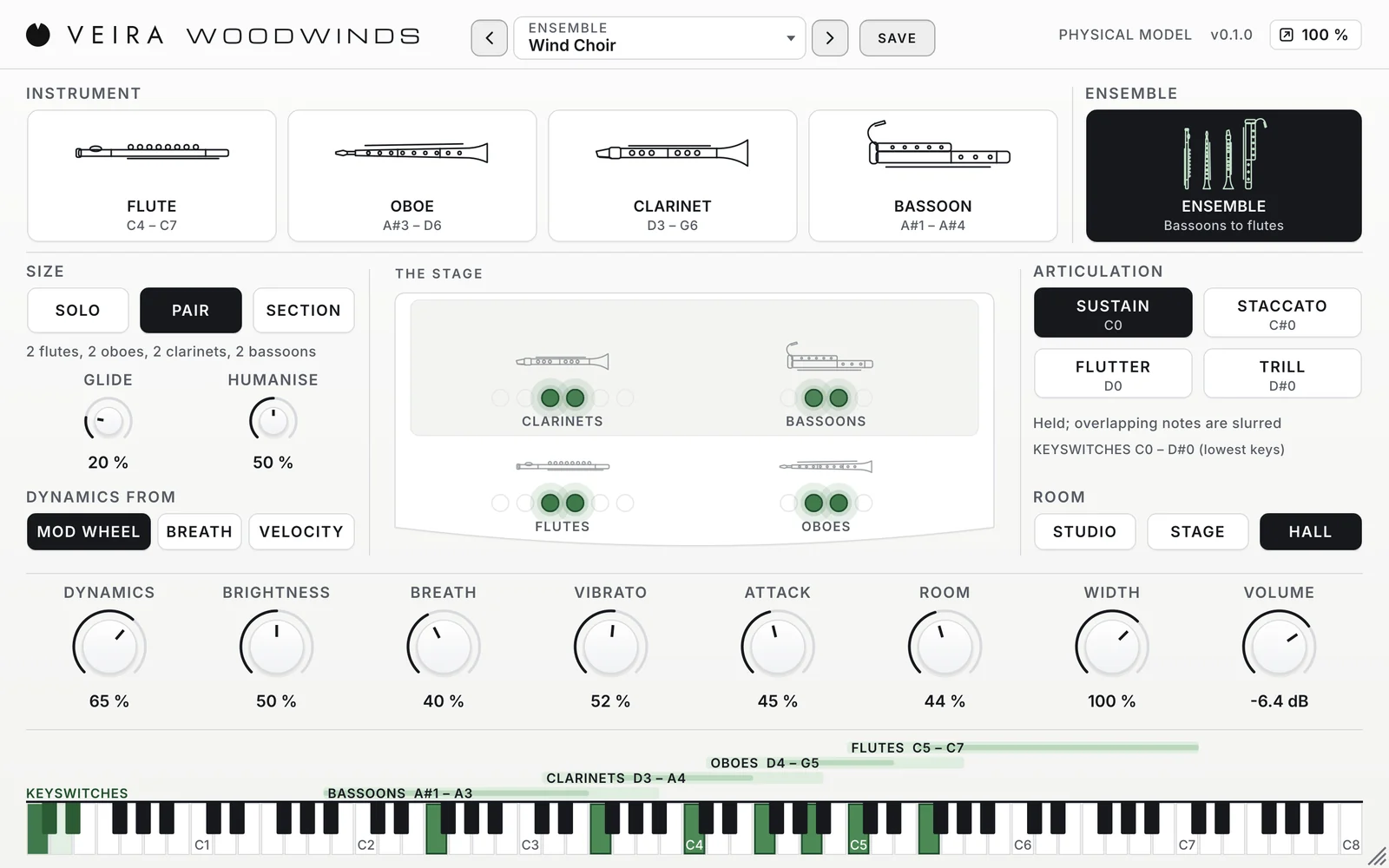
The woodwinds are the orchestra’s colours: the flute’s air, the oboe’s reedy focus, the clarinet’s hollow depth and the bassoon’s woody bass. Writing for them well means knowing where each one sings, how a wind player phrases, and how the four blend. VEIRA Woodwinds plays them from a keyboard. This is how to write for woodwinds with it.
Four instruments, four registers
The flute plays from C4 to C7 and is at its brightest high up; low, it is soft and breathy. The oboe, from A#3 to D6, is nasal and focused, the voice that carries a lonely melody. The clarinet, from D3 to G6, is two instruments in one: hollow and dark low, where its cylinder favours the odd harmonics, clear and sweet above its break. The bassoon, from A#1 to A#4, is the winds’ bass and a singing tenor. Keep each part in the darker part of its bar on the keyboard strip, its best register.

Phrase like a wind player
A wind player breathes, tongues and slurs, and those three shape every line. In VEIRA Woodwinds, a note played while another is held is slurred: the fingering changes and the tongue does not strike again. Lift between notes you want tongued, and overlap the ones you want slurred. ATTACK sets the tongue, from a soft du to a hard tu, and velocity adds to it. Leave room for the player to breathe: long lines with no gaps sound like no one is playing them.
Dynamics are breath
Play the dynamics as you record: the mod wheel, or a breath controller with DYNAMICS FROM on BREATH, plays them continuously once moved. Louder is brighter, as the reed beats harder or the jet drives the edge harder, so a crescendo changes the colour, not only the level. Swell into long notes, fall away at the ends of phrases, and record the wheel with the notes.
Pairs, sections and the wind choir
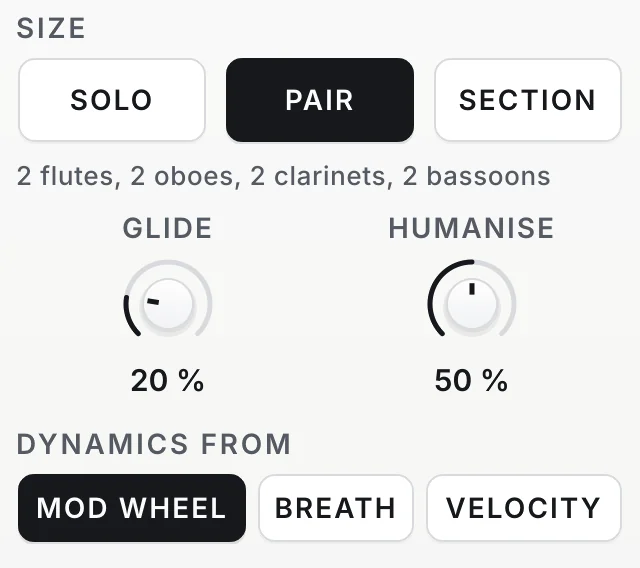
- SOLO: one player, one line. A chord played on a solo instrument plays one note, as a real player would.
- PAIR: two players, as an orchestra’s winds sit: one note in unison, two notes divided.
- SECTION: six flutes, four oboes, six clarinets or four bassoons, sharing the notes held from the top down.
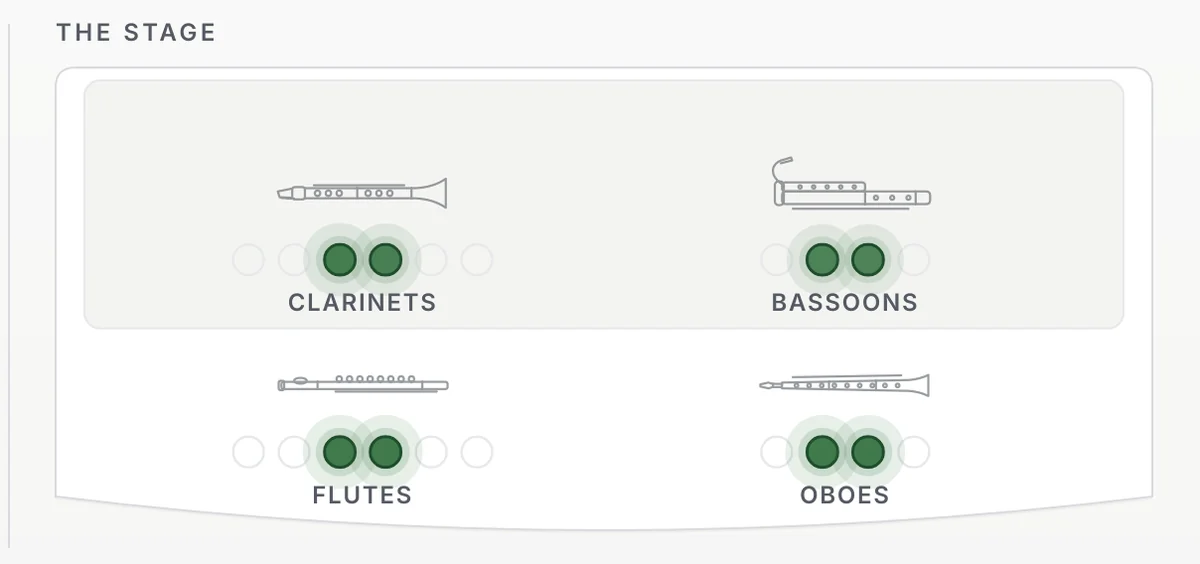
- ENSEMBLE: bassoons, clarinets, oboes and flutes across the keyboard: play a chord with two hands and the winds share it out.
Two players on one note beat slowly against each other, as real pairs do; HUMANISE sets how differently they tune, time and breathe.
Short notes, flutter and trills
STACCATO is a short tongued note, its dynamic from the velocity: write rhythmic figures with real accents. FLUTTER rolls the air about 24 times a second, a shimmer for suspense and magic; TRILL trills a whole tone up, each player at their own speed. Switch between them with the keyswitches C0 to D#0, recorded a little before the notes they belong to.
Start from a preset: Solo Flute or Pastoral Oboe for a melody, Wind Choir or Chorale Winds for chords, Wind Quartet for chamber writing, Staccato Winds for rhythm, Flutter Flutes or Trilling Winds for colour, Ballad Flute under a song. Read the page of VEIRA Woodwinds for every control. For the strings under the winds, VEIRA Strings; for the brass above them, VEIRA Brass.