A piano built from partials: how a synthesized piano works
How VEIRA Digital Piano builds every note from decaying sine partials instead of recordings, why piano strings are stretched and decay in two stages, and how to use its pedals, tones and AGE.
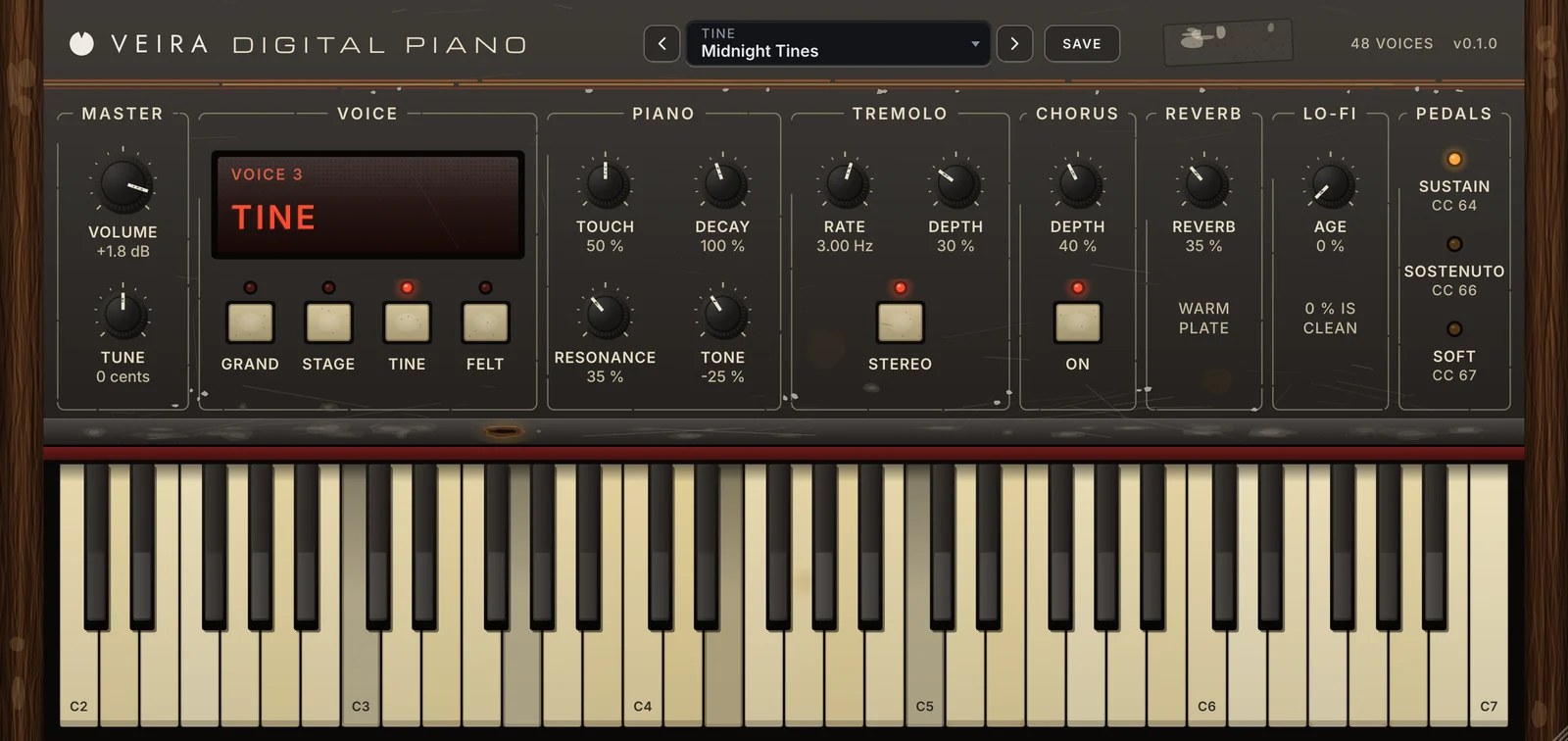
Most software pianos play recordings: thousands of samples of a real instrument, note by note and layer by layer. VEIRA Digital Piano doesn't. It is a vintage 1980s-style digital piano, and every note is synthesized in code at the moment you strike the key, from pure tones that die away. No recordings are used. Here is how that works, and why it can still sound and behave like a piano.
A note is a sum of partials
Any piano note can be described as many pure sine tones, called partials, each starting at its own level and fading at its own speed. Digital Piano builds a bank of up to 64 of them for each note. On a real string they are not quite whole-number multiples of the note: a stiff string stretches them a little higher, more so towards the top and bottom of the keyboard. The GRAND, STAGE and FELT tones follow that rule, and each partial is shaped by where the hammer strikes, by the hammer's felt (so louder notes are brighter) and by the soundboard.
Why a piano note falls, then rings on
Listen to a held piano note: it drops quickly at first, then settles into a long, quiet ring. That two-stage decay comes from the two or three strings of each note pulling on each other through the bridge. Digital Piano gives its lowest partials slightly detuned pairs, a fast prompt sound and a slow aftersound, which also brings back the gentle beating of real strings.
Four tones
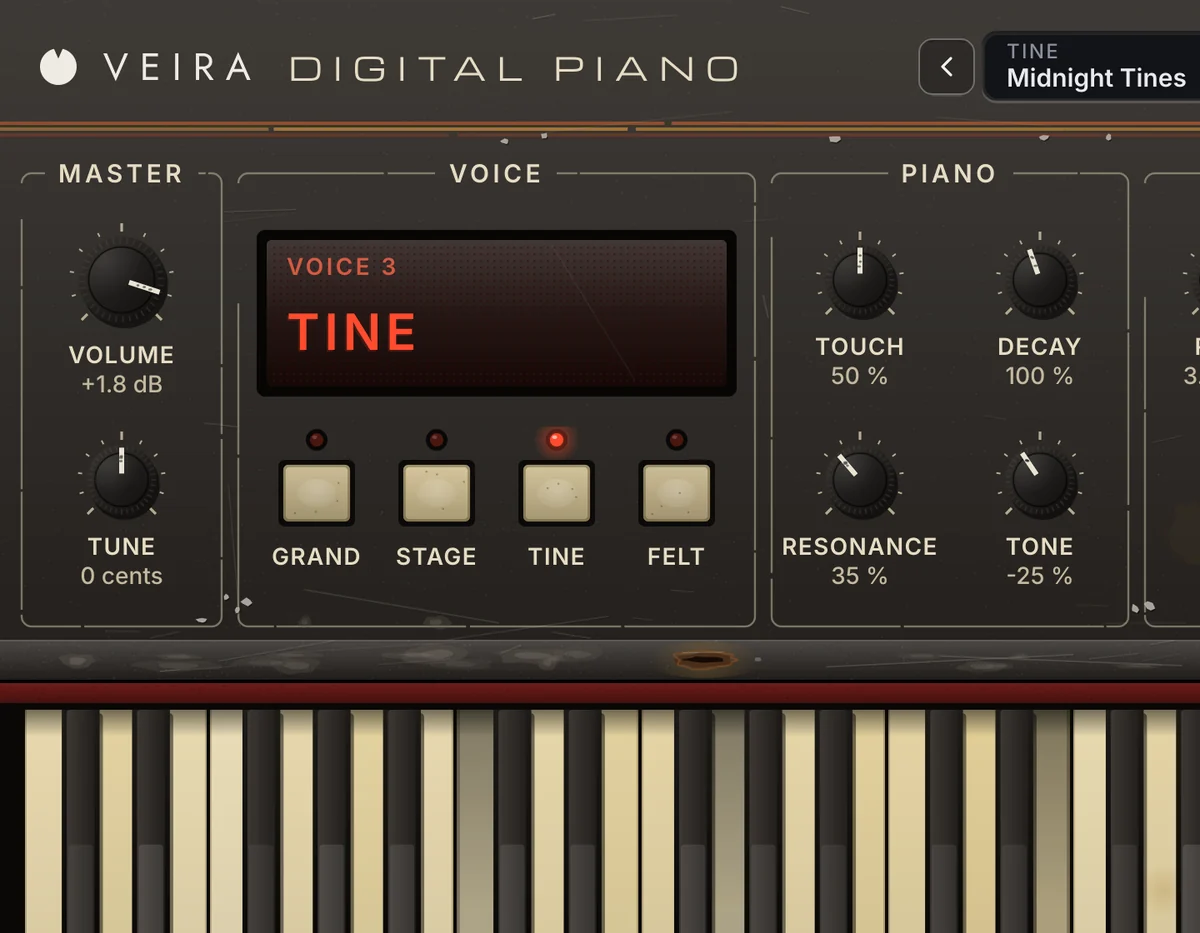
- GRAND: a concert grand, for solo playing and ballads.
- STAGE: a bright stage piano with stiffer strings, brighter hammers and a pickup presence, to cut through a band.
- TINE: an electric tine piano, a near-sine note whose bark grows with velocity and softens as it rings, with the tine's ping on the attack.
- FELT: a soft felt piano with a felt thud and a short, dark ring.
Pedals that matter
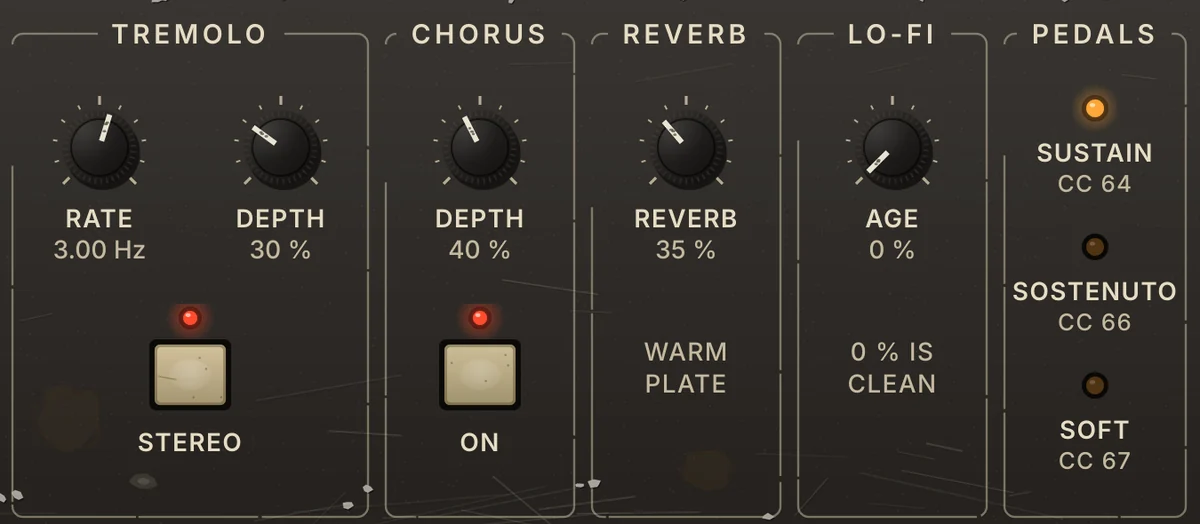
A piano is played with the feet as much as the hands. The sustain pedal lifts every damper, and Digital Piano reads it continuously, so half pedal works: the dampers touch the strings more and more as you lift. While they are up, RESONANCE lets the other strings ring along. Sostenuto holds only the notes down when you press it, soft plays the following notes softer and darker, and the top 20 keys ring on with no dampers, as on a real piano.
The sound of the era
The effects come in the order of the old instruments: tremolo, with a stereo mode that pans the classic tine sound from side to side, a bucket-brigade-style chorus and a warm plate. AGE goes further back, lowering the sample rate and the bits like a tired sound chip and adding noise and a slow wobble; at 0 % it is exactly clean.
Read the VEIRA Digital Piano page for every detail, or start from its 32 presets, from Concert Grand and Eighties Power Ballad to Midnight Tines, Felt Diary and Cassette Grand.